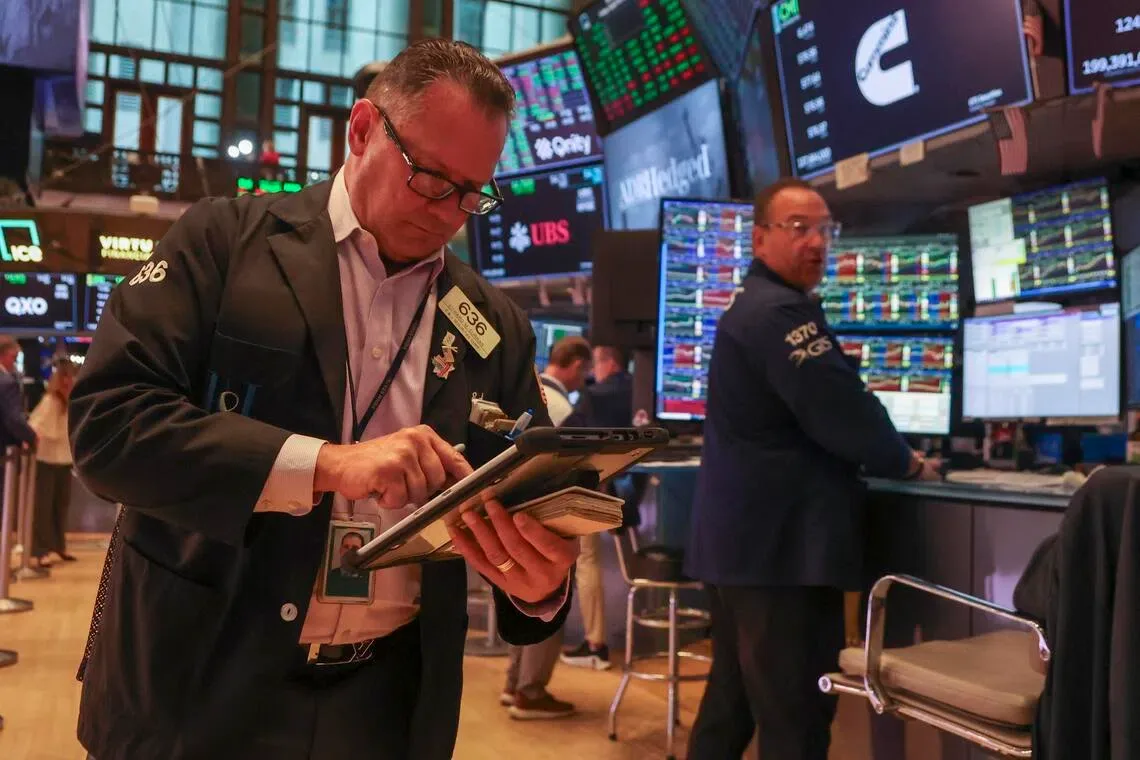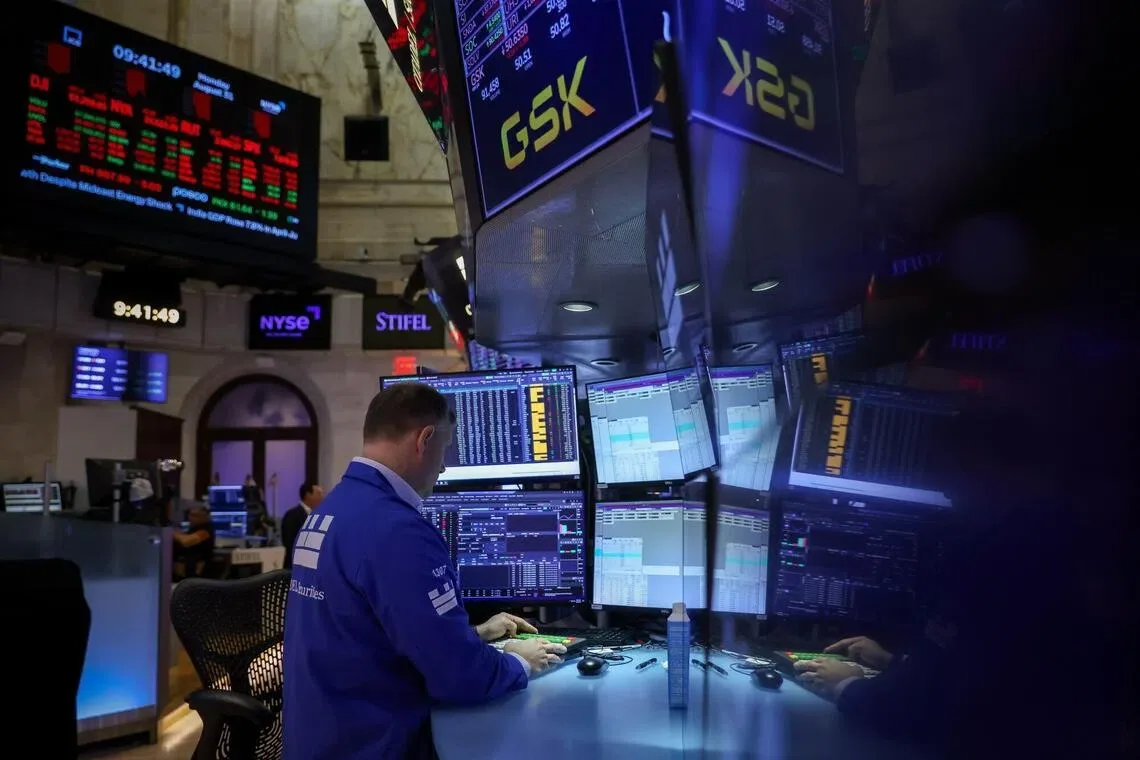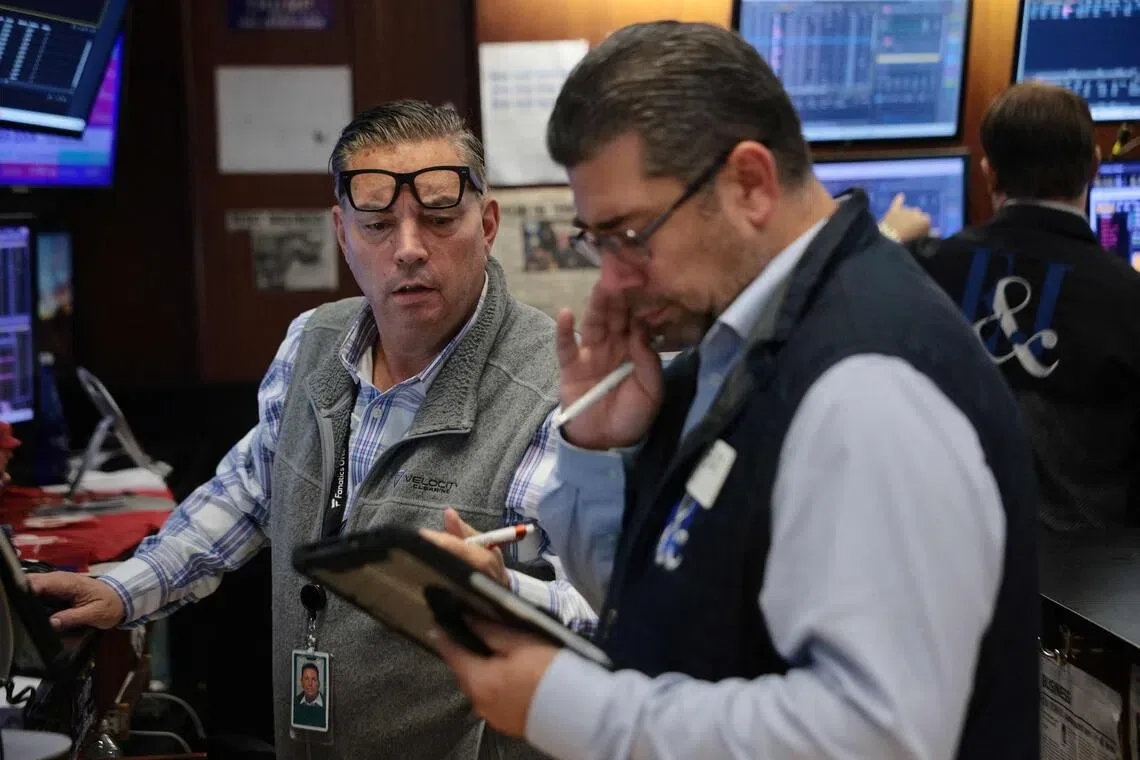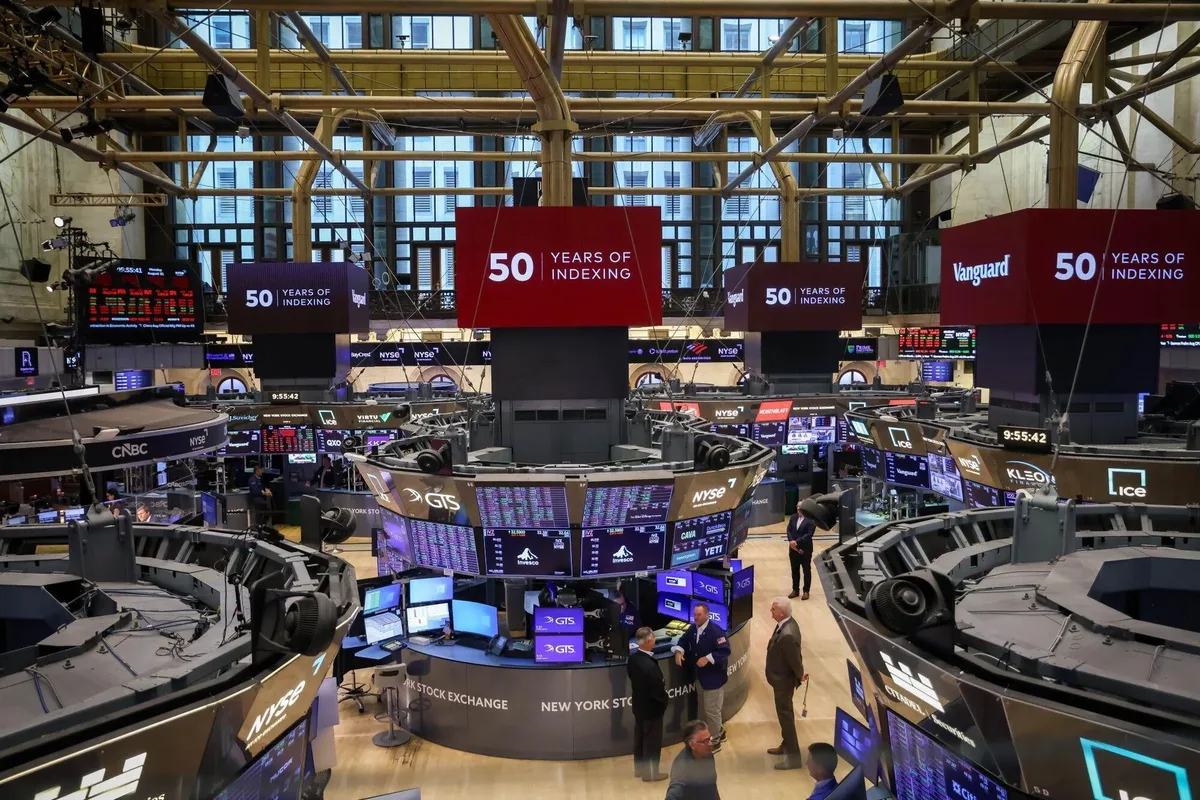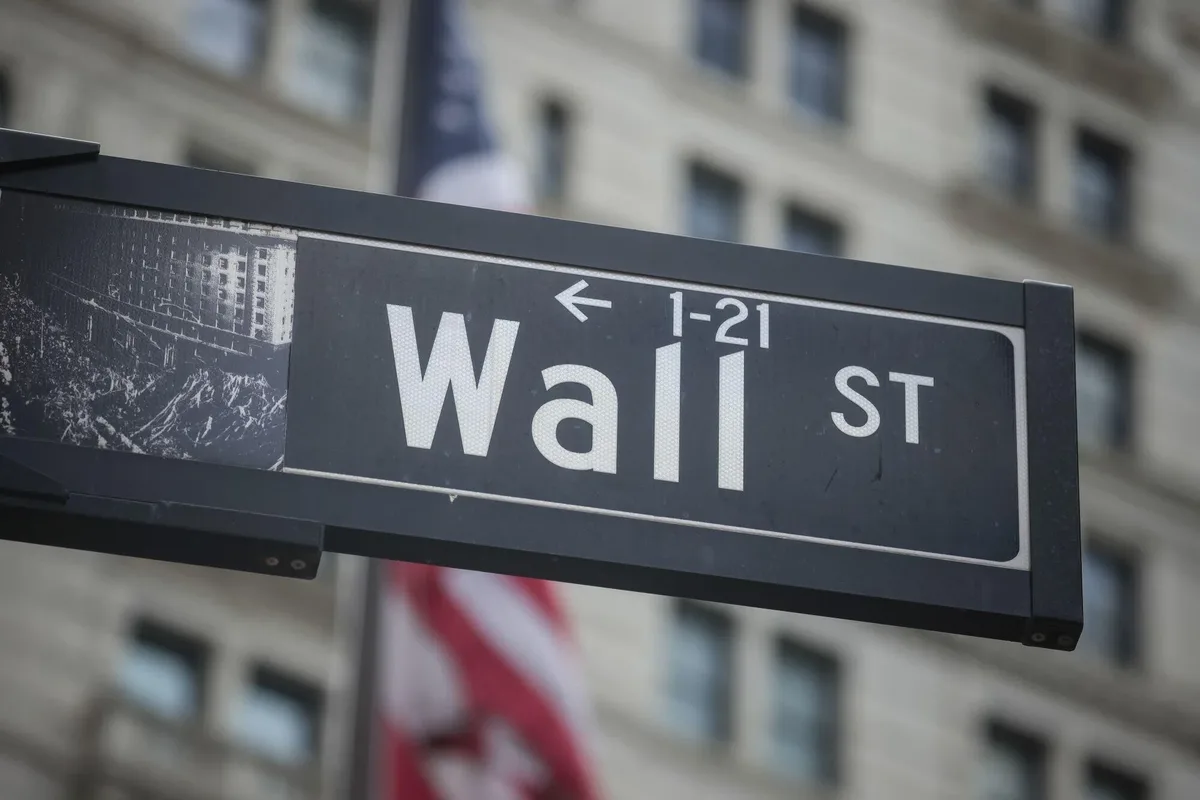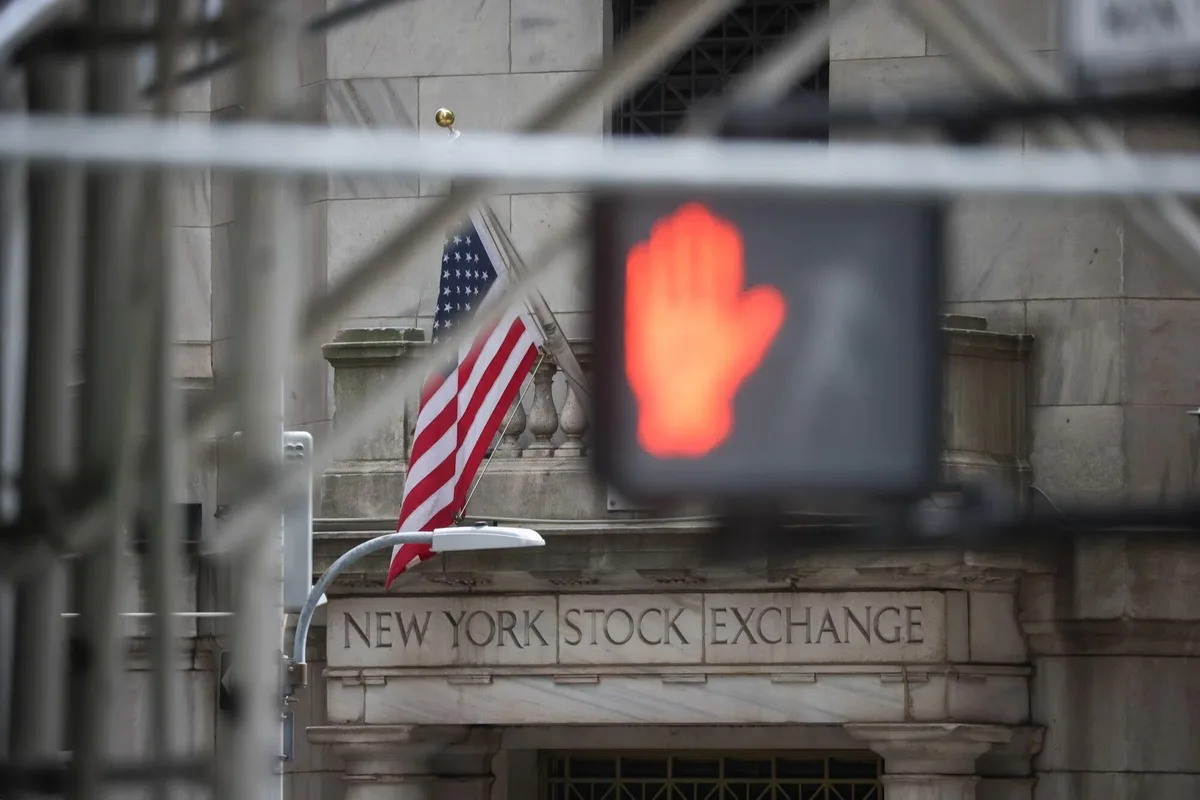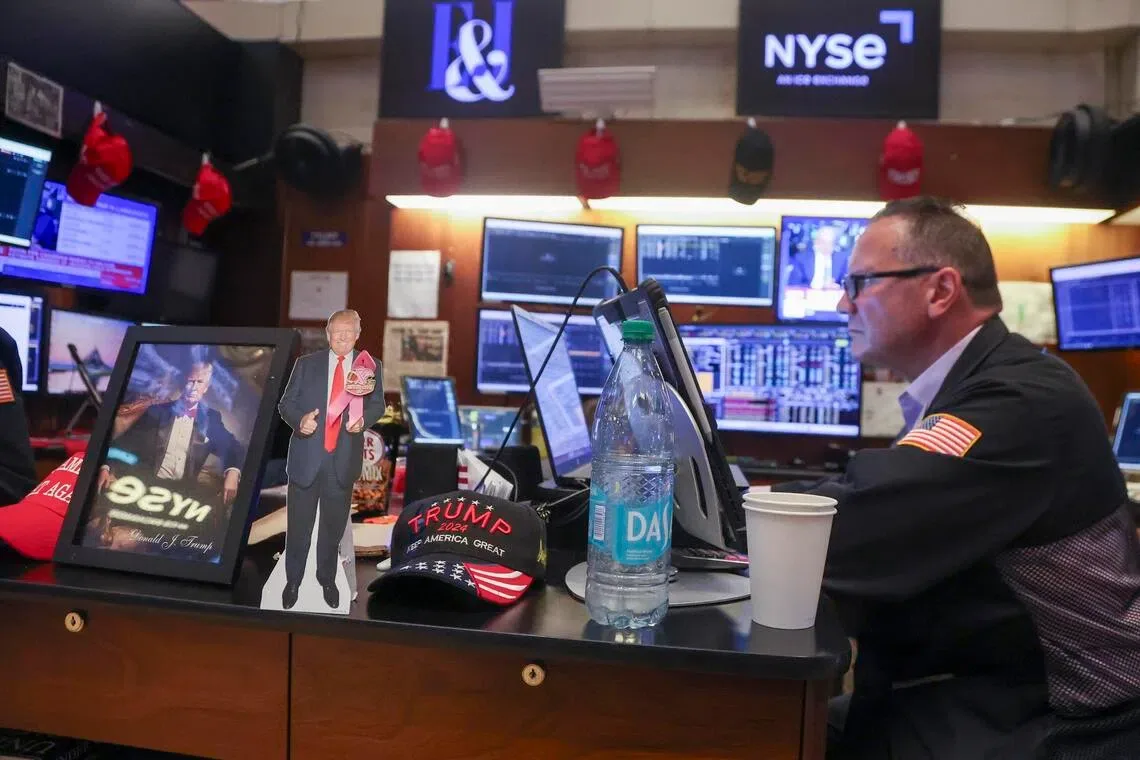
US stock indexes dropped on August 31 and September 1 due to rising oil prices and inflation concerns linked to escalating US-Iran tensions. The Dow Jones fell 374.09 points, or 0.7%, closing at 53,185.90 on August 31, as investors reacted to hawkish Fed comments and a spike in oil prices. Peter Tuz, president of Chase Investment Counsel, said the mix of Middle East hostilities and increased rate hike odds made for a "risk-off day" with many investors staying out of the market [1, 2]. The US 10-year Treasury yield reached a multiyear high near 4.82% around this time [3, 4].
The downward pressure continued on September 1 as bond yields stayed near 19-month highs and oil prices rose amid the tensions. Ross Mayfield, an investment strategy analyst at Baird, described it as "the perfect cocktail for a risk-off day in a market trading near all-time highs" [3]. The market priced in a roughly 68% chance of a 25-basis-point Fed rate hike at the September meeting as of September 1 [3].
Stocks bounced back starting September 2, with all three major US indexes gaining, led by small caps and semiconductor stocks such as Nvidia and Micron. Lauren Cassidy, chief investment officer at Founders 100 ETF, noted that accelerating AI adoption provided strong fundamentals despite ongoing geopolitical risks. "AI adoption is still in the very early innings," she said, with potential for exponential growth [5, 6, 7]. The Dow Jones closed at 53,061.89 on this day [5, 6, 7].
On September 3, Wall Street rallied sharply after Fed Governor Christopher Waller indicated he might pause rate hikes if inflation pressures ease. Waller said, "I would be inclined to let key interest rates stand should upcoming data confirm that price pressures are easing." The Dow Jones jumped 624.16 points, about 1.18% [4, 8]. Treasury yields pulled back slightly to around 4.78% [4, 8, 7]. Bill Northey, senior investment director at US Bank Wealth Management, said Waller's comments gave a broad lift to markets, with earnings results supporting strength in sectors like semiconductors and software [9].
Stocks continued rallying on September 4, rising over 1% as rate hike expectations receded amid mixed economic reports. The likelihood of a 25-basis-point hike dropped to about 50.4% following Waller's remarks [9, 8]. President Donald Trump underscored US readiness for further action on Iran, stating, "The US is prepared to launch further attacks on Iran whenever it wants," asserting US control over the Strait of Hormuz [7].
September is historically the worst month for US stocks, especially during midterm election years due to political anxiety [3]. Notable stock movements during this period were seen in companies including Dell, Brown-Forman, Micron, Qualcomm, Nvidia, and Uber [5, 6]. The US economy is expected to have added 56,000 jobs in August with the unemployment rate steady at 4.1% [4, 9].
Market participants will watch upcoming economic data and Fed signals closely as the central bank's September meeting approaches, with the debate over a potential 25-basis-point rate increase still unresolved.