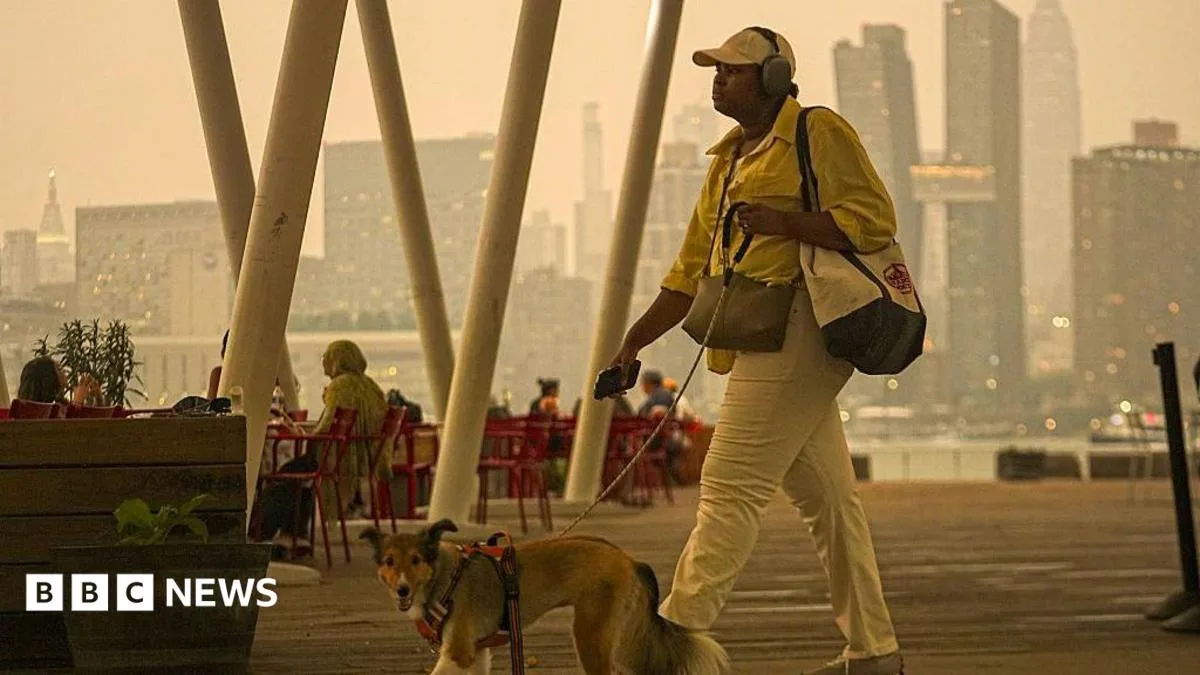
Over 850 wildfires continue to burn across Canada as of mid-July 2026, with many fires out of control in Ontario, Manitoba, and Saskatchewan, including some as large as 130,000 acres [1, 2, 3]. These fires have consumed about 2.4 million hectares (6 million acres) of land to date [2, 4].
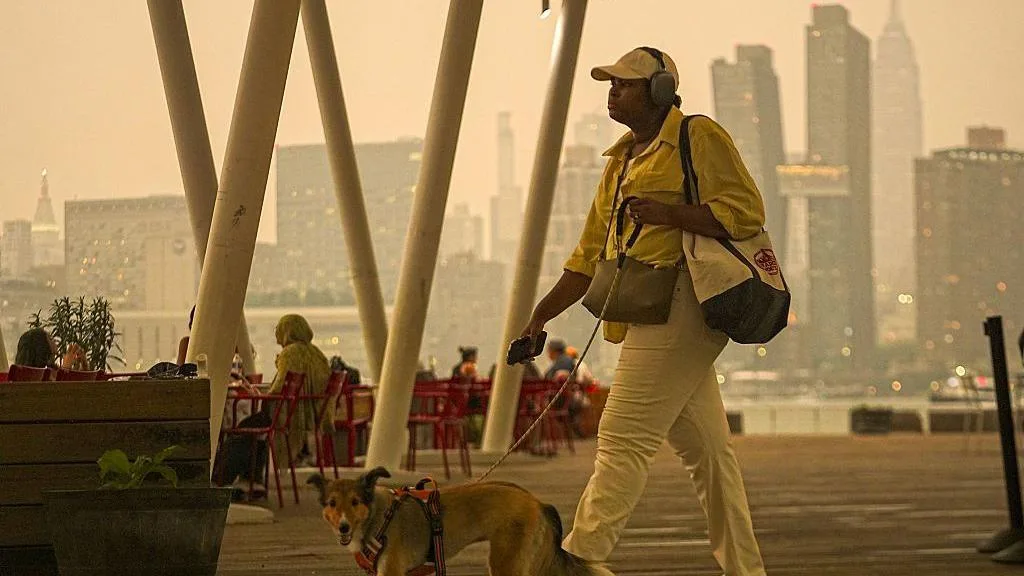
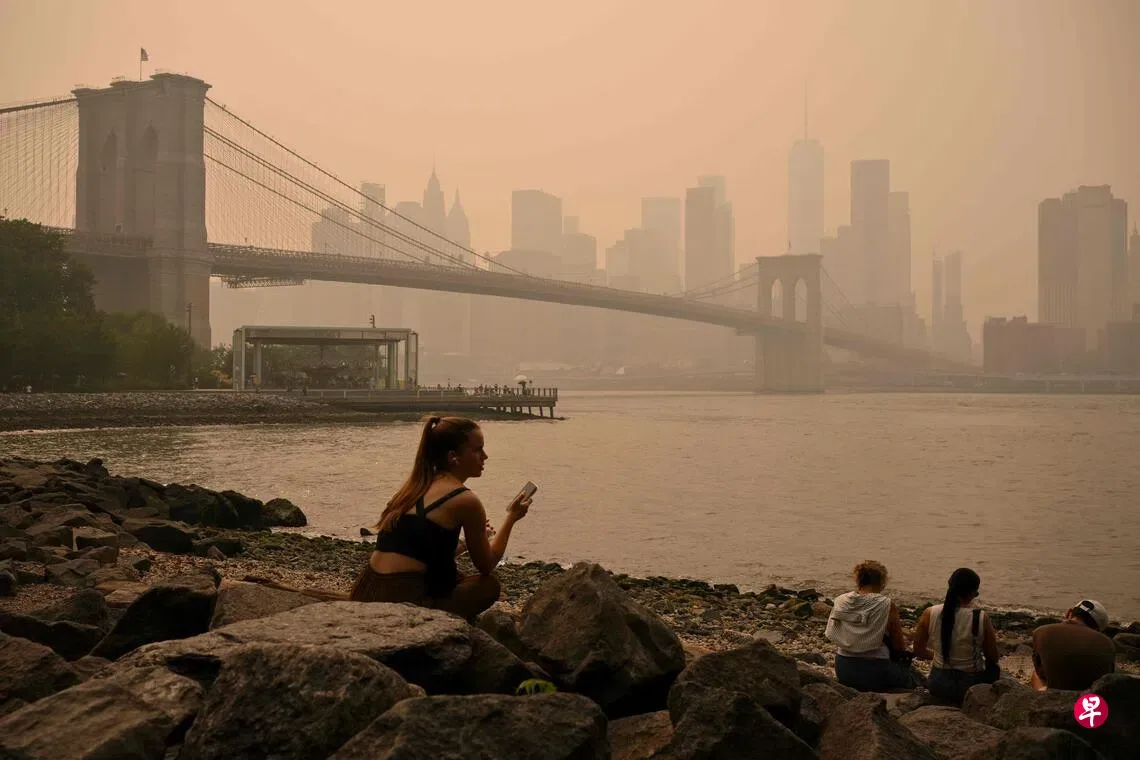
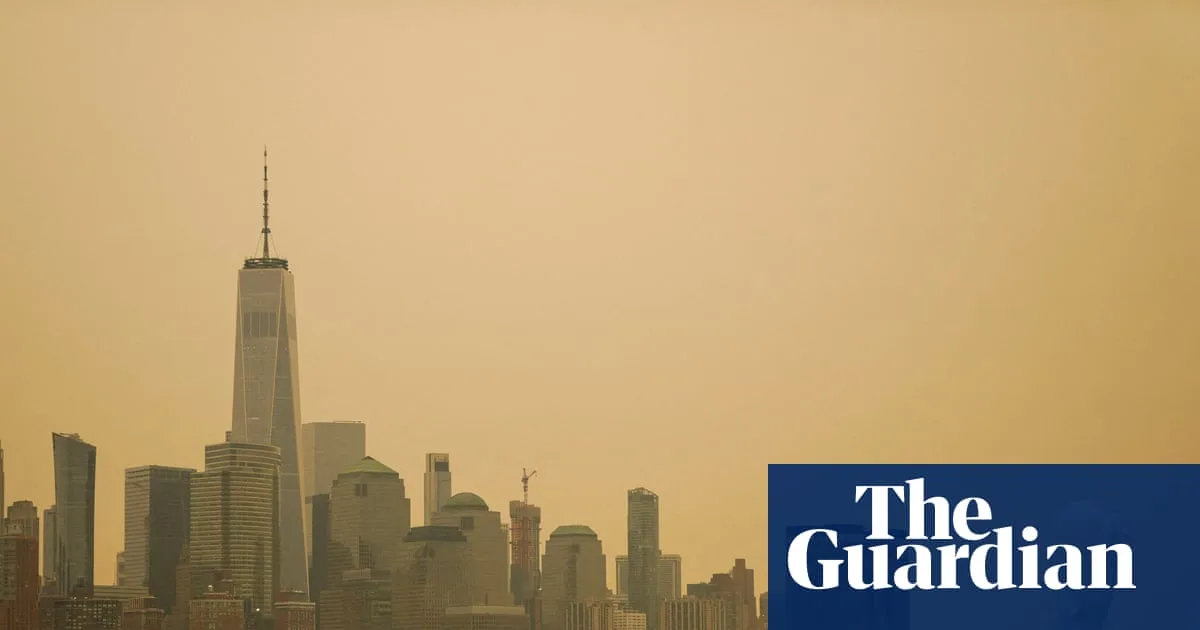
Smoke from the Canadian blazes has spread southward into the United States, affecting air quality in at least 16 to over 20 states, mainly in the Midwest, Great Lakes, Northeast, and Mid-Atlantic regions [1, 5, 2, 3, 6, 7]. Cities such as Detroit, Minneapolis, Chicago, and New York have reported hazardous or very unhealthy air conditions, with Detroit frequently ranking as the world's worst city for air quality, reaching an Air Quality Index (AQI) of 600—twice the U.S. Environmental Protection Agency’s hazardous threshold [1, 8, 2, 6, 9].
Authorities across the affected states have issued widespread air quality alerts. Residents are advised to stay indoors, limit outdoor activities, and wear N95 masks if they must go outside. Vulnerable groups including children, the elderly, pregnant people, and those with heart or lung conditions face the greatest health risks from the fine particulate matter (PM2.5) in wildfire smoke [5, 6, 7, 10, 9]. Dr. Fernando Safdie, a lung cancer specialist, explained, "The main concern is fine particle pollution, known as PM2.5. These particles are small enough to get deep into the lungs, and the smallest can pass into the bloodstream" [9].
The smoke plume is driven by northwesterly winds pushing smoke into US states, but a shift eastward toward Quebec is expected by Monday, July 20, which could improve air quality south of the border [1]. However, smoke is forecast to persist into the weekend of July 17-19, raising concerns about air quality at the upcoming World Cup final in New Jersey on July 19 [1, 4].
The 2026 U.S. wildfire season is also above average, with 3.7 million acres burned so far, exceeding the 10-year average of 2.7 million acres [4].
Political tensions have risen as U.S. politicians, including President Donald Trump and several Republican members of Congress, blame Canada for poor forest management contributing to the smoke. Trump accused Canada of "willful negligence," stating, "We are holding Canada responsible for the fact that they are not properly maintaining their Forests, and Brush therein" [7, 10, 4, 11]. Four Michigan Republican lawmakers wrote that "Canada has the tools to prevent the smoke from pouring into the U.S. and has chosen not to" [7].
Canada rejects the criticism. Ontario Premier Doug Ford said the province will buy 11 new firefighting aircraft and rejects claims that the Canadian response is inadequate [4]. The Canadian Senate has also released a report recommending expanded forest management to mitigate future fires [4, 11].
Smoke impacts began appearing in northern U.S. states around July 15, with air quality deteriorating by July 16 and political statements emerging by July 17 [3, 1, 8, 2, 7].
The expected wind shift on July 20 is the next significant event that could reduce smoke levels across the United States, easing hazardous air conditions [1].