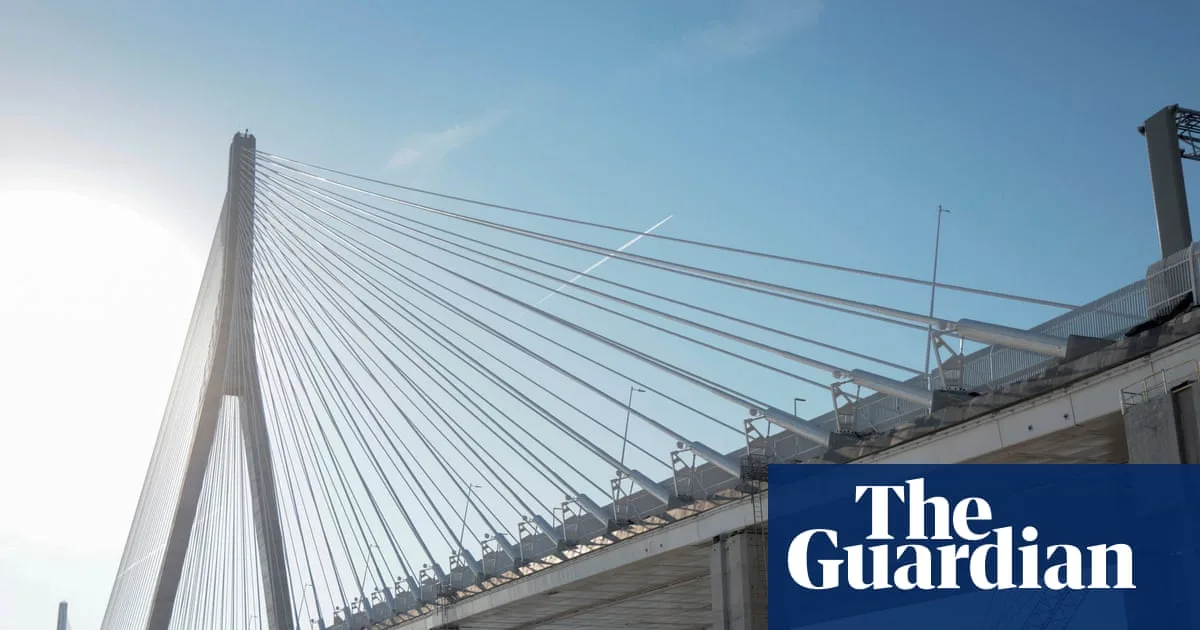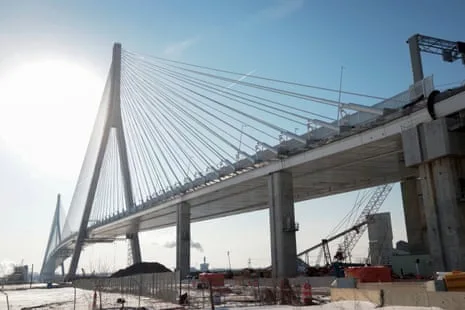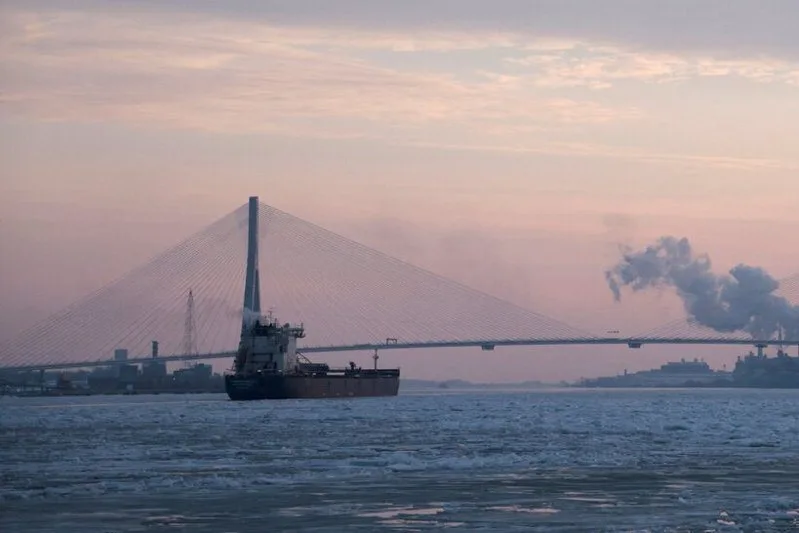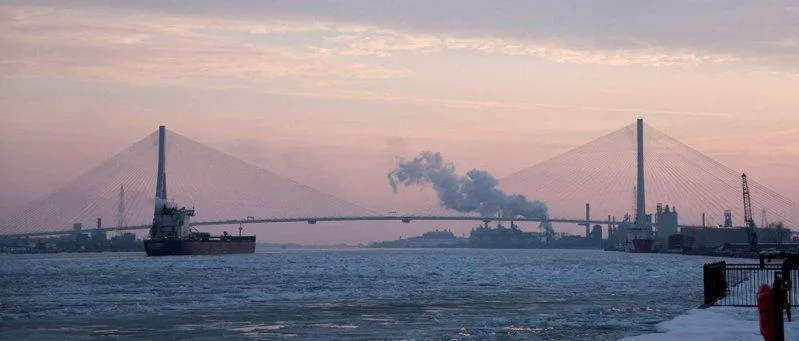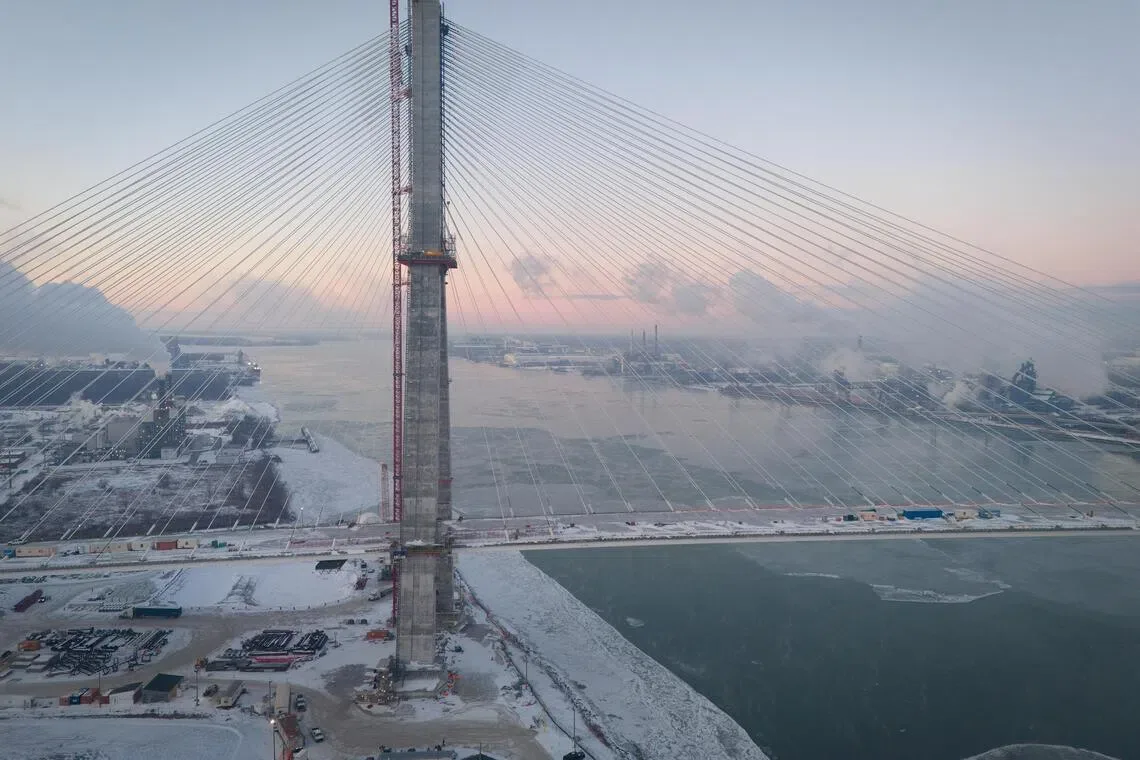
Canada canceled a planned joint celebration with the United States for the opening of the Gordie Howe International Bridge, citing recent trade threats from US President Donald Trump [1, 2, 3, 4]. The bridge, which links Windsor, Ontario, and Detroit, Michigan, is set to open to traffic on July 27, 2026 [1, 2, 3, 5, 4].
The Gordie Howe International Bridge project cost between US$4.4 billion and 4.7 billion and is named after Canadian hockey legend Gordie Howe [1, 2, 4]. It will help alleviate heavy truck traffic on the nearby Ambassador Bridge, which handled $126 billion in truck trade between the two countries in 2023 [1, 4].
In February 2026, President Trump threatened to block the bridge project over trade issues, but allowed it to proceed after a toll revenue arrangement was reached [1, 2, 4]. Nonetheless, trade tensions escalated when Trump announced a 50% tariff on many Canadian imports including automobiles, alcohol, and dairy products on July 20, 2026 [1, 2, 4].
Following the tariff announcement, Canada decided it would be inappropriate to hold a joint US-Canada celebration, as explained by Jenna Ghassabeh, spokesperson for Canadian Infrastructure Minister Gregor Robertson: "In light of trade action threatened by the United States earlier this week, it would be inappropriate to proceed with a celebratory event between the two countries" [1]. Canada plans to hold a separate celebration for Canadians on July 24, three days before the bridge opens to traffic [1, 2, 3, 5, 4]. Ghassabeh added, "We remain committed to opening the bridge on July 27th, and to celebrating this milestone among Canadians on July 24th" [2].
The joint opening ceremony was originally planned for June but postponed due to unresolved issues before being rescheduled for late July [2, 3, 5]. It remains unclear if the US government will hold a separate event for the bridge opening [2].
Canada financed the bridge's construction and intends to recover costs through toll revenues, though the Trump administration opposed this funding model [2]. The 1.5-mile (2.4-kilometer) bridge is expected to provide a new major crossing for trade and travel between Canada and the United States [2].