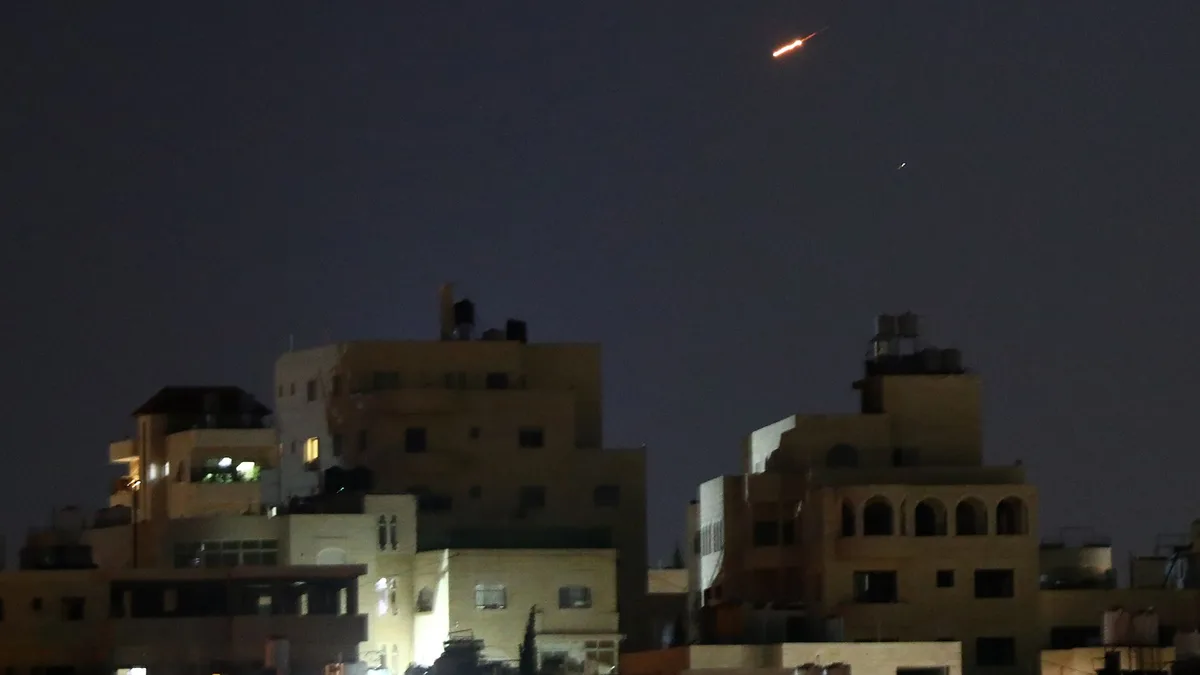
Iran launched four missiles at northern Israel on Sunday in retaliation for an Israeli airstrike on Beirut, marking the first direct Iranian missile attack since the April 8 ceasefire took effect [1, 2]. Sirens sounded across northern Israel as the missiles were launched, but the Israel Defense Forces said its air defense systems intercepted all threats [1]. Iranian state media reported a third wave of missile launches, though Israeli officials confirmed all had been intercepted so far [1].
The Iranian military said Israel had crossed "all red lines" by intensifying attacks in southern Lebanon and targeting the Dahieh suburb of Beirut, warning Israel would face "more forceful blows" if it continued operations in the area [1]. In response, IDF spokesperson Brig. Gen. Efi Defrin called Tehran’s missile attack a "grave mistake" and vowed to continue bombing Hezbollah positions in Beirut [1].
Parliament Speaker Mohammad Bagher Qalibaf said Iran’s missile response changed the ceasefire equation and warned: "As long as there is no genuine will for confidence-building, Iran’s response will remain the same" [2]. Secretary of Iran’s Supreme National Security Council Mohammad Bagher Zolghadr warned that if the "Zionist-American alliance makes another mistake, the region will become hell for them" [2].
Following the exchanges on Sunday, Iran declared early Monday it was halting attacks on Israel but warned of a crushing response if Israeli strikes in Lebanon continue [2]. Israeli media reported Israel agreed to stop airstrikes on Iran but planned to maintain offensive operations in southern Lebanon [2].
U.S. President Donald Trump said he planned to call Israeli Prime Minister Benjamin Netanyahu to urge restraint and avoid further escalation after Iran’s missile attack [1].