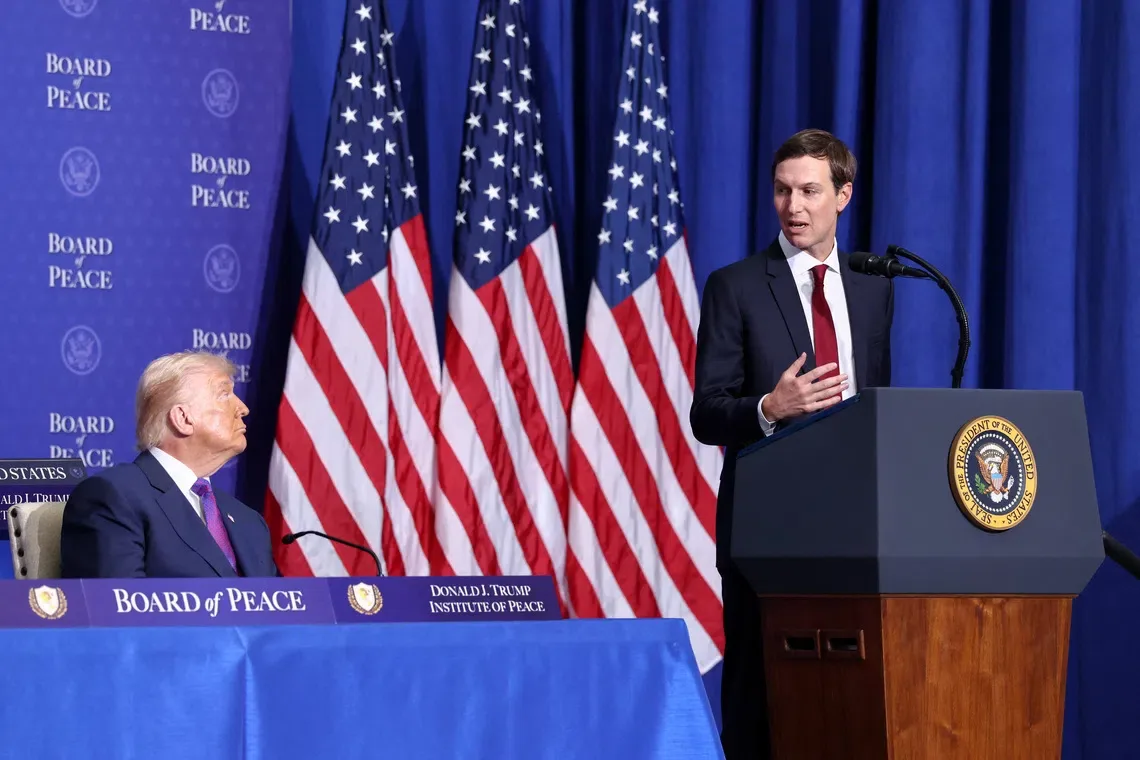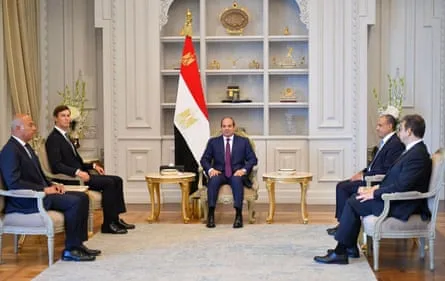
Jared Kushner, US envoy and son-in-law of former President Donald Trump, held a rare meeting with Hamas political chief Khalil al-Hayya on 16 August 2026 in Egypt to discuss a 15-point Gaza peace plan backed by the United States [1, 2, 3]. Kushner was accompanied by envoys including Board of Peace director Nickolay Mladenov, former British Prime Minister Tony Blair, and mediators from Egypt, Qatar, and Turkey during the talks [1, 4, 5].
The plan requires Hamas to fully disarm and Israel to withdraw gradually from Gaza in phases, with security maintained by international forces and new Palestinian police overseeing local governance [1, 3, 6]. Hamas agreed to the plan but conditioned its implementation on Israel withdrawing forces first and ceasing attacks [3, 5]. Hamas leader Khalil al-Hayya’s meeting with Kushner marked his first trip abroad since taking office in July 2026 [5, 7].
Despite the ongoing diplomacy, Israel continued airstrikes against Gaza militants on 16 August 2026 [2]. Israeli Prime Minister Benjamin Netanyahu had publicly rejected the peace plan in early August, saying Israel would not withdraw before Hamas fully disarms and calling the plan "unacceptable" [1, 2, 6]. Netanyahu’s stance remains a major hurdle to progress.
Kushner met Netanyahu in Jerusalem on 17 August to push the peace effort [1, 3, 6]. He expressed optimism that some progress on disarmament and the plan's implementation could begin within 30 days, including clearing weapons and filling tunnels, with verification led by a senior US military official [6, 8]. Kushner stressed, "We have a plan to rebuild Gaza, but we will not allow Gaza to be rebuilt until the demilitarisation occurs" [9]. He also affirmed US support for Israel’s right to self-defense against imminent threats [9].
Several Arab and Muslim countries including Saudi Arabia, UAE, Jordan, Pakistan, Indonesia, Egypt, Qatar, and Turkey issued a joint statement condemning Israel’s rejection of the plan and urged action to prevent obstruction [1, 4, 5].
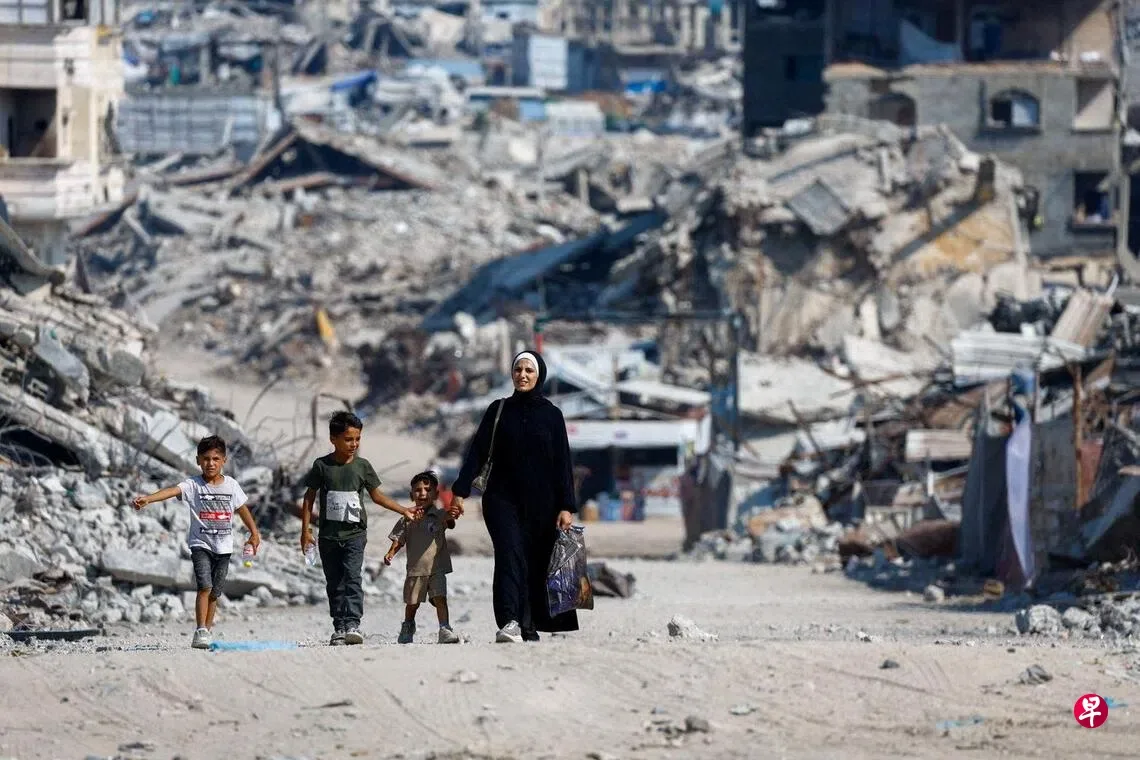
The Gaza ceasefire brokered in late 2025 by the US-led Board of Peace has held but violence and casualties continue. Since the ceasefire started, at least 1,260 Palestinians have been killed in Gaza by Israeli strikes, according to one source [10]. Another source citing broader conflict reports over 73,000 Palestinians killed since October 2023 [9].
The peace plan involves about 2 million people in Gaza and sets clear conditions for disarmament, withdrawal, and governance reforms [1]. Kushner’s meetings follow his earlier contacts with Hamas in October 2025 that helped secure the ceasefire and hostage releases [1, 3]. The next phase will focus on validating disarmament steps and beginning implementation as early as mid-September 2026.