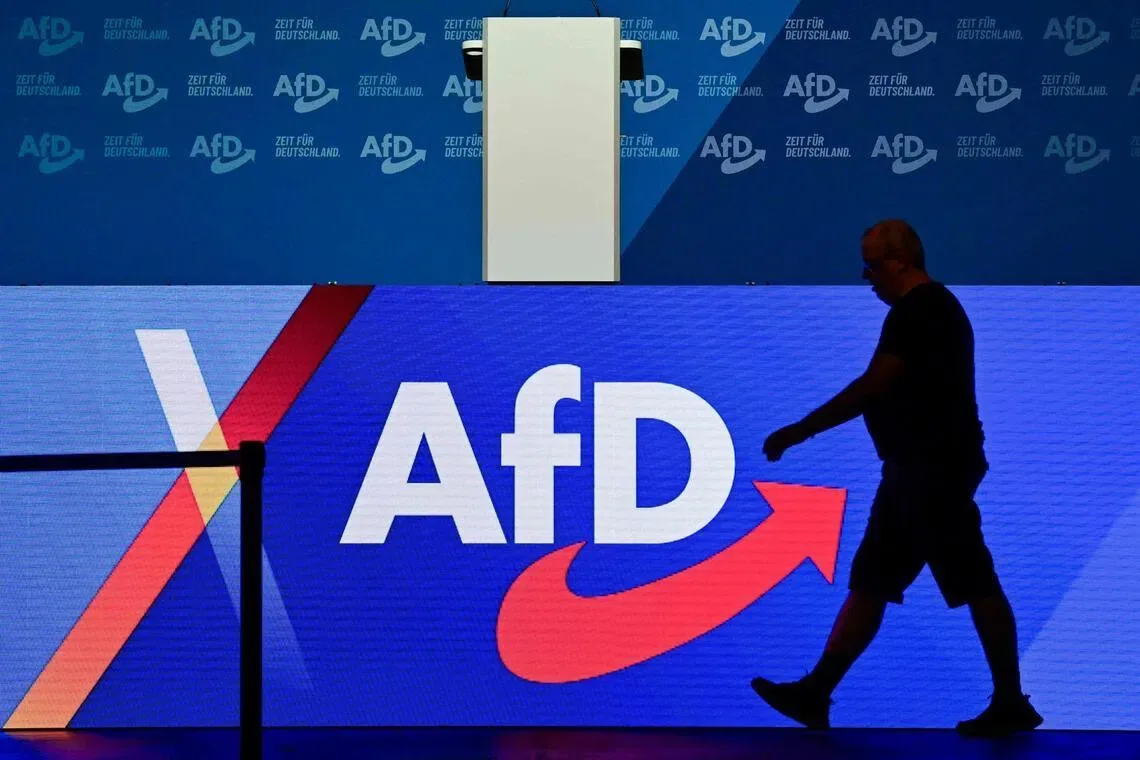
The far-right Alternative for Germany (AfD) held its biennial national congress in Erfurt on July 4-5, where co-leaders Alice Weidel and Tino Chrupalla were re-elected with 81.3% and approximately 70% of delegate votes, respectively [1, 2]. Roughly 540 to 600 party delegates attended the conference [3, 4].
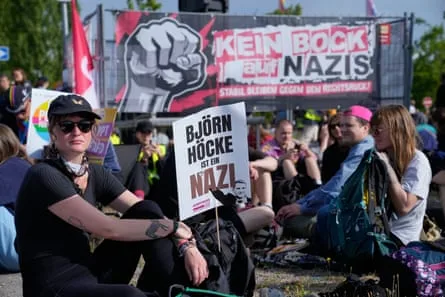
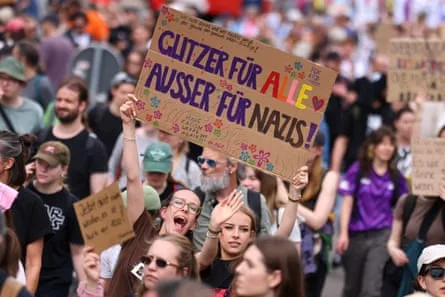
Protests against the AfD conference drew between 15,000 and 50,000 people, according to varying estimates. Police put the figure at 15,000 to 30,000, while some sources cited up to 50,000 demonstrators. The crowd included trade union members, civil society groups, left-wing parties, and anti-fascist alliances such as ‘Resistance’ and ‘Widersetzen’ [5, 6, 3, 7, 8, 9, 10, 1, 2]. Anti-AfD activist Noa Sander said, “This is an extremely dangerous party. The AfD wants mass deportations and ethnic cleansing… We intend to do this by blockading their party conference and standing in the way of the AfD” [5].
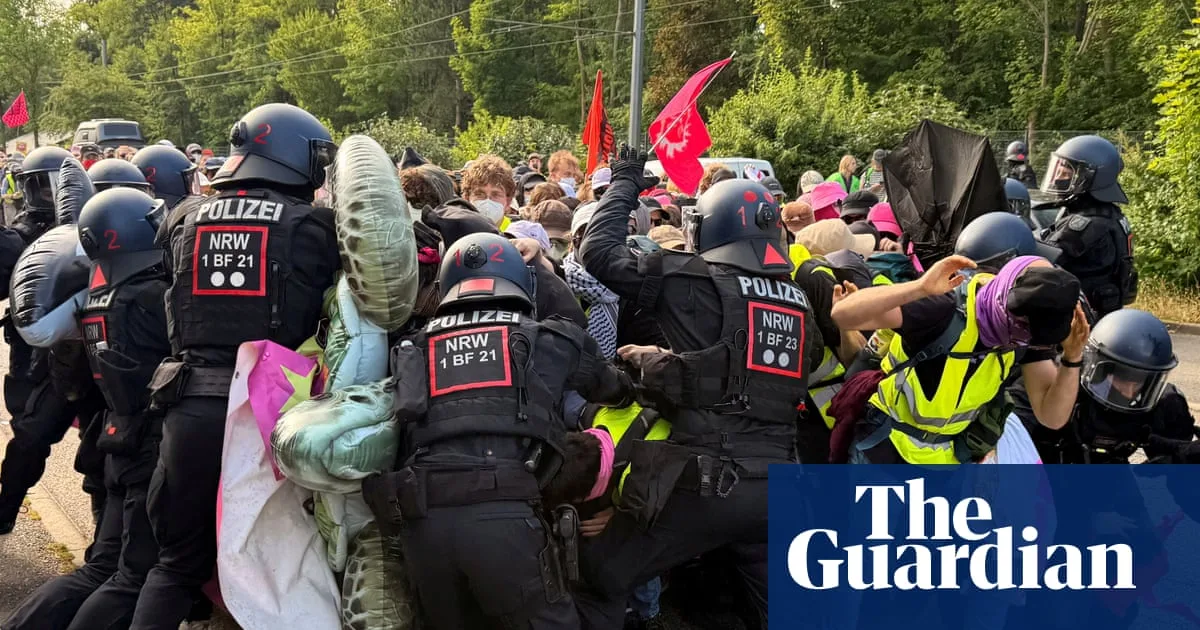
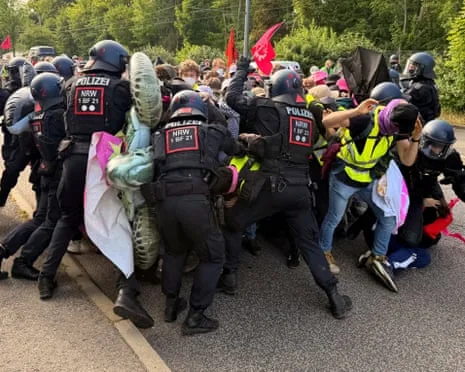
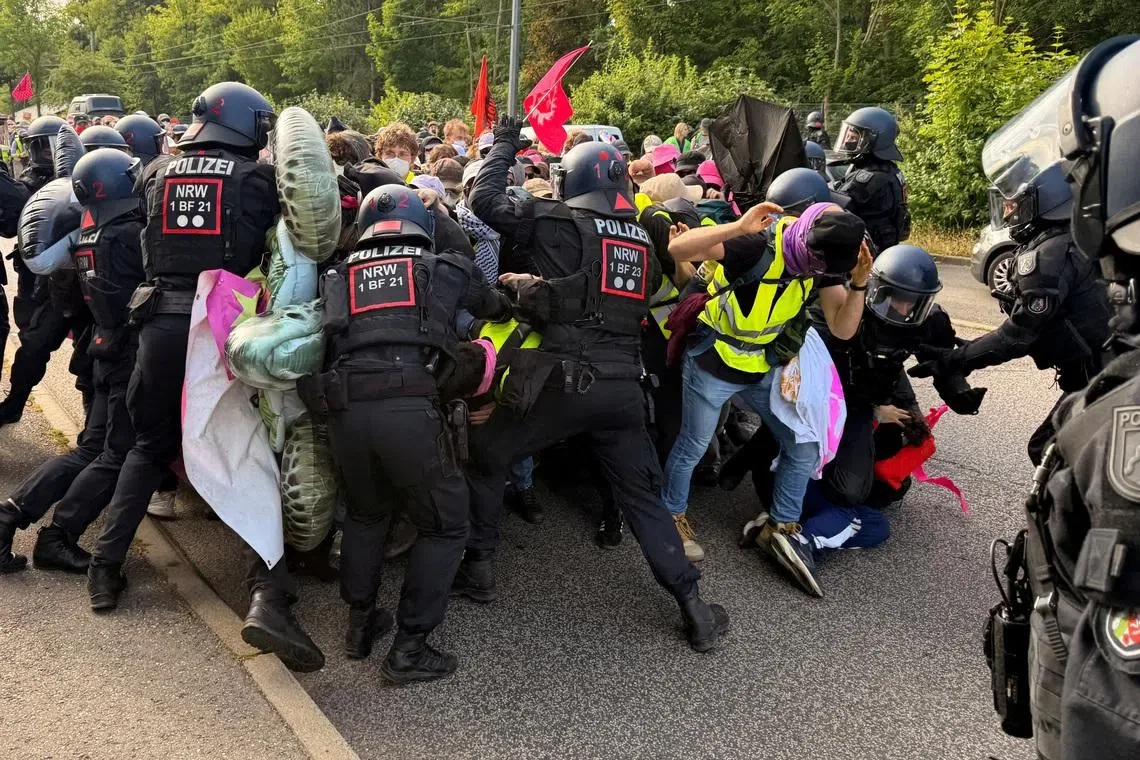
Protesters used sit-in blockades, blocked highways and roads leading to the venue, glued themselves to tram tracks, and some even abseiled from motorway bridges to disrupt the party congress [3, 4, 8, 10, 2]. Despite occasional clashes with police in riot gear, authorities described the protests as “mostly peaceful,” reporting 65 to 100 criminal offenses mainly related to property damage and actions by radical minority groups [3, 11, 1, 2]. More than 200 police buses transported officers to the city, with estimates suggesting up to 2,500 protesters had prepared for violence [5, 8, 9].
The timing of the congress sparked controversy as it coincided with the 100th anniversary of a Nazi Party meeting in nearby Weimar. Critics saw the choice as a deliberate provocation, though the AfD denied this [5, 3, 4, 11, 9]. AfD co-leader Tino Chrupalla accused protesters of opposing “democratic decision‑making” and monopolizing “democracy” itself [4, 2]. AfD lawmaker Beatrix von Storch warned, “The countdown to civil war in Erfurt is ticking. You only have violence. We have arguments” [5].
AfD support has surged in recent polls to about 29%, ahead of the governing CDU/CSU at 21% and SPD at 13%, buoyed by strong backing in eastern states ahead of regional elections in Saxony-Anhalt and Mecklenburg-Vorpommern [6, 4, 8, 1]. Mainstream German parties maintain a strict political isolation strategy against the AfD due to concerns over its extremist tendencies. The domestic intelligence agency is also monitoring the party over suspicions of anti-constitutional activity [8, 9, 1].
Some anti-AfD groups have called for the party to be banned, highlighting its promotion of fascist policies and threats to democracy. Lena Raupach, spokesperson for the antifascist group widersetzen, said the AfD “wants mass deportations and terror on the streets” but “doesn’t solve a single real problem” [2].
Smaller protests continued in Erfurt on July 5, with police reporting 65 criminal offenses by midday [1]. The AfD’s next significant test will come in regional elections later this year, where it aims to win state-level power for the first time.