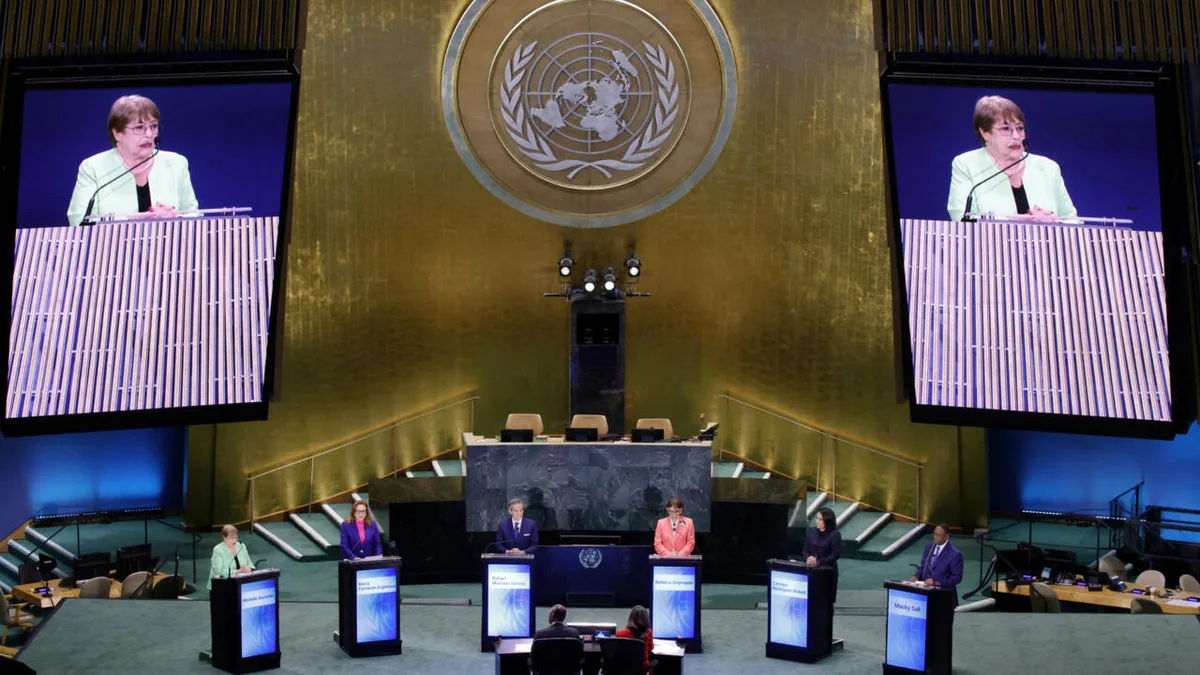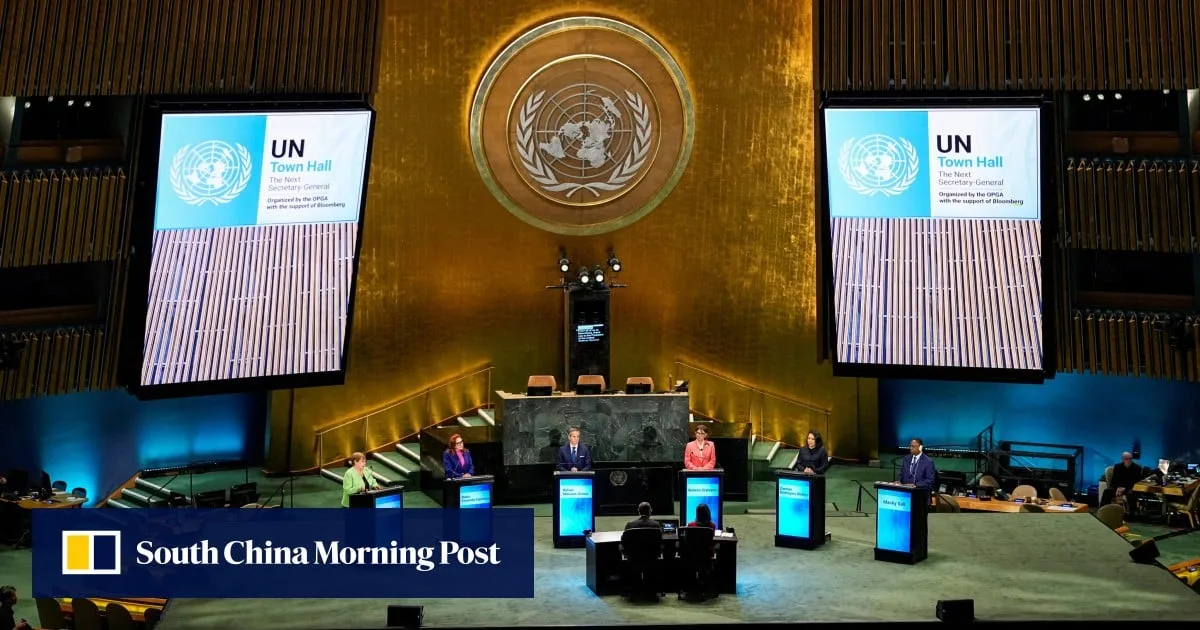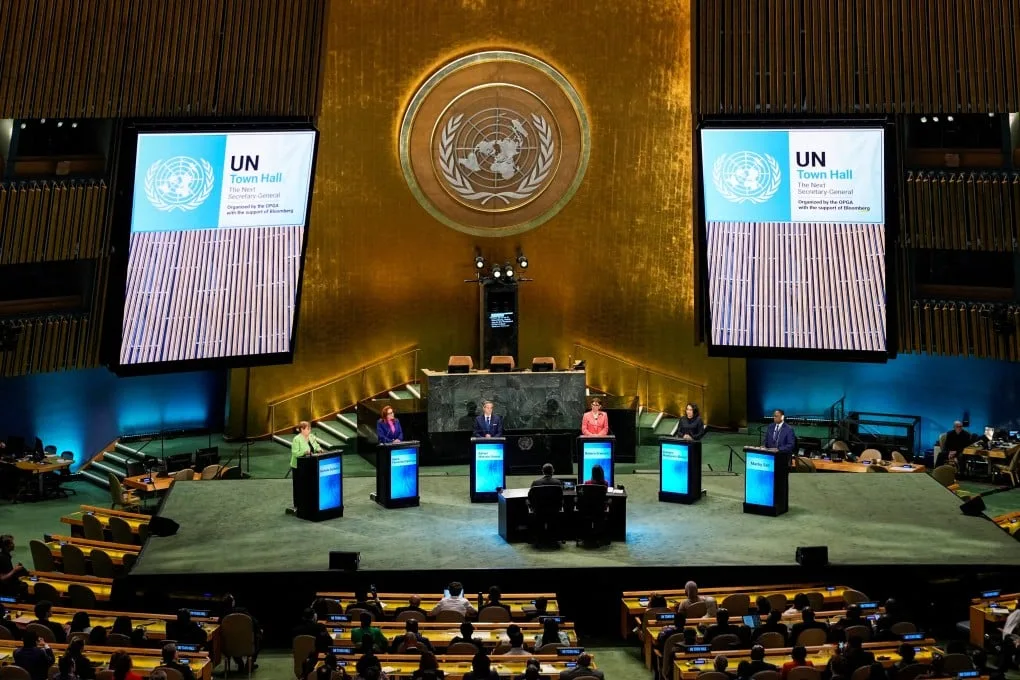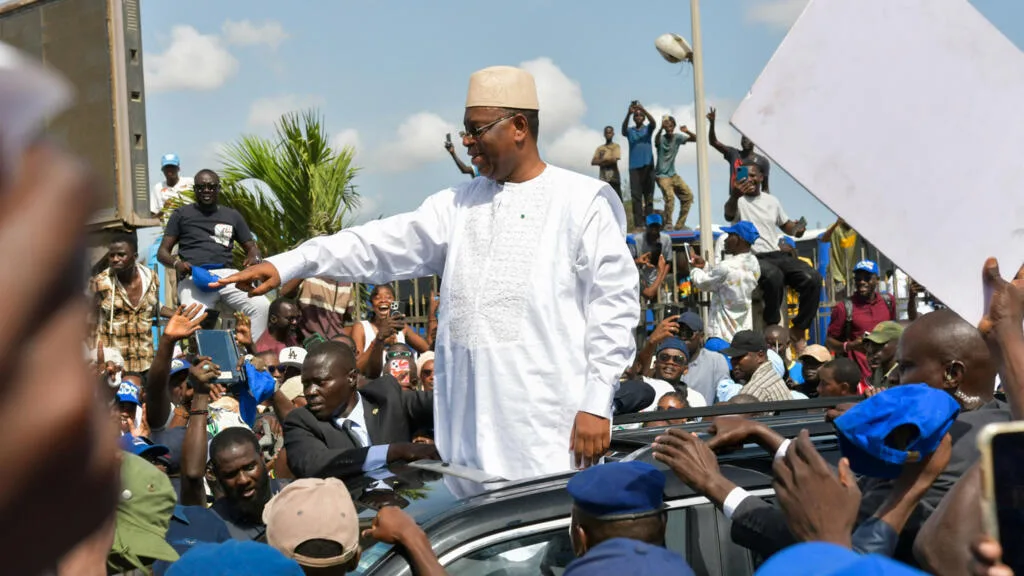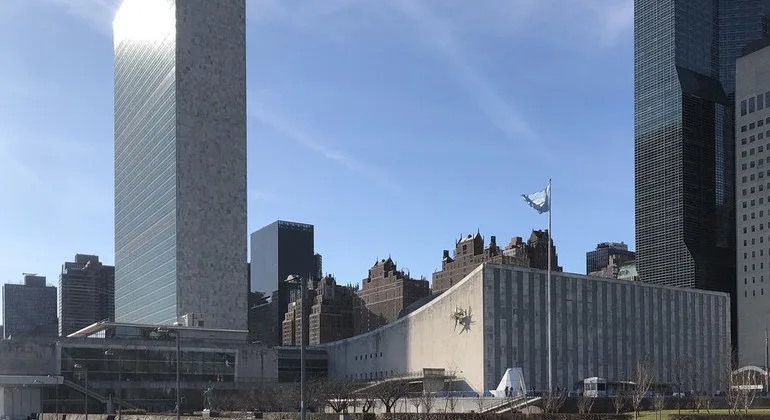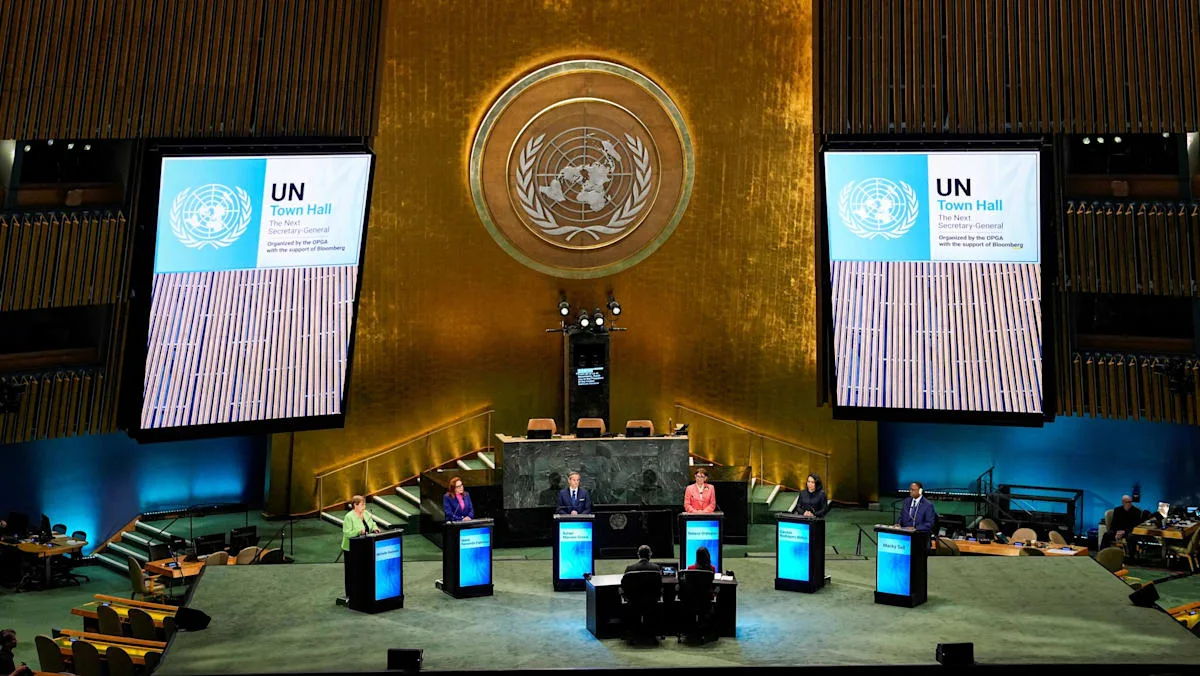
Seven candidates are competing to become the next United Nations Secretary-General following Antonio Guterres' announced departure on December 31, 2026 [1, 2, 3, 4]. Six official candidates appeared in a nearly two-hour televised debate on July 23 at the UN General Assembly Hall, sharing their visions to lead the organization [5, 1, 2, 6, 3]. The contenders included Michelle Bachelet of Chile, Maria Fernanda Espinosa of Ecuador, Rafael Grossi of Argentina, Rebeca Grynspan of Costa Rica, Carolyn Rodrigues-Birkett of Guyana, and Macky Sall of Senegal [5, 1, 2, 6, 3]. Two days later, Uganda's Olara Otunnu, age 75, entered the race as the seventh candidate [4].
The debate was broadcast live worldwide on Bloomberg and UN WebTV, allowing a broad audience to hear the candidates’ platforms [5, 1, 2, 6]. Key topics included restoring the UN’s credibility, adapting it to 21st-century challenges like global conflicts and financial crises, and instituting institutional reforms [5, 1, 2, 6, 3]. Several candidates emphasized the need for improved early warning systems for conflicts and strengthening the pillars of peace, security, human rights, and development [1, 3]. Rebeca Grynspan called for a UN that actively delivers results on the ground, stating, "Five years from now, I would like nobody to ask me again ‘where is the UN?’ That will be my indicator" [1]. Macky Sall promised to "restore trust and put the UN on a path to become more agile, more effective, and more ready to listen, listen, act, and bring people together" [1].
Among the original six candidates, four are women and two are men [3]. Michelle Bachelet, age 74, faced criticism from the US and China related to her previous UN roles, especially on human rights issues [3]. The candidates now face a high-stakes selection process. Starting July 30, the 15 members of the UN Security Council will hold closed-door straw polls [2, 4]. To be chosen, a candidate must receive at least nine votes without a veto from any permanent council member [2, 3, 4].
After Security Council endorsement, the selected candidate will be formally appointed by the UN General Assembly and will take office on January 1, 2027 [2, 4]. The vote marks a critical step in deciding who will lead the world body through complex geopolitical and institutional challenges in the coming years.