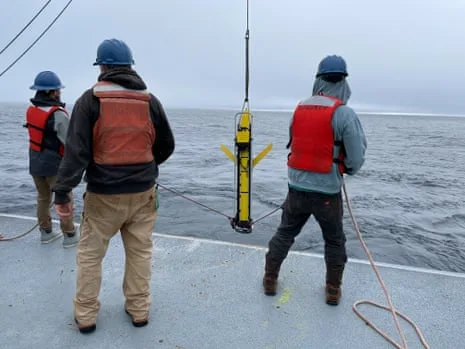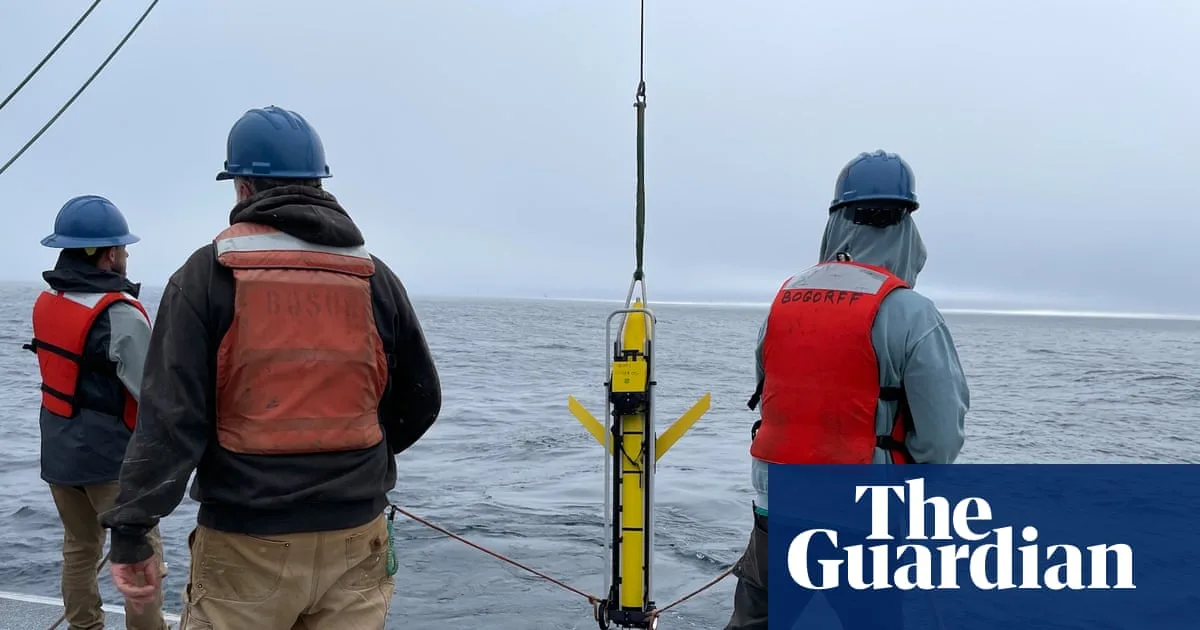
The Trump administration is dismantling the Ocean Observatories Initiative (OOI), a $368 million deep-ocean observation network established about 10 years ago to monitor marine ecosystems, ocean environments, and currents influencing global climate [1, 2]. The OOI, which began operations in June 2016, was originally intended to operate for 25 years and includes more than 900 instruments deployed off Oregon, Washington, Alaska, North Carolina, and in the Irminger Sea near Greenland and Iceland [1, 2].
The National Science Foundation (NSF) issued a notice on May 21, 2026, announcing the start of dismantling and removal efforts following the firing of all members of its independent oversight board [2]. NSF plans to send ships starting in June 2026 to retrieve the instruments over an expected 15-month period [1, 2]. As the physical infrastructure is pulled back, real-time data streams and observation capabilities at those sites will cease, said Jim Edson, OOI principal investigator [2]. Seismic instruments monitoring an active underwater volcano off Oregon will continue operating until 2028 [1].
Scientists have used OOI data to study key environmental issues including how oceans absorb greenhouse gases, marine heat waves, fisheries impacts, coastal flooding, and the Atlantic Meridional Overturning Current (AMOC), a vital global ocean circulation system that may be weakening due to climate change [1]. The Irminger Sea moorings are part of an international collaboration focused on the AMOC [1, 2].
Michael England, a spokesman for NSF, said the decision "aligns with NSF’s wider strategy to have a nimbler approach to prioritising support for evolving scientific priorities and emerging technologies as well as a deliberate approach to smart life cycle management within its portfolio of research infrastructure" [1].
The dismantling marks a rollback of climate and science efforts by the administration, which has also pushed to expand deep-sea mining and loosen fishing regulations [2]. Critics expressed concern about the impact on US scientific leadership and climate research. Former NOAA acting chief scientist Craig McLean said it shows "a further lack of understanding that the current administration has of scientific value and scientific merit" and called it a setback for US global leadership [1]. Senator Chris Van Hollen described it as a "shortsighted move" that could raise costs for American taxpayers [2]. Senator Sheldon Whitehouse added, "Fossil fuel is heating our oceans by the zettajoule, so Trump’s corrupt fossil fuel stooges want to turn off the monitors" [2].
Jim Edson expressed gratitude for those who contributed to the observatory, saying, "We are profoundly grateful for the extraordinary efforts of the scientists, engineers, operators, educators, students, and partners who made this facility possible and who continue to advance its legacy through the use of its data" [2].
The NSF ship deployments to begin removing ocean monitoring instruments will start in June 2026, with dismantling expected to last approximately 15 months [1, 2].