US President Donald Trump announced on July 30, 2026, that the US-led Board of Peace has reached an agreement for the complete disarmament of Hamas and other armed groups in Gaza, to be implemented in phases [1, 2, 3, 4, 5, 6, 7]. The plan includes a gradual withdrawal of Israeli forces from Gaza as disarmament progresses, with an International Stabilization Force and a new Palestinian police force responsible for security in the territory [1, 5, 8]. Trump described it as "a major milestone in the implementation of the Trump 20-Point Plan," saying the agreement will be carried out in carefully structured stages aimed at making Gaza safe for residents and neighbors [1].
Senior Hamas officials confirmed their agreement on weapons disarmament and the phased Israeli withdrawal, noting Gaza’s demilitarization is linked to Israel’s pullout [4, 9, 10, 11]. Ghazi Hamad of Hamas’ negotiating team said, "Israel will not intervene in the issue of disarmament. The National Committee is the body that will undertake this task" [11]. The process involves disarmament phases starting with smaller factions and then dismantling major military infrastructure, such as tunnels, weapons stockpiles, and production sites [5, 6, 12].
Israeli officials have objected to the agreement, arguing it does not meet demands for full demilitarization of Gaza prior to any talks. An Israeli official said, "The 15-point document in question does not provide a satisfactory response to these demands and Israel conveyed its objections" [12]. Israeli political sources also indicated that Gaza demilitarization was not discussed in a recent meeting between Prime Minister Netanyahu and Trump [11].
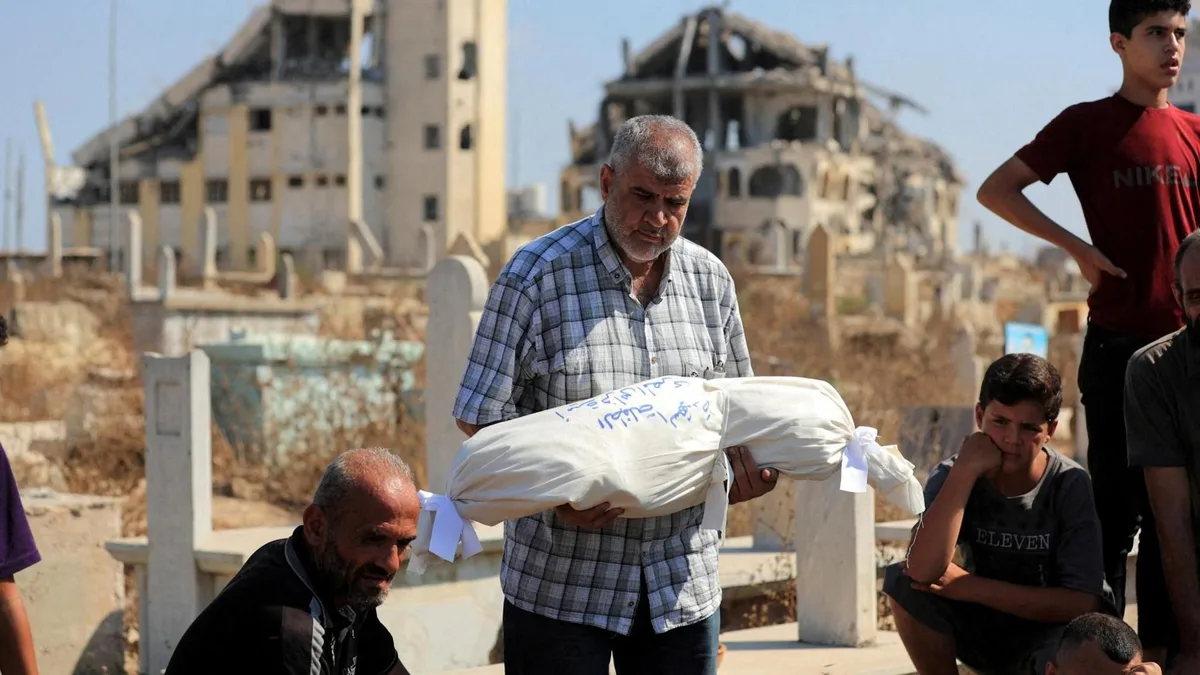
The agreement includes mediation and monitoring by Egypt, Qatar, and Turkey [2, 3, 4, 5, 9, 10, 6, 12, 7]. It is designed with a "zero-trust" principle involving independent verification at each stage, so either side can halt progress if conditions are not met [6]. Despite the ceasefire and ongoing talks, violence has persisted. On July 30, Israeli airstrikes killed at least six Palestinians, including children [2, 3, 5, 6, 7].
The timetable for disarmament is uncertain. Estimates range from 200 to 320 days, though US officials have downplayed the certainty of such timelines [12]. Hamas views the National Committee for the Administration of Gaza (NCAG) as responsible for overseeing disarmament without Israeli involvement [9, 11, 12].
A meeting of Gaza ceasefire mediators is scheduled soon in Cairo to discuss the second phase of implementing the peace plan [10, 6].