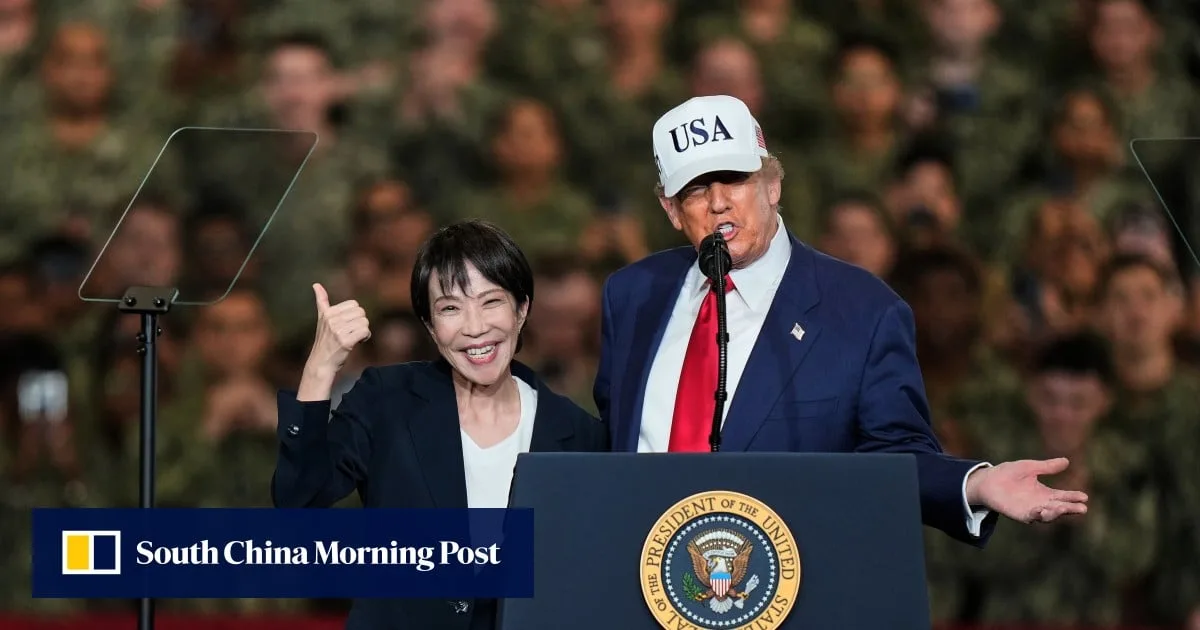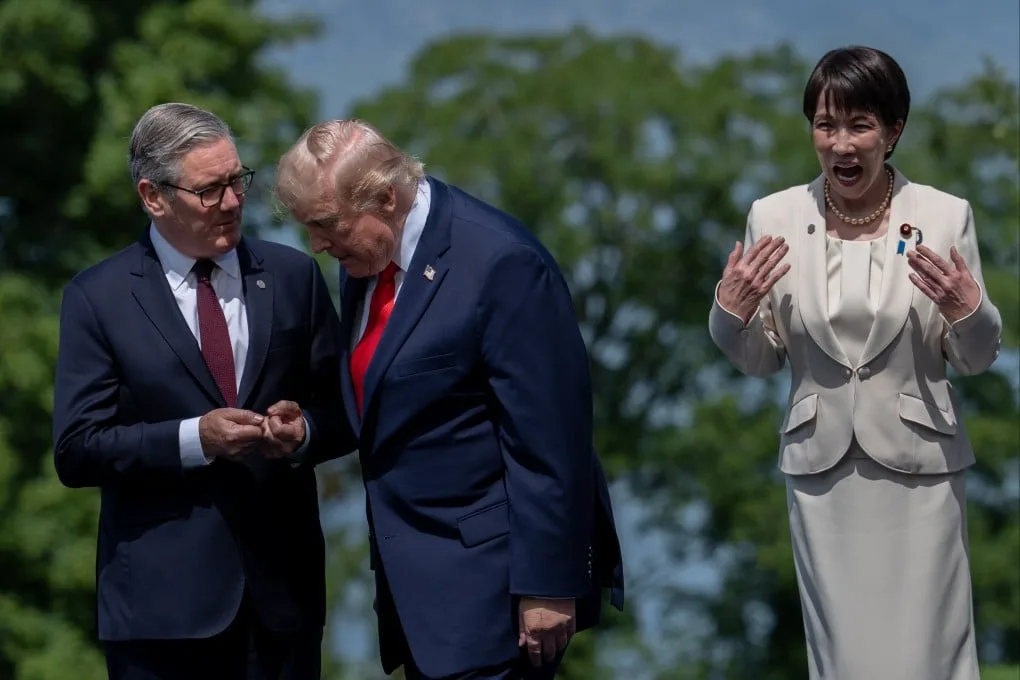
US President Donald Trump on June 17 called Japanese Prime Minister Sanae Takaichi his "biggest fan" among world leaders during a press conference at the G7 summit [1]. He said, "I have to tell you, she thinks I did a great job. You have to call her and ask her. She’s doing a very good job, by the way." Trump praised Japan's leadership under Takaichi, stating Japan was "doing very well" [1, 2].
Trump noted that Takaichi refrained from criticizing him over the ongoing Iran conflict, unlike other G7 members. He said Takaichi did not voice criticism over the Iran war and other issues [1]. He also said Japan offered to get involved in the Iran situation but was not willing to get involved directly during the war. "Actually, Japan has offered to get involved, but I mean, I’ll be honest, Japan was not willing to get involved during the war," Trump said [1, 2].
In March 2026, Takaichi met Trump at the White House and called him "the only person who can bring peace and prosperity across the world" [1].
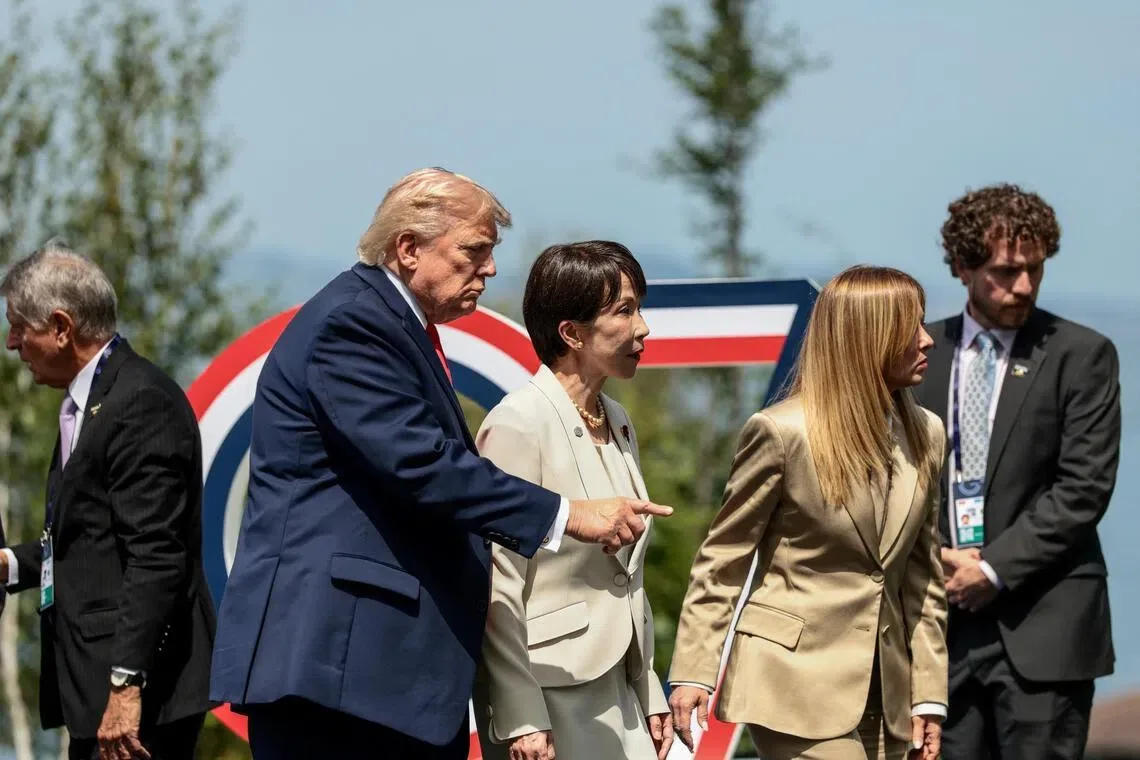
The Iran conflict had escalated after US and Israeli airstrikes on Iran in late February 2026 led to the effective closure of the strategic Strait of Hormuz, a critical route for global oil shipments [1, 2]. Just ahead of the June 2026 G7 summit, the US and Iran reached a preliminary peace deal that included a 60-day ceasefire extension and agreements to reopen the Strait of Hormuz [1, 2]. The G7, which includes Canada, France, Germany, Italy, Japan, the United Kingdom, and the United States along with EU representation, met as these developments unfolded [2].
Trump said the US no longer necessarily needed support from other countries over the Iran situation, although it was disappointing others did not act sooner [1].
The ceasefire extension and reopening of the Strait of Hormuz remain central to the tentative calm reached between Washington and Tehran as tensions remain fragile ahead of future talks.