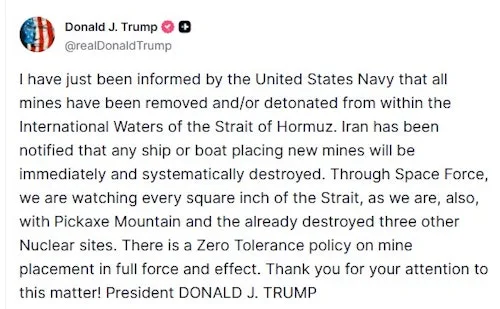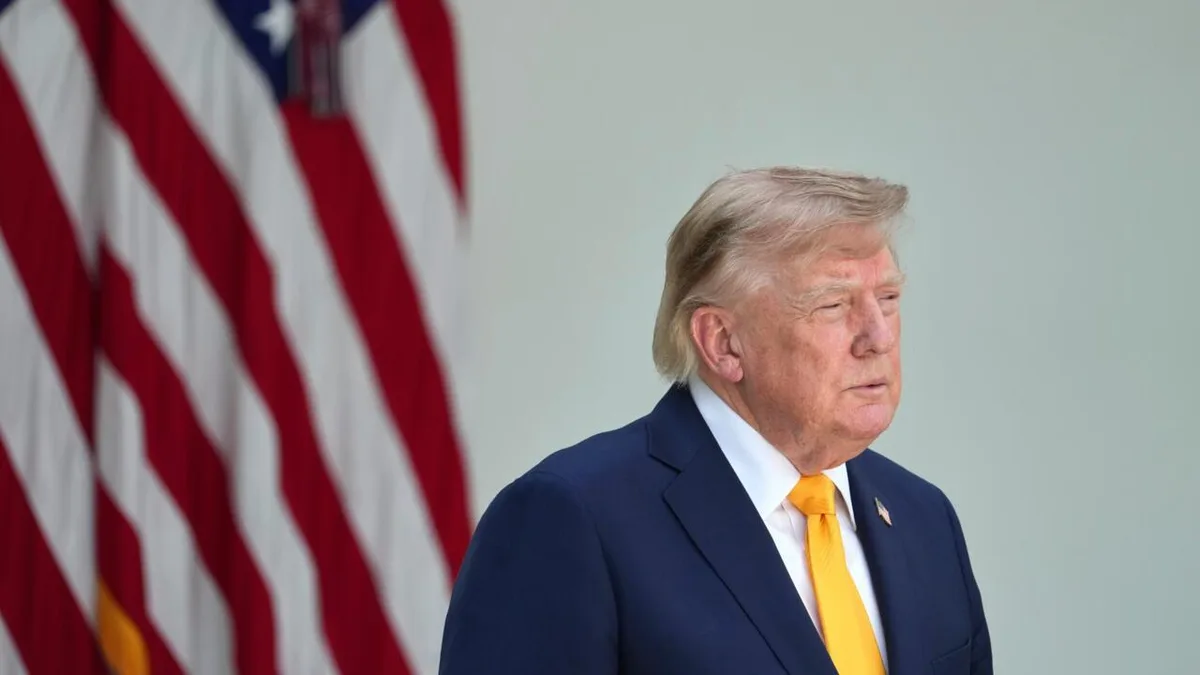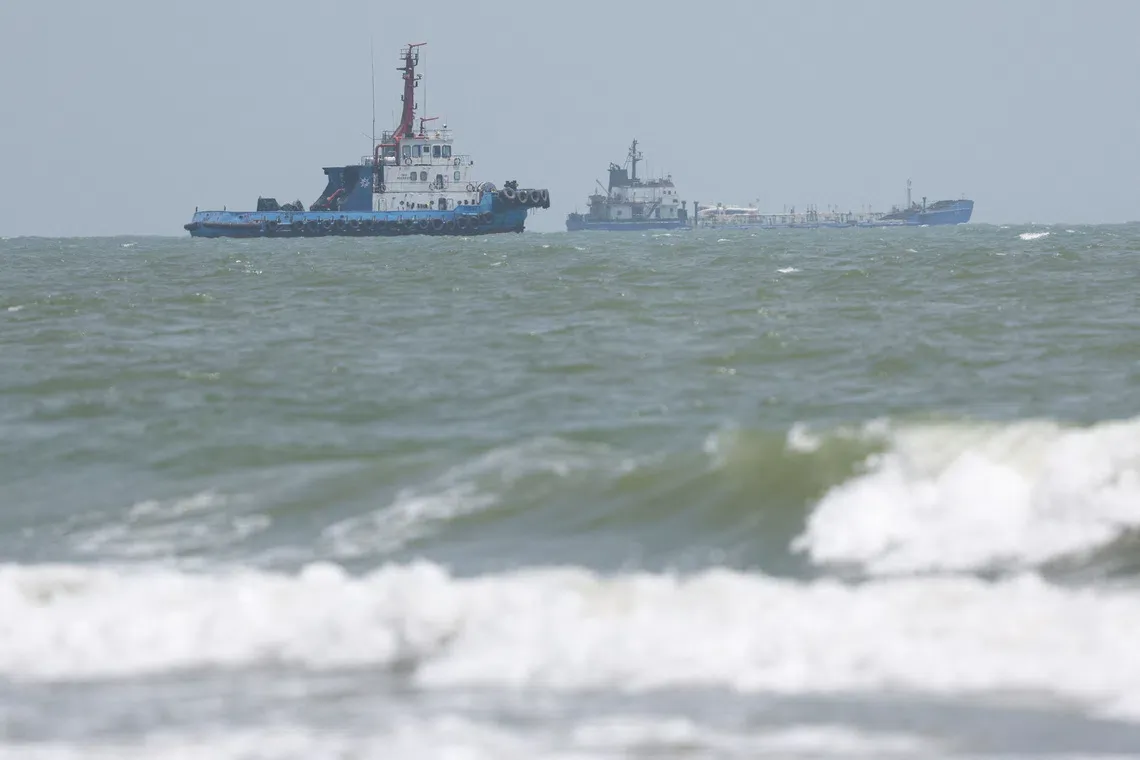
U.S. President Donald Trump announced on August 25, 2026, that all mines have been removed or detonated in the international waters of the Strait of Hormuz. He stated, "I have just been informed by the United States Navy that all mines have been removed and/or detonated from within the International Waters of the Strait of Hormuz" [1]. Trump warned Iran that any new mines placed would be met with immediate and systematic destruction under a "Zero Tolerance policy on mine placement," reinforcing that "Iran has been notified that any ship or boat placing new mines will be immediately and systematically destroyed" [2, 3].
Trump added that the U.S. Space Force is closely monitoring the area, saying, "The United States, through its Space Force, is watching every square inch of the Strait of Hormuz" [2]. The mine clearing was the result of a months-long covert U.S. Navy operation using underwater drones and private contractors to locate and neutralize more than 100 suspected mines in the Strait, a vital chokepoint for global oil shipments [1].
On August 24, oil transit through the Strait was around 5 million barrels per day, down sharply from over 20 million barrels per day before the war began [2]. Over the previous 30 days, more than 500 ships passed through the southern channel near Oman, though about 2% were hit by Iranian drones or missiles during transit [1]. The clearance of mines now allows two-way simultaneous traffic escorted by U.S. Air Force protection, raising the potential for increased oil exports through the Strait [1].
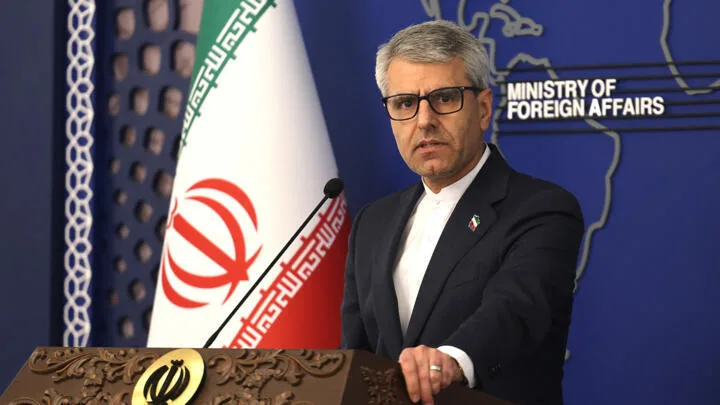
The announcement coincides with ongoing diplomatic talks between Iran and Oman foreign ministers held in Tehran to negotiate a draft agreement related to the Strait of Hormuz [1]. Some Iranians in Tehran expressed concern over expanded U.S. sanctions announced at the same time. Mehdi Yazdian remarked, "Naturally, sanctions affect people's lives. People are being hurt, both those who are financially well-off and those who are financially weak" [4].