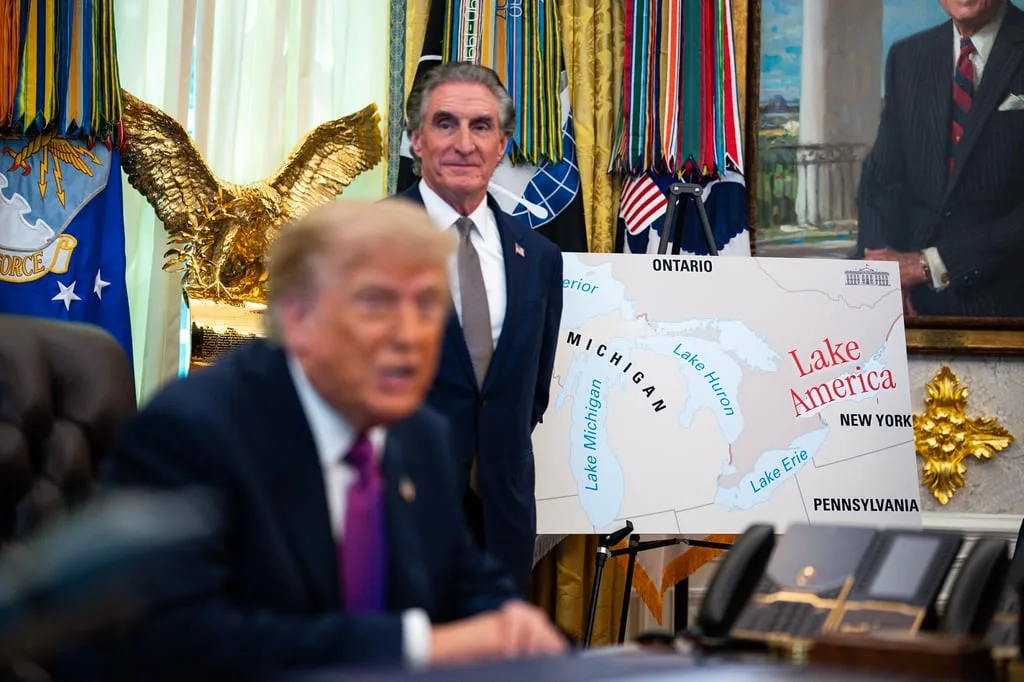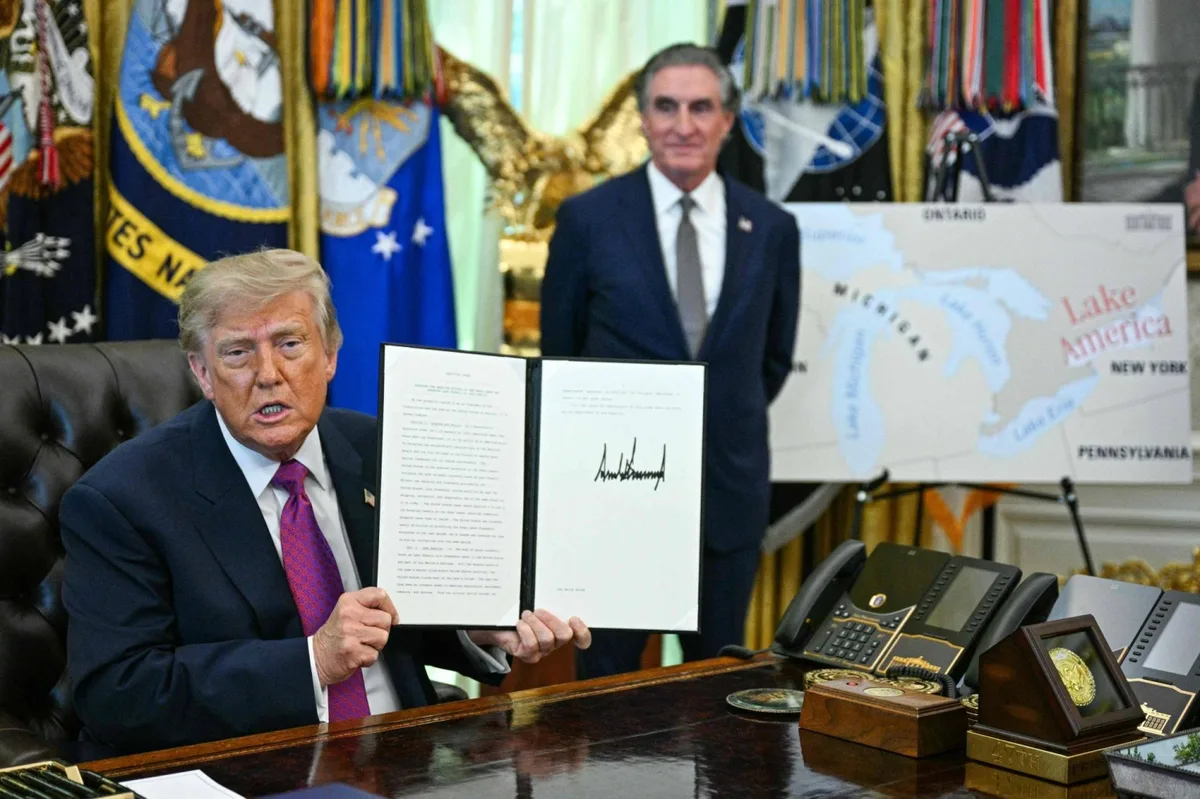
President Donald Trump intensified diversion tactics ahead of the November 2026 US midterm elections by announcing an order to rename Lake Ontario as "Lake America" and raising the prospect of talks with North Korean leader Kim Jong Un for the first time since January 2025 [1].
Trump called reporters to the Oval Office by August 27 or earlier to unveil the controversial Lake Ontario renaming [1]. About a week earlier, he publicly broached potential diplomatic engagement with Kim Jong Un, a significant departure from his previous silence on North Korea [1].
These distractions come as Trump's approval ratings remain stuck in the low 30s amid a six-month Iran war that is dragging down his support [2, 1]. Political analysts like William Galston of the Brookings Institution assert, "This president specializes in diversions," highlighting how Trump aims to shift public focus away from the ongoing conflict and a challenged economy [2, 1].
The White House strategy reportedly involves limiting escalation of the Iran war while quietly advancing less headline-grabbing economic policies to avoid spotlighting economic troubles [2, 1]. Trump's efforts have included praising Kim Jong Un publicly, contrasting with his criticism of US ally South Korea and reducing joint military drills with Seoul [1].
Democrats have criticized Trump's antics sharply. Senate Minority Leader Chuck Schumer called the Lake Ontario renaming "a pathetic attempt at distraction, and it's working families who are paying the price" [1]. Some Democrats also interpreted Trump's recent posts on routine White House maintenance as out of touch [1].
With the midterm elections under three months away, the Trump administration appears set to continue deploying high-profile but divisive distractions while managing foreign conflicts cautiously and keeping economic measures low profile.