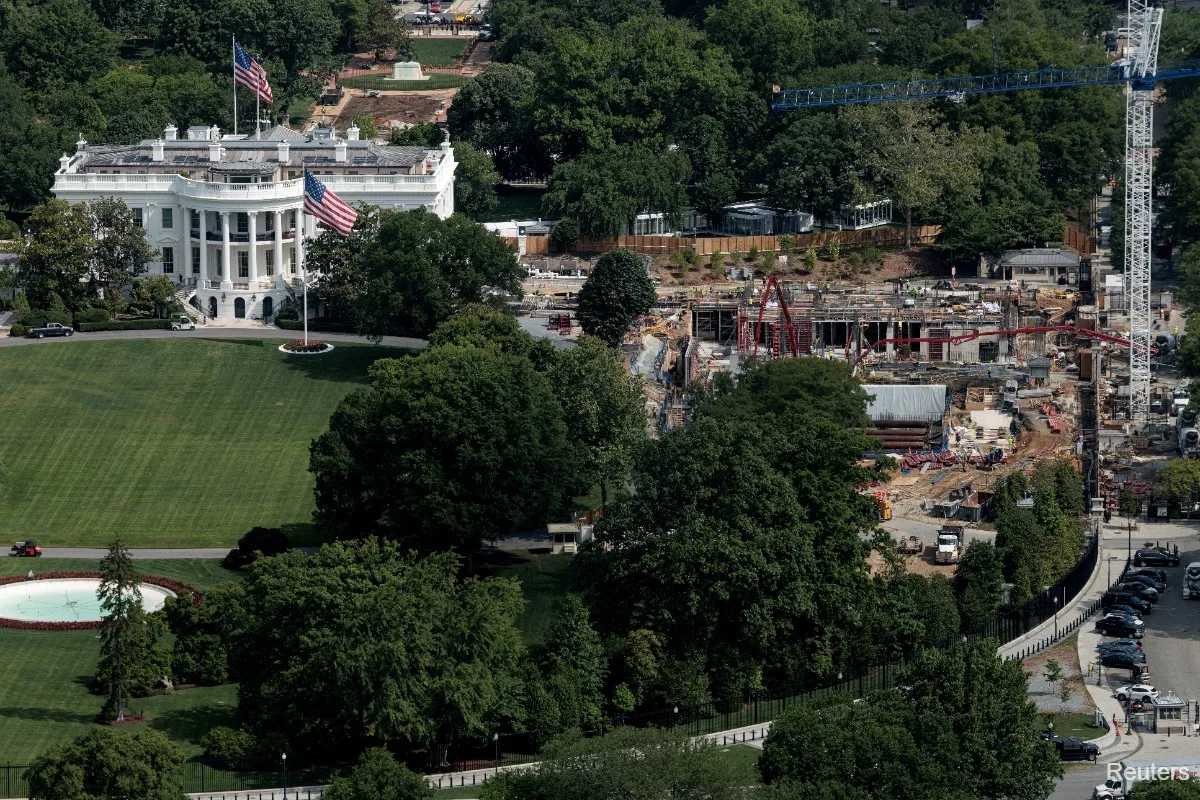
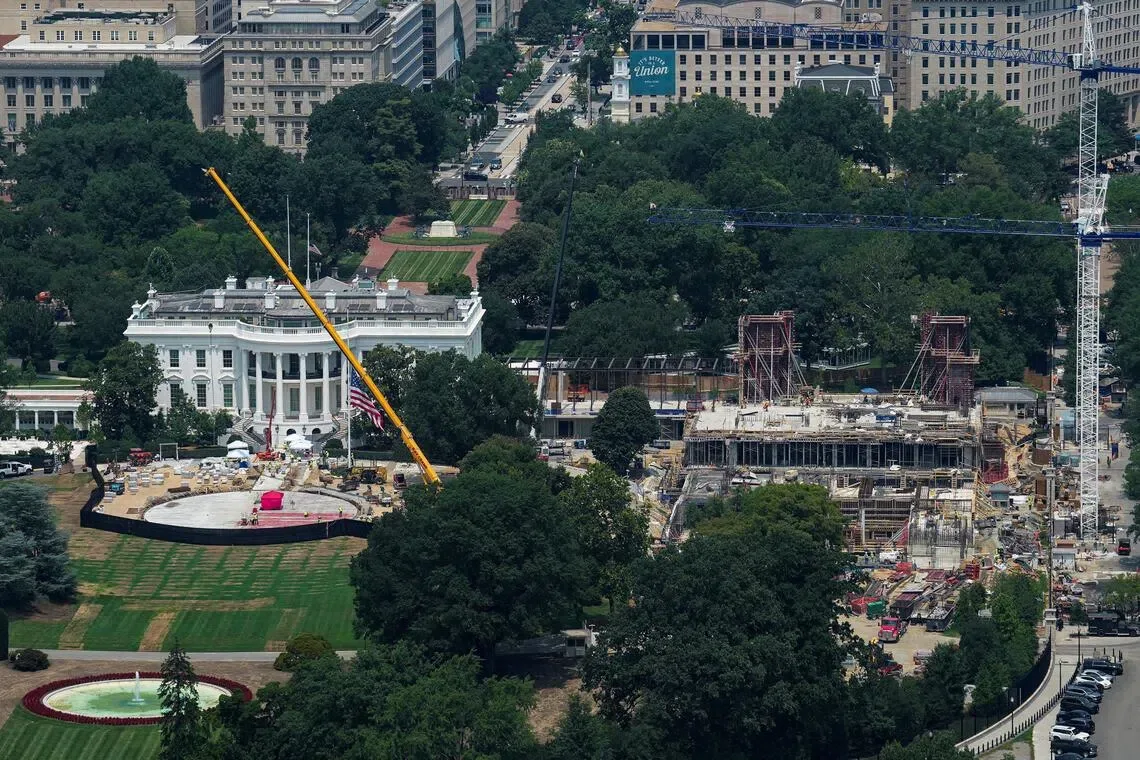
A US federal appeals court ordered President Donald Trump’s administration to stop construction on a $400 million ballroom at the site of the demolished East Wing of the White House on August 7, 2026. The 2-1 decision by the US Court of Appeals for the District of Columbia Circuit upheld a preliminary injunction obtained by the National Trust for Historic Preservation, which sued after construction began without congressional authorization [1, 2, 3, 4, 5, 6].
Trump’s administration demolished the White House’s historic East Wing in 2025 to start the project without seeking approval from Congress, triggering legal challenges. The project plans include a 90,000-square-foot ballroom along with underground facilities that may contain a military bunker [2, 3, 6].
The court majority wrote that building such a large structure requires explicit congressional permission. "Whether a massive ballroom should be constructed is for Congress to decide and is not a matter for Executive self-help," the ruling declared. It noted the White House is "the People’s House" and "Each President is a temporary tenant, not the owner...The President has no— and claims no—constitutionally assigned authority over that property," emphasizing the limits of presidential power to reshape the residence [3, 5].
US District Judge Richard Leon had previously blocked above-ground work but allowed underground construction to continue, though the appeals court has now extended the block on above-ground building [1, 3].
The ruling was stayed for 14 days, allowing the Trump administration to appeal to the US Supreme Court [1, 2, 4]. Trump called the decision "horrendous, politically motivated, and unlawful" and vowed an immediate Supreme Court appeal. He defended the project as necessary for national security and safety, pointing to the underground bunker, and said it is privately financed as a gift to the US without taxpayer cost — a claim that some reports dispute with cost estimates as high as $600 million [2, 6].
Two of the appeals court judges were appointed by Democratic presidents, while the dissenting judge was appointed by Trump [2, 6].
On June 5, 2026, before the ruling, a Justice Department attorney argued that courts should not block the privately funded ballroom construction [1]. The appeals court’s decision halts above-ground work indefinitely pending further legal review.
The Trump administration has 14 days from the ruling to file an appeal with the Supreme Court to challenge the injunction and resume construction [1, 2, 5].