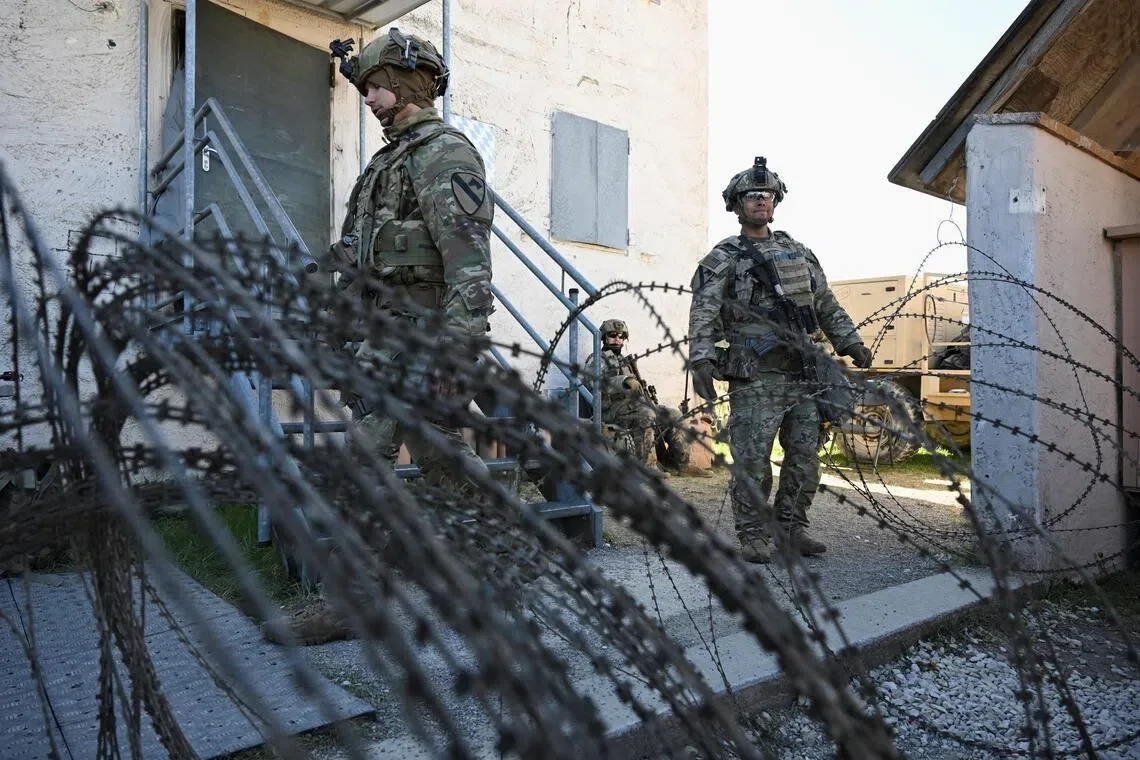
The United States began a review of its military force posture in Europe on July 27, 2026, with the goal of speeding up NATO allies’ assumption of primary responsibility for conventional defense on the continent [1, 2]. US Defense Secretary Pete Hegseth had announced the planned review to NATO defense ministers in June 2026 [1, 3, 4, 2, 5].
US Defense Under Secretary Elbridge Colby explained publicly that "this will be a real review, designed to ensure that NATO is moving fast and irreversibly toward Europe taking primary responsibility for its conventional defense," adding that "the outcome of this Review will be an acceleration of NATO’s transition to a stronger, more equitable, and sustainable alliance" [1, 2]. Colby stated this on the social media platform X, emphasizing the urgency of the transition [1, 6, 3, 4, 2, 5].
The Pentagon has informed NATO allies it is reducing the number of US military assets globally available for NATO operations as part of the process [1, 6, 3, 4, 5]. This move responds in part to criticism from US President Donald Trump, who has repeatedly faulted European allies for their response to the war in Iran, including their refusal to allow US forces use of European bases at the conflict’s start [1, 3, 4, 5]. Secretary Hegseth has also threatened to reduce US spending on NATO unless allies meet defense spending targets [1, 3, 4, 5].
The review will reassess the US military presence in Europe with the goal of aligning it with the 2025 National Security Strategy and the 2026 National Defense Strategy [2]. It is expected to produce a range of strategic options reflecting current geopolitical and military conditions. The process will include consultations with NATO commanders, European allies, members of the US Congress, and various government agencies [2].
Multiple news agencies reported on July 28 about Colby’s statements and the objectives of the review, bringing wider public attention to the initiative [3, 4, 5]. The review marks a clear US push to rebalance defense responsibility onto NATO allies in Europe while reevaluating America’s troop presence and resources on the continent.