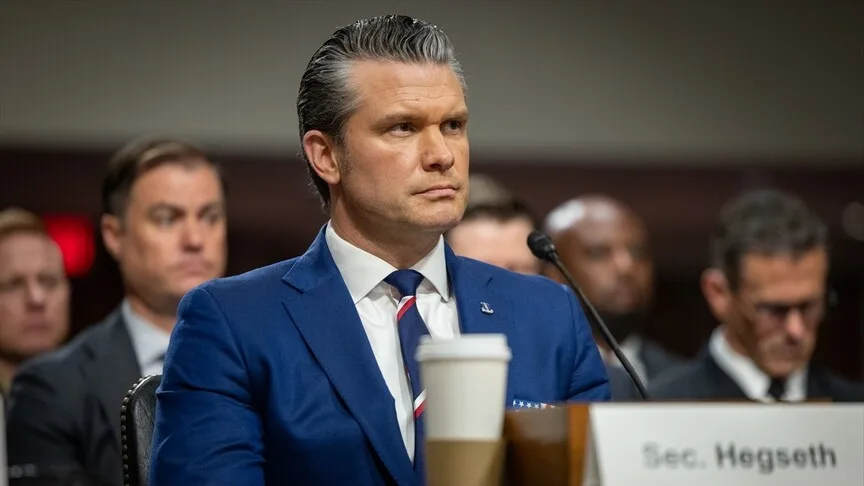
US Secretary of Defense Pete Hegseth declared on May 30, 2026, at the 23rd Shangri-La Dialogue conference in Singapore that the United States will no longer subsidize defense costs for wealthy allied nations [1, 2]. "The era of the United States subsidizing the defense of wealthy nations is over. We need partners, not protectorates," Hegseth said [2]. He warned, "You don’t have a strong alliance unless everyone has skin in the game" [2].
Hegseth called on US allies to assume greater responsibility for their security, emphasizing that the US now seeks partners who share defense burdens rather than protectorates dependent on American subsidies [1, 2]. He specifically named Japan, South Korea, Australia, the Philippines, Malaysia, Indonesia, India, Singapore, Thailand, and Vietnam as countries that have increased or are in the process of increasing their defense spending and collaboration [1, 2].
The US plans to deepen industrial cooperation, accelerate weapons sales, and expand intelligence sharing with allies willing to step up their contributions [1]. Those refusing to increase defense commitments face changes in their relationship with the US [1, 2].
Hegseth also referenced former President Donald Trump’s insistence that all alliance members contribute meaningfully to shared defense efforts [2]. He underscored that the days of some countries continuing to benefit from US taxpayers’ generosity without adequate contribution are over, stating in Mandarin, "对于那些认为自己可以继续免费享用美国纳税人慷慨付出的人,现在听好了,这样的日子已经结束" (For those who think they can keep freeloading on US taxpayers, listen up, those days are over) [1].
The speech marks a decisive shift in US defense policy toward expecting financial and operational parity with wealthy allies. The next US step is to adjust bilateral ties with countries based on their willingness to increase defense spending and cooperation.