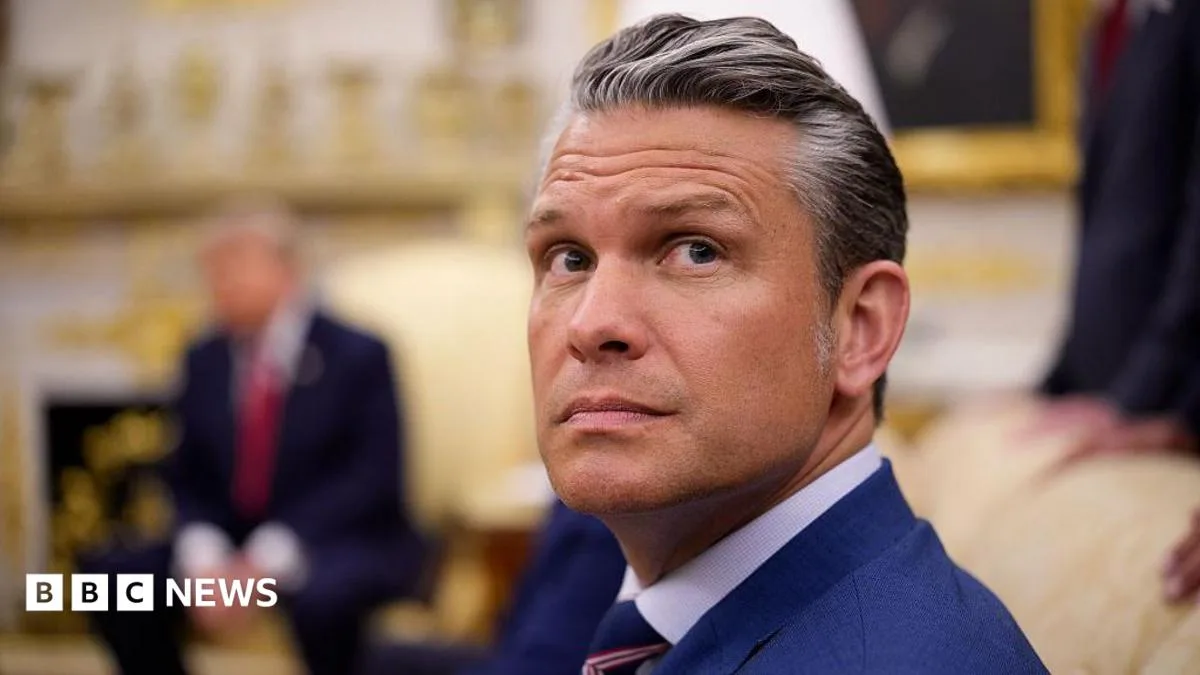
US Defense Secretary Pete Hegseth announced on July 15, 2026, that all active-duty and reserve military personnel aged 30 and above will undergo mandatory annual screening for testosterone deficiency as part of their health assessments [1, 2, 3]. Service members under 30 may participate voluntarily in the testing program [1, 2, 3].
Hegseth said the program aims at "restoring and optimizing natural capabilities," protecting longevity, and sustaining fighting capacity rather than providing artificial enhancement. He stated, "I’m authorizing a new screening program for testosterone deficiency for our service members, ensuring you have the right testosterone levels to operate at your absolute best," and clarified it’s about "ensuring you have the biological foundation required to sustain the fight" [2, 3].
Those diagnosed with low testosterone will be offered voluntary testosterone replacement therapy (TRT) [1, 2, 3]. The US Food and Drug Administration is currently reviewing whether to ease restrictions on testosterone prescriptions for older men, a consideration linked to the military’s policy [4, 5, 6].
The Pentagon declined to specify if female service members are included, with Hegseth referring to "warfighters" and "warriors" without gender detail. Some reports interpret the program as primarily targeting male soldiers [3, 7, 4, 5, 6].
Medical experts express mixed views. Dr Mohit Khera said, "many young men have low testosterone levels, which puts them at a disadvantage in terms of muscle mass, energy, and that could be an issue if you are in combat," but cautioned against prescribing testosterone without clear symptoms [1]. Dr Kevin McVary noted, "We hear from patients that when you treat low T, things like cognitive alertness and stamina improve," though he added the evidence is not conclusive and mainly comes from symptomatic patients [8].
The policy has sparked political debate linked to broader cultural conflicts. Representative Chrissy Houlahan said it "proves that Secretary Hegseth takes direction from the far corners of the manosphere," while Senator Tammy Duckworth commented, "The announcement sounded like gender-affirming care to me" [9].
The screening took effect following Hegseth’s announcement via a video posted on social media platform X on July 15, 2026 [1, 2, 3]. There is no further timeline specified for changes or evaluations.