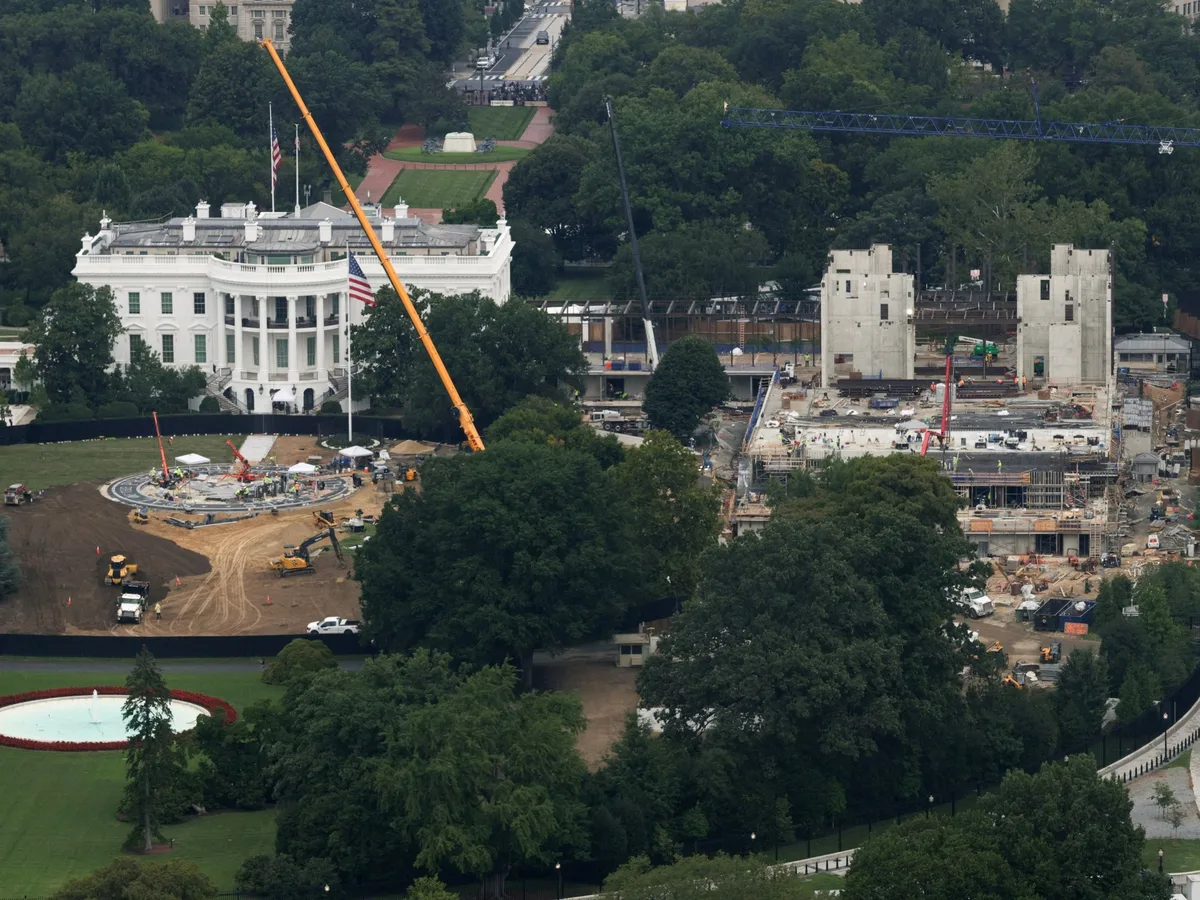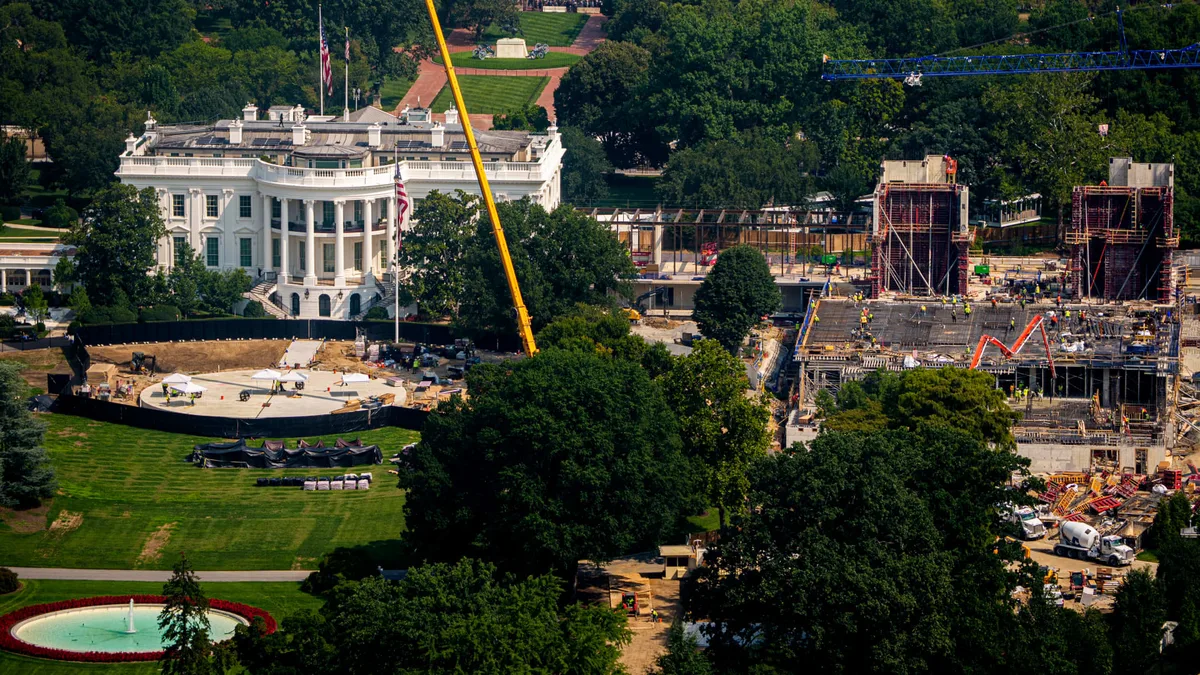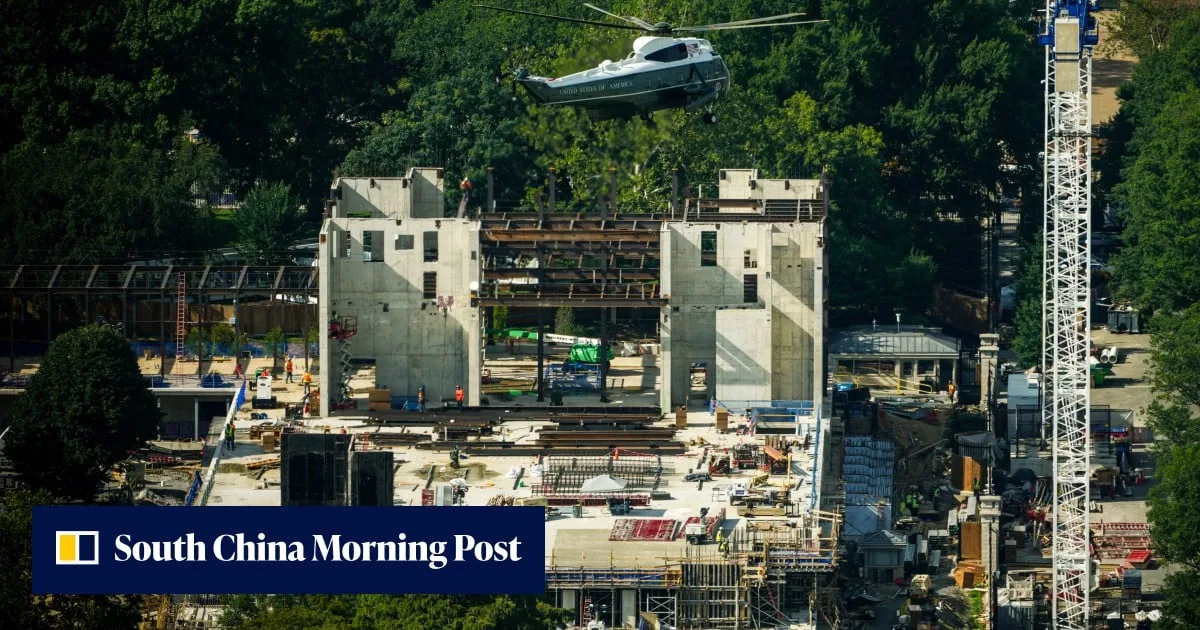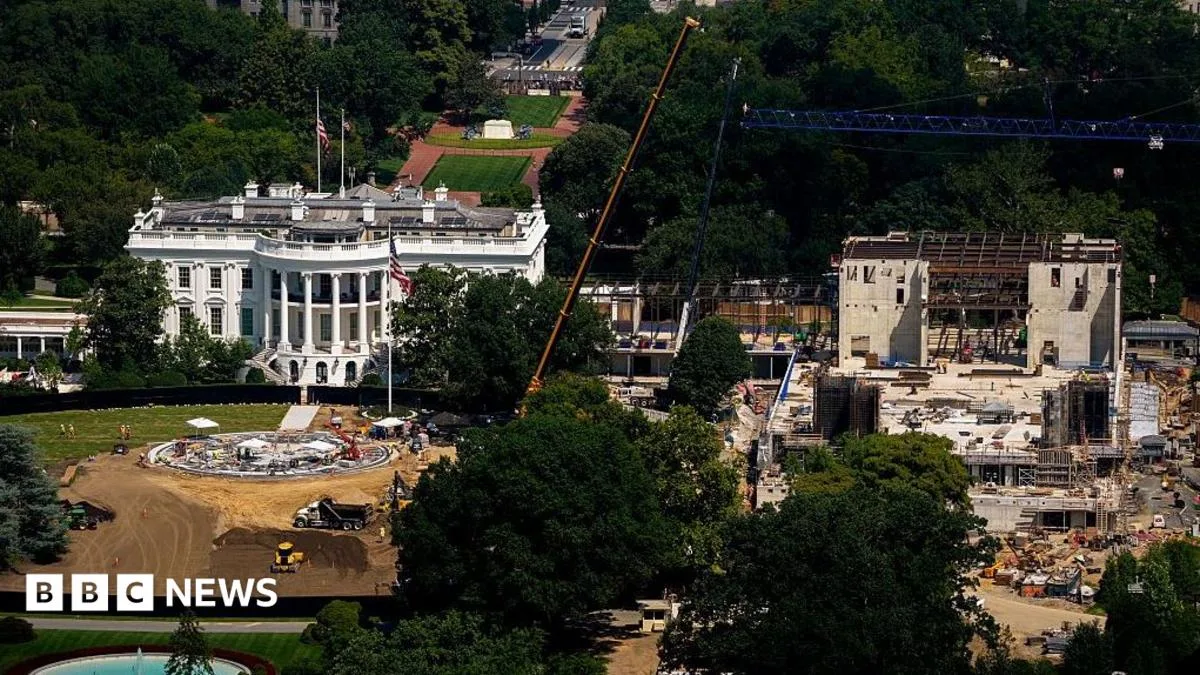
The US Supreme Court ruled 5-4 on August 31, 2026, allowing construction of a $400 million White House ballroom to continue, blocking lower court orders that sought to halt above-ground work on the project [1, 2, 3, 4, 5, 6, 7, 8, 9]. The project includes a large ballroom and a military complex located in the former East Wing of the White House [1, 3, 7, 9]. The ballroom is planned to cover about 90,000 square feet [3, 7, 8].
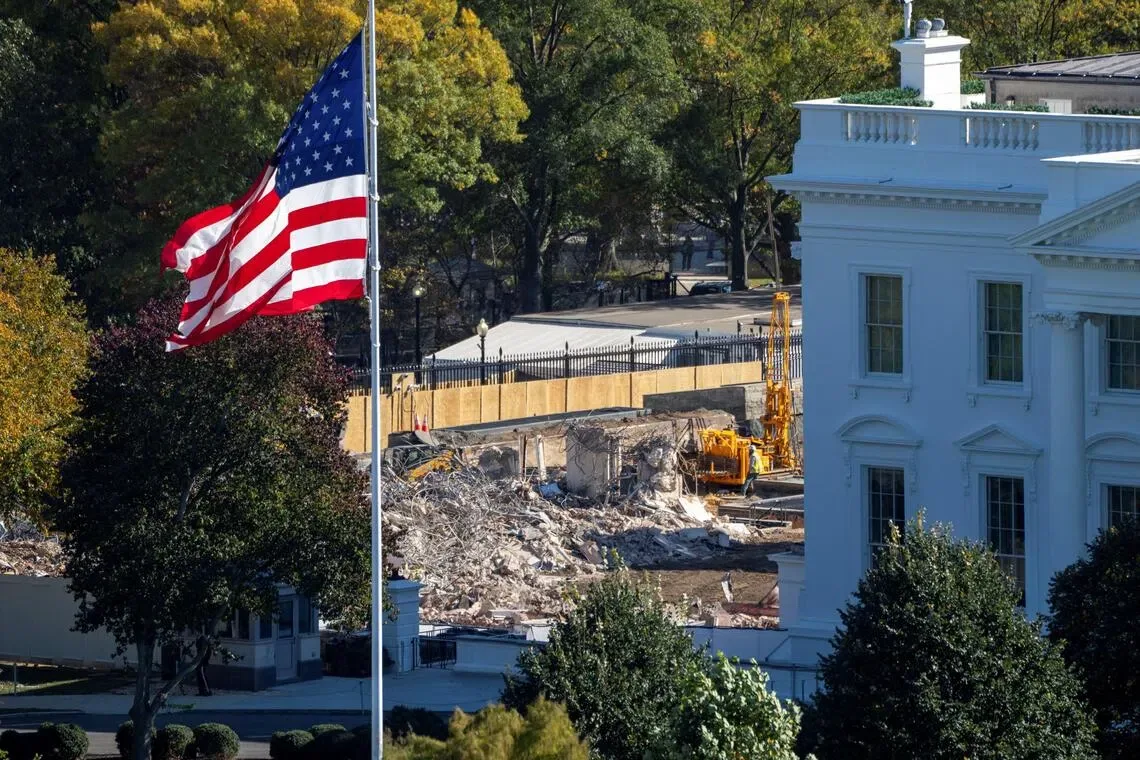
The Trump administration began construction in 2025 after demolishing the historic East Wing without congressional approval [1, 3, 4, 6, 7, 8]. Trump has described the project as a "gift" to the American people and hailed the ruling as a major victory, saying the complex is "under budget and ahead of schedule" [2, 3, 4, 10, 11, 8, 9]. The administration also cited national security reasons for the project, including an underground bunker, and warned that halting work would cause irreparable harm [3, 6, 7, 9].
The National Trust for Historic Preservation sued to block the project, arguing Trump lacked unilateral authority and that congressional approval was required [1, 3, 4, 6, 7, 8, 9]. The Supreme Court majority held that the plaintiff likely lacks legal standing to sue, allowing construction to continue while the lawsuit proceeds in lower courts [3, 5, 6, 7, 9]. The Court did not resolve the project's ultimate legality [1, 2, 6, 7, 8, 9].
Chief Justice John Roberts dissented alongside the three liberal justices, calling the construction "likely unlawful" for proceeding without express congressional authorization. He said, "The ballroom is a building or structure being erected on federal park grounds – President’s Park – in the District of Columbia. Yet Congress has not passed any law resembling ‘express authority’ for the Executive’s construction of it" [1, 2, 3, 4, 5, 6, 7, 8, 9]. Roberts added, "Today’s decision is no victory for the separation of powers" [6].
As of August 24, 2026, construction was reported about 65% complete, with 250 workers operating up to 20 hours daily [9]. While the project cost is widely reported at roughly $400 million funded privately by corporations and patriots, some sources dispute the private funding claim and estimate costs as high as $600 million [1, 3, 7, 9].
The lawsuit will return to lower courts to proceed while construction continues. The ballroom and military complex are expected to be completed by mid or summer 2028 [4, 8, 9].