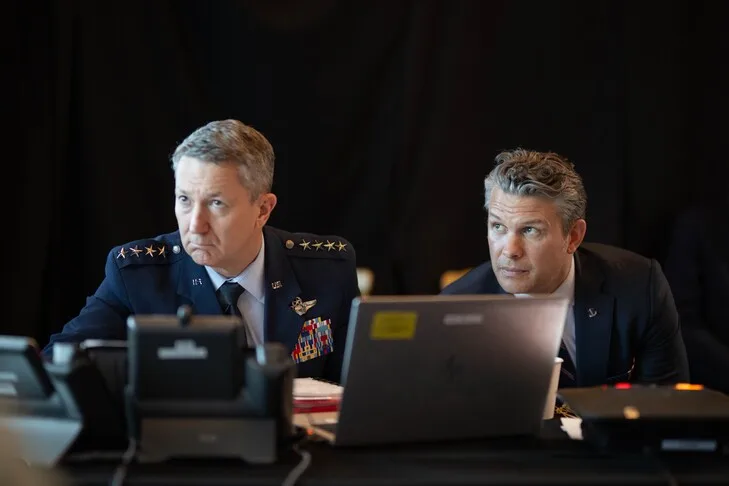
US Defense Secretary Pete Hegseth announced that US forces will carry out military strikes on key facilities in Iran, acting under orders from President Donald Trump. The strikes are scheduled to begin imminently, with initial attacks planned for June 10, 2026, and possible follow-up raids extending into the night after the first wave [1, 2].
Hegseth stated the targets were chosen to improve the operational environment for US military forces and to undermine Tehran's desired military capabilities. "We will hit them hard on our terms on the targets that improve the environment for us to operate in and undermine the capabilities that Iran wants to have," he said [1].
The Defense Secretary described the operations as "strong and clear," emphasizing readiness to continue strikes if necessary. "This building (CENTCOM headquarters) continues to plan, and so those strikes that will happen tonight will be strong and clear, and if they have to happen tomorrow night, they will be strong and clear," Hegseth said [2].
Officials framed the air campaign as a tactic to increase pressure on Iran following unsuccessful diplomatic negotiations. Hegseth echoed President Trump’s warning to Tehran, saying, "So as President Trump said, they've been tap tap tapping. You can see when someone's trying to tap tap tap on a deal, instead they're going to have tap tap tap bombs dropping on key facilities in Iran from the United States of America."
He added, "If we need to negotiate with bombs, we'll negotiate with bombs, and we're very good at it," underscoring the administration’s stance on achieving concessions through military means if diplomacy fails [1, 2].
The US military’s operations aim to disrupt Iran’s military infrastructure and reduce threats to US personnel and interests in the region. The Pentagon has not disclosed the specific targets but indicated they relate to Iran’s operational capabilities.
Hegseth’s announcement came on June 10, followed by a press briefing on June 11 reaffirming that the strikes would be decisive and could extend beyond the initial attack window [1, 2].