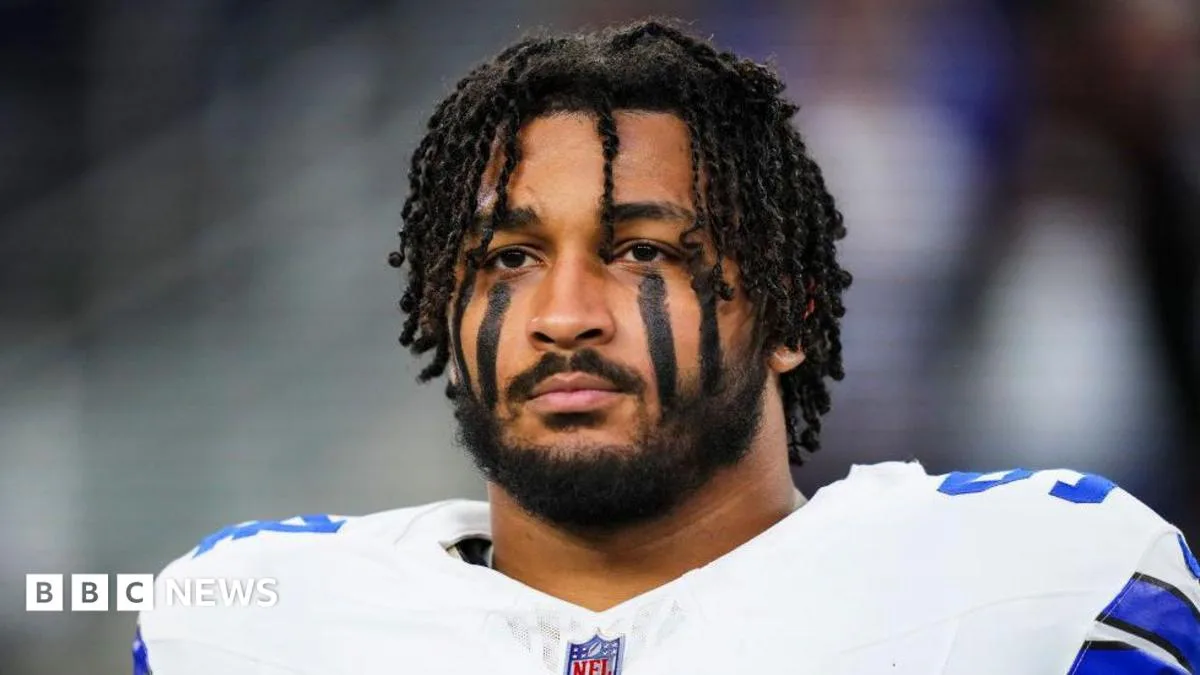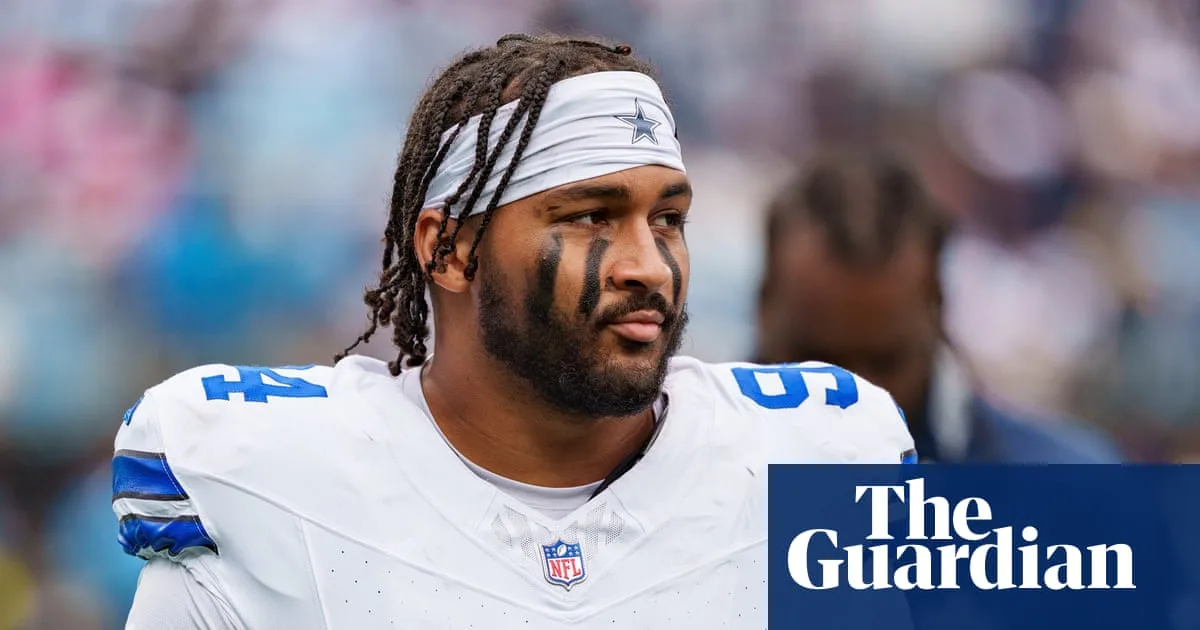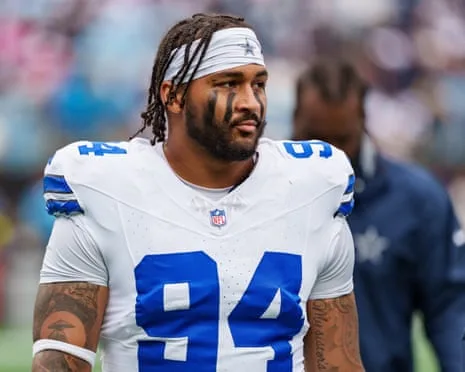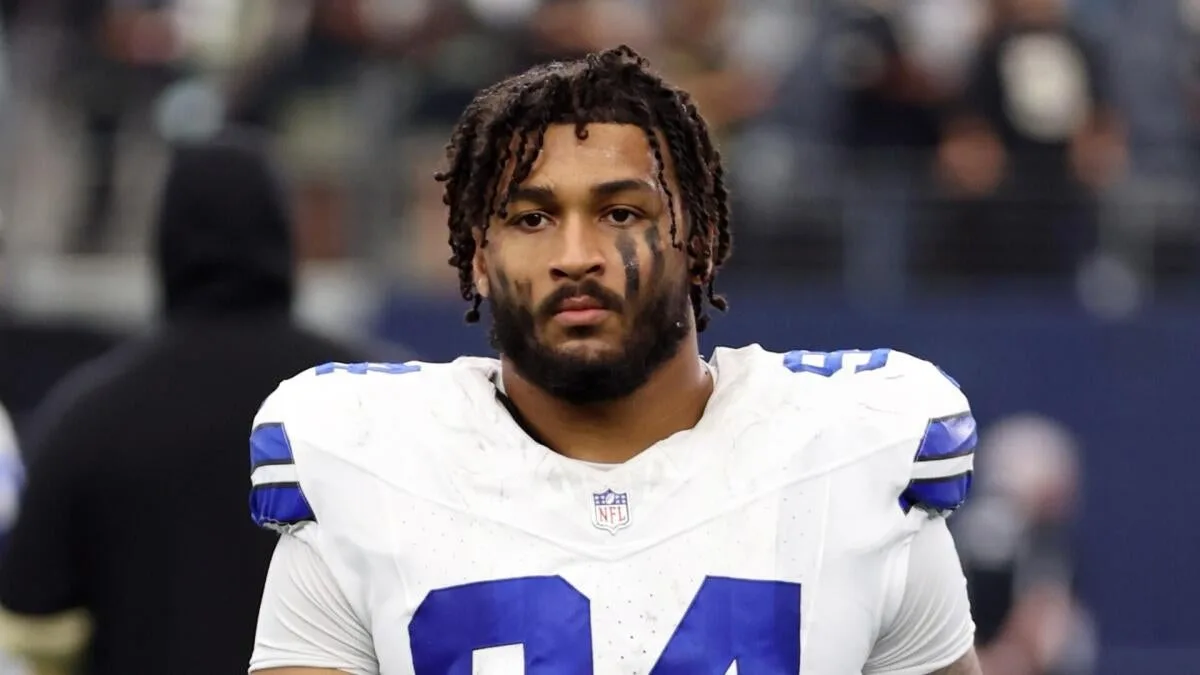
Marshawn Kneeland, a 24-year-old former defensive end for the Dallas Cowboys, died by suicide in November 2025 after a police chase in Texas, officials said [1, 2, 3, 4]. Kneeland failed to stop for Texas Department of Public Safety troopers, leading to the chase. His crashed vehicle was found before authorities located him with a self-inflicted gunshot wound [1, 2, 3, 4]. During the search, a dispatcher reported that people close to Kneeland had received a group text from him saying goodbye, suggesting possible suicidal intent [2, 3].
Postmortem brain analysis by Boston University's CTE Center confirmed Kneeland had stage 1 chronic traumatic encephalopathy (CTE), the earliest and mildest stage of the disease [1, 2, 3, 4]. CTE is a progressive brain condition caused by repeated head impacts and currently can only be diagnosed after death. It is linked to symptoms such as headaches, loss of concentration, depression, aggression, and suicidal tendencies [1, 2, 3, 4]. Dr. Ann McKee, director of the BU CTE Center, said, "Unfortunately, I was not surprised to find CTE in the brain of Mr Kneeland, because we have found this progressive brain disease in nearly half of the athletes we've studied who have died before the age of 30" [1].
Kneeland began playing tackle football at age 7 and played college football at Western Michigan University before being drafted by the Dallas Cowboys in the second round in 2024 [1, 2, 3]. He played 18 games for the Cowboys, including 4 as a starter [1]. Despite modern concussion protocols and improved helmets, Kneeland's diagnosis shows current safety measures do not fully prevent CTE, according to experts. Dr. Chris Nowinski, CEO of the Concussion & CTE Foundation, noted, "We have no reason to believe the current generation is at a lower risk of CTE than previous generations. Concussion protocols do not prevent CTE because CTE is caused by repeated head impacts, not just concussions" [3].
Kneeland’s family issued a statement expressing that the diagnosis helps provide context on some of the struggles he may have faced and aims to raise awareness of athletes’ mental health challenges in high-contact sports. They said, "While this diagnosis does not change the tragedy of his passing, it provides important context about some of the struggles he may have been facing. We continue to remember Marshawn with compassion for the person he was, rather than defining him by the final moments of his life. One Love" [2].
On July 7, 2026, Kneeland’s family publicly announced the stage 1 CTE diagnosis following the report from Boston University’s CTE Center [2].