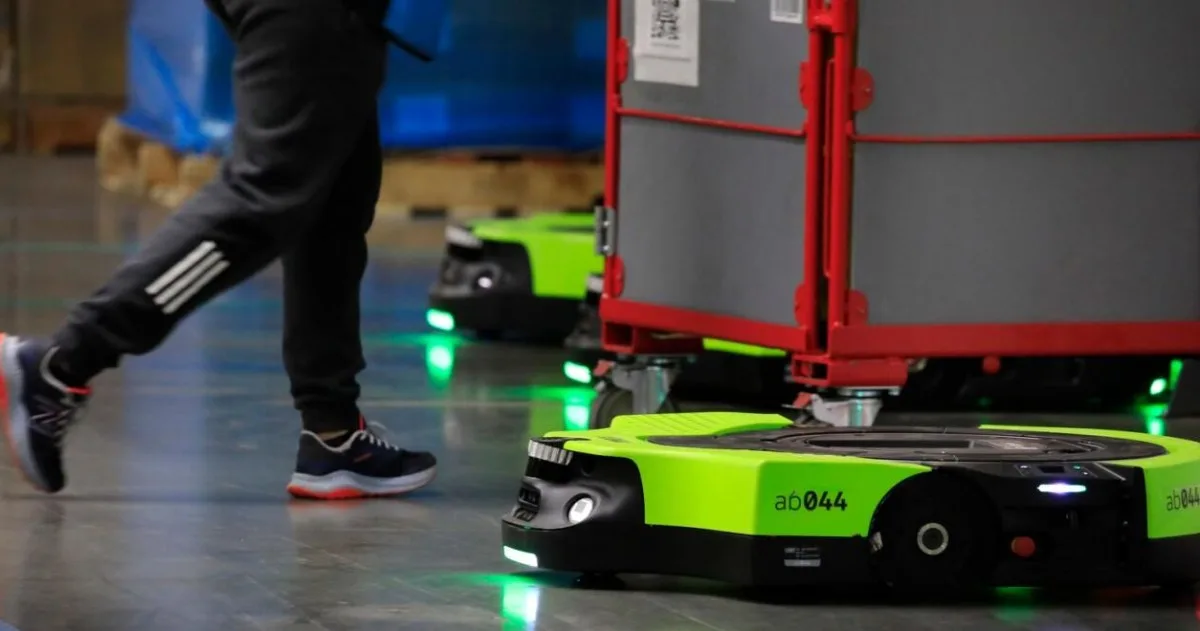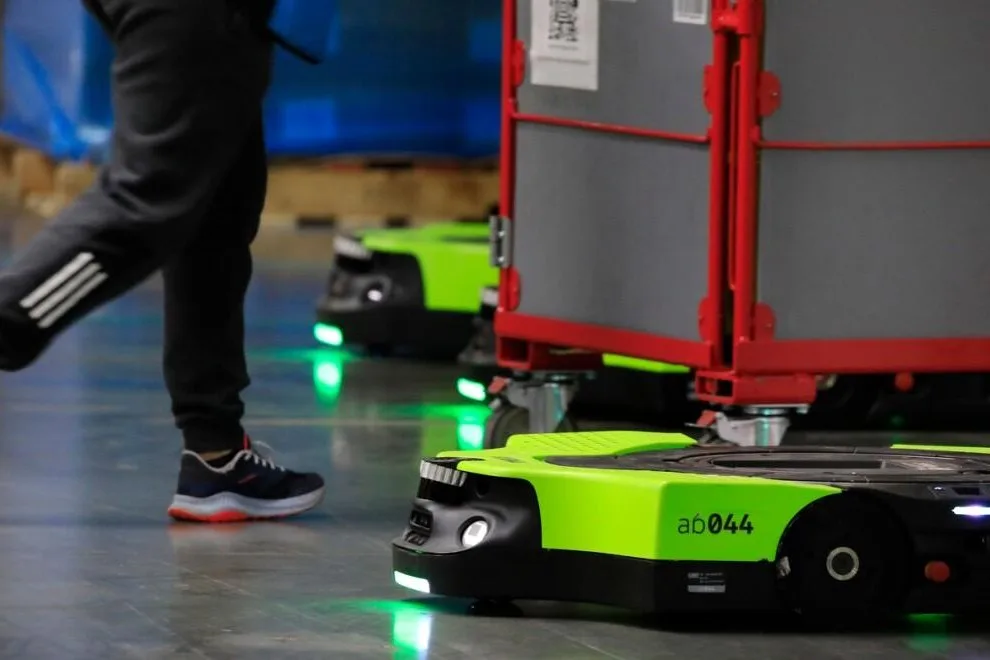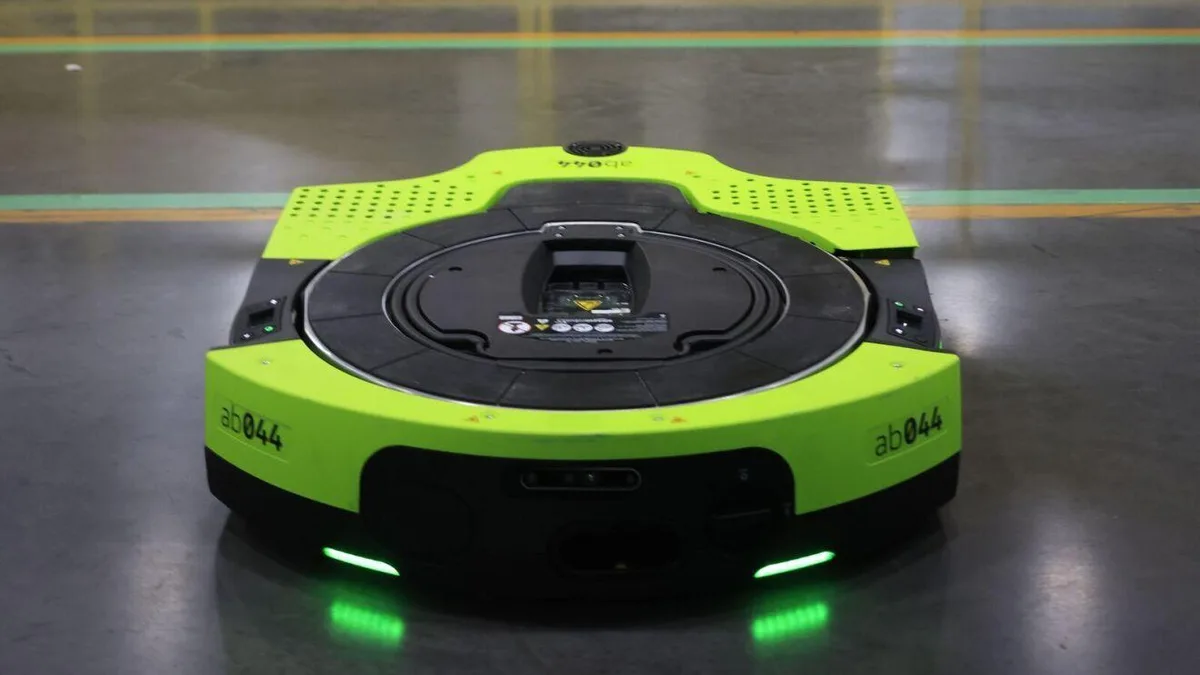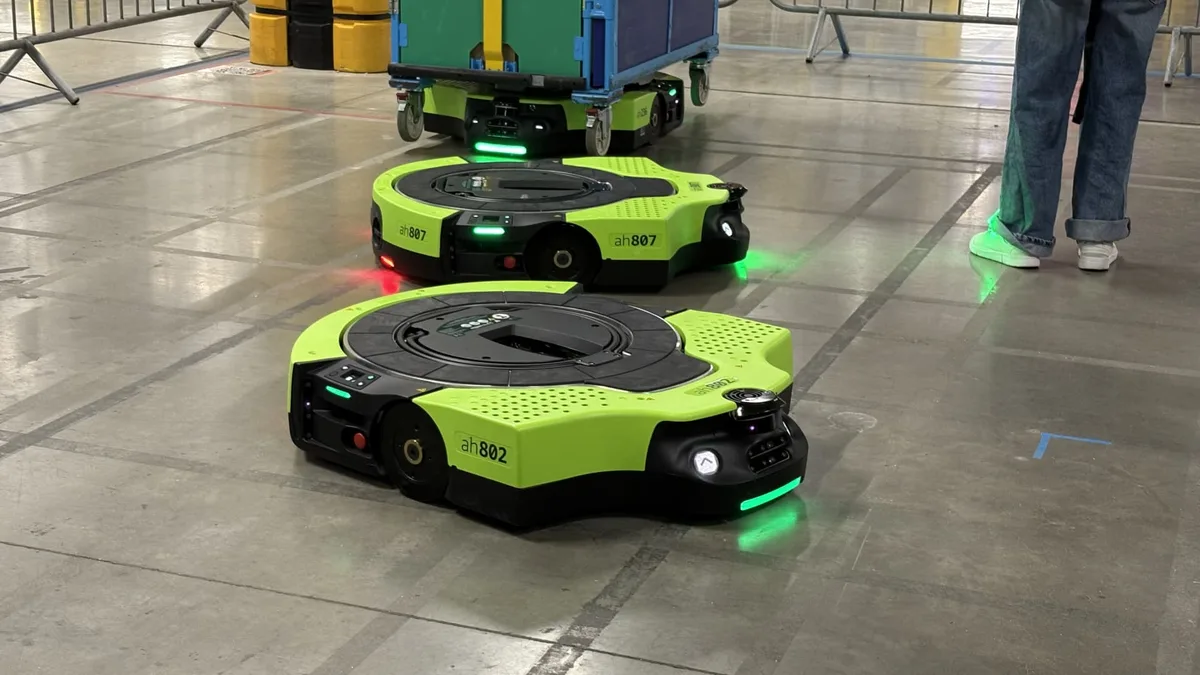
Amazon revealed a new version of its autonomous warehouse robot, Proteus, that can understand and respond to natural language commands from workers. The company announced the update on June 4 at its Delivering the Future event in London and is currently piloting the robot in labs [1, 2].
The advanced Proteus can transport heavy carts and items weighing up to 400 kilograms, working across larger warehouse areas that extend beyond dock zones. Scott Dresser, Amazon Robotics VP, said, "You tell it what needs to be done. It figures out the priority, the route, the timing" [1].
The original Proteus robot was first deployed in 2022 in 25 U.S. fulfillment centers to assist with moving carts weighing up to 400 kilograms [2]. The new model adds more natural language interaction features and expanded operational range.
Amazon plans to roll out the updated Proteus robot in Europe during the first half of 2027 [1, 2]. This deployment is part of a broader 10 billion euro ($11.6 billion) investment to modernize its European fulfillment operations in the coming years [2].
Amazon is also developing other warehouse robotics, including the touch-sensitive Vulcan robot and a robotic tote handling system named STARK piloted in Barcelona [1, 2].
Despite recent investments in robotics, Amazon says its goal is to support warehouse workers and create new jobs. Chief Technologist Tye Brady said, "Since we've invested in robotics, we've created hundreds of thousands of jobs" [2]. However, CEO Andy Jassy warned the company expects its total corporate workforce to shrink over the next few years due to AI and automation, stating, "We will need fewer people doing some of the jobs that are being done today, and more people doing other types of jobs... we expect that this will reduce our total corporate workforce" [2].
Amazon has already cut 14,000 corporate jobs in October 2025 and plans to reduce 16,000 more in January 2026 to reduce bureaucracy and layers of management [2].
The next-generation Proteus is undergoing lab pilots now, with European warehouse deployment scheduled for the first half of 2027 [1, 2].