Apple raised prices for AppleCare+ plans on Macs and iPads by $0.50 per month or $5 per year for new subscribers in the US, while existing subscribers keep current rates. For example, the 13-inch MacBook Air AppleCare+ monthly price went from $7.49 to $7.99, and the annual plan rose from $74.99 to $79.99 [1, 2, 3].
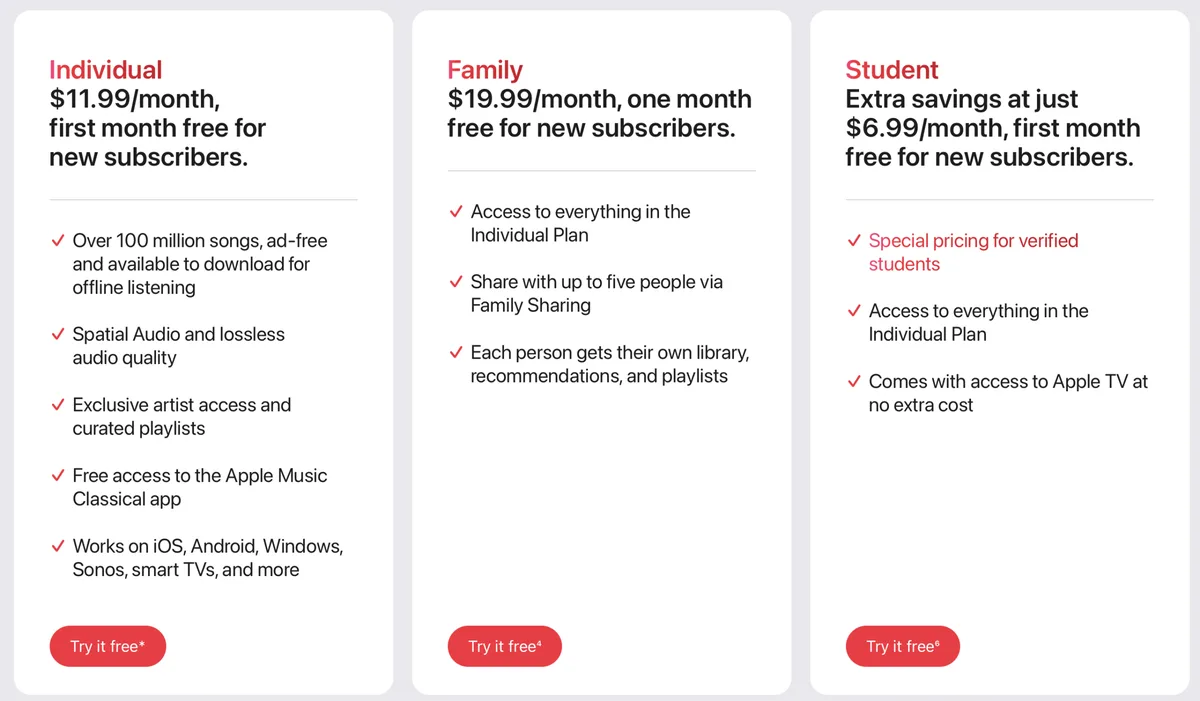
The company also increased Apple Music subscription costs in the US, with the individual plan price rising from $10.99 to $11.99 per month, the family plan from $16.99 to $19.99, and the student plan from $5.99 to $6.99 [4, 5, 6]. Apple attributed the Apple Music price increase to "rising licensing costs," according to a statement to Music Business Worldwide [4].
Apple One subscription bundles saw price hikes for Family plans from $25.95 to $27.95 and Premier plans from $37.95 to $39.95. Reports differ on the Individual plan, with some sources saying it remained stable at around $19.95-$20 [6, 7].
Similar price increases occurred in China, where AppleCare+ Mac and iPad plans rose by about 100-150 yuan. Apple Music individual plans increased by about 1 yuan per month, with family and student plans also climbing a few yuan each [2, 8, 5]. For example, the AppleCare+ 11-inch iPad Pro plan cost rose from 1299 to 1399 yuan, and the Mac mini three-year plan from 649 to 799 yuan [8].
Apple previously announced hardware price increases in June 2026 across Macs, iPads, Vision Pro, HomePod, and Apple TV 4K, blaming a global RAM shortage that increased component costs. CEO Tim Cook said, "We’ve been trying to shield customers but the situation has become unsustainable" [1, 8, 3].
All the new pricing applies only to new subscribers; existing AppleCare+ contracts remain at prior rates. Some Apple Music users under Apple One bundles may also keep old pricing [1, 6, 3].
The timeline of changes began with the June 25 announcement of hardware price hikes, followed by July increases for AppleCare+ and Apple Music in China and the US [1, 8, 5]. Apple One price adjustments came in July as well [6, 7].