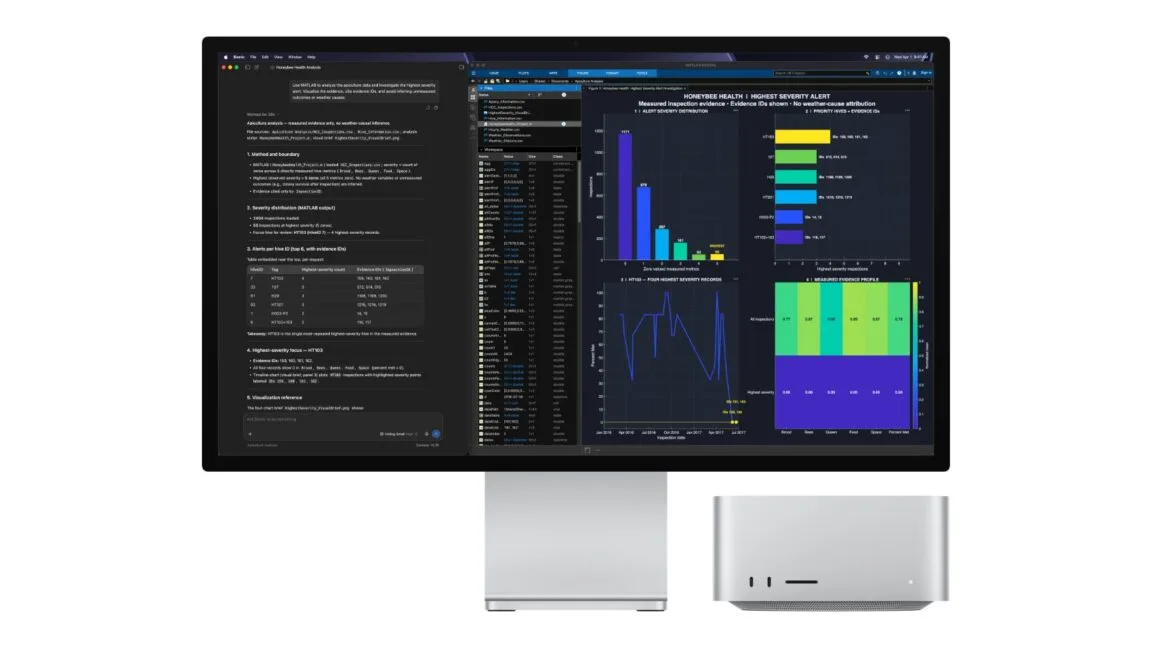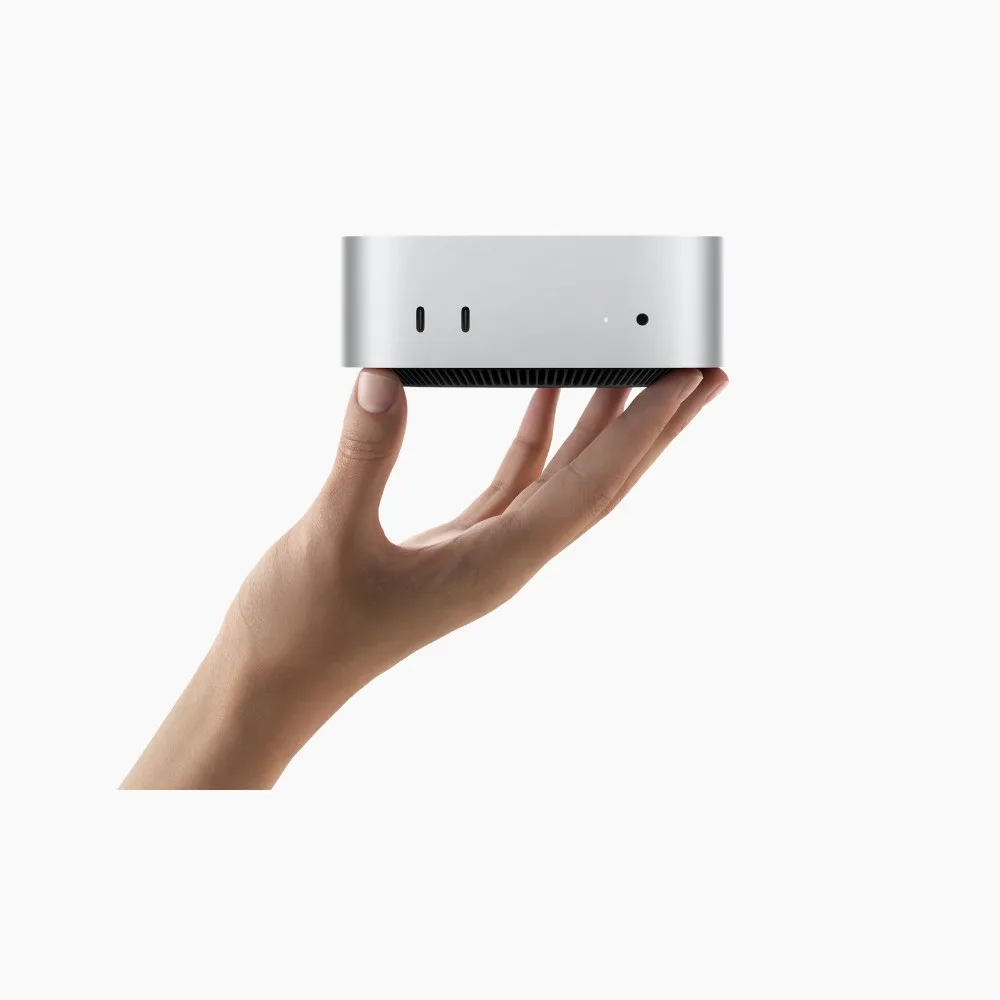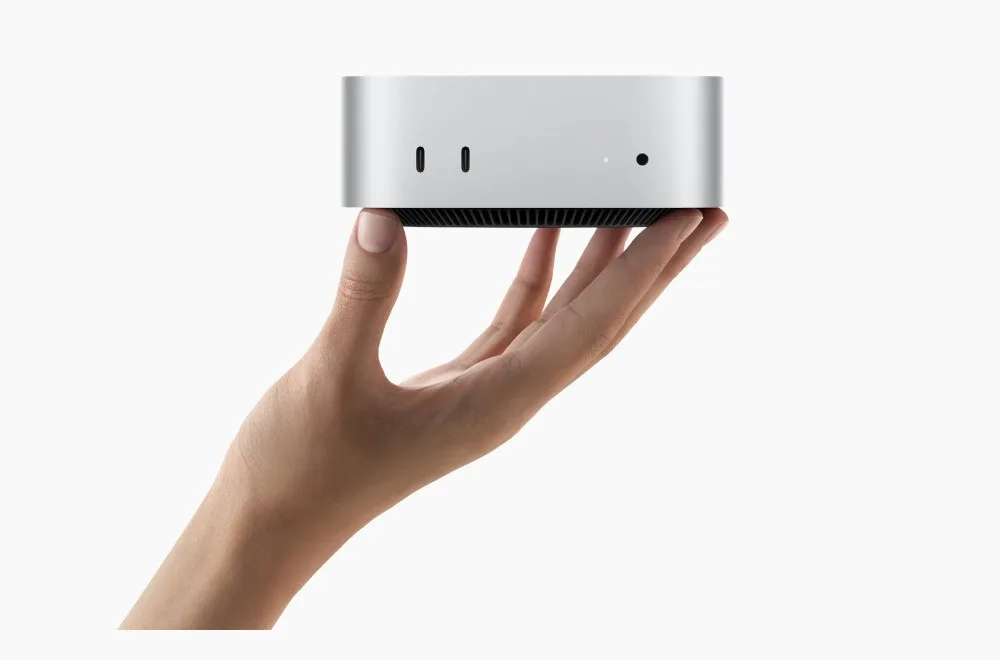
Apple announced updated Mac Mini and Mac Studio desktop models powered by two new chips, the M6 and M5 Ultra, on August 25, 2026 [1, 2, 3]. The M6 chip marks Apple’s first 2nm process chip in the M-series lineup, offering significant efficiency and performance improvements [1, 2]. The M5 Ultra chip is Apple's most powerful Mac processor to date, optimized especially for AI workloads [1, 2, 3].
Both the Mac Mini and Mac Studio are popular choices for local AI inference and development tasks [1, 2]. Apple emphasized that "with these frameworks and new chips, developers can run and fine-tune large AI models locally on their Mac," highlighting their focus on AI capabilities [2]. Multiple Mac Studio machines with M5 Ultra chips can be connected to pool memory and run AI models with up to a trillion parameters [2].
The new Mac Mini can be configured with either the M6 or M5 Pro chip. The M5 Pro chip processes large language model prompts 8.5 times faster than previous Mac Mini Pro versions [2, 3]. The Mac Studio can be equipped with M5 Max or M5 Ultra chips. Mac Studio models with M5 Max run large language models nearly 4 times faster than their predecessors [2, 3].
Connectivity on the Mac Mini has been improved to include 2.5Gb Ethernet, Bluetooth 6, and Wi-Fi 7 [3]. The Mac Mini base price starts at $899, up from the $599 base price of 2026 and earlier models, partly due to higher memory costs [2, 3]. The Mac Studio starts at $2,499 for the M5 Max configuration and $5,499 with the M5 Ultra chip [2, 3].
In December 2025, Apple released macOS 26.2, which introduced low-latency Thunderbolt 5 communication to enable distributed AI inference across linked machines [1]. This update supports multi-machine setups like those involving Mac Studio with M5 Ultra chips.
Most Mac Mini and Mac Studio configurations with the new chips will begin shipping on September 22, 2026 [3]. Higher RAM Mac Studio models with up to 512GB of RAM are expected to be available by late October 2026 [3].