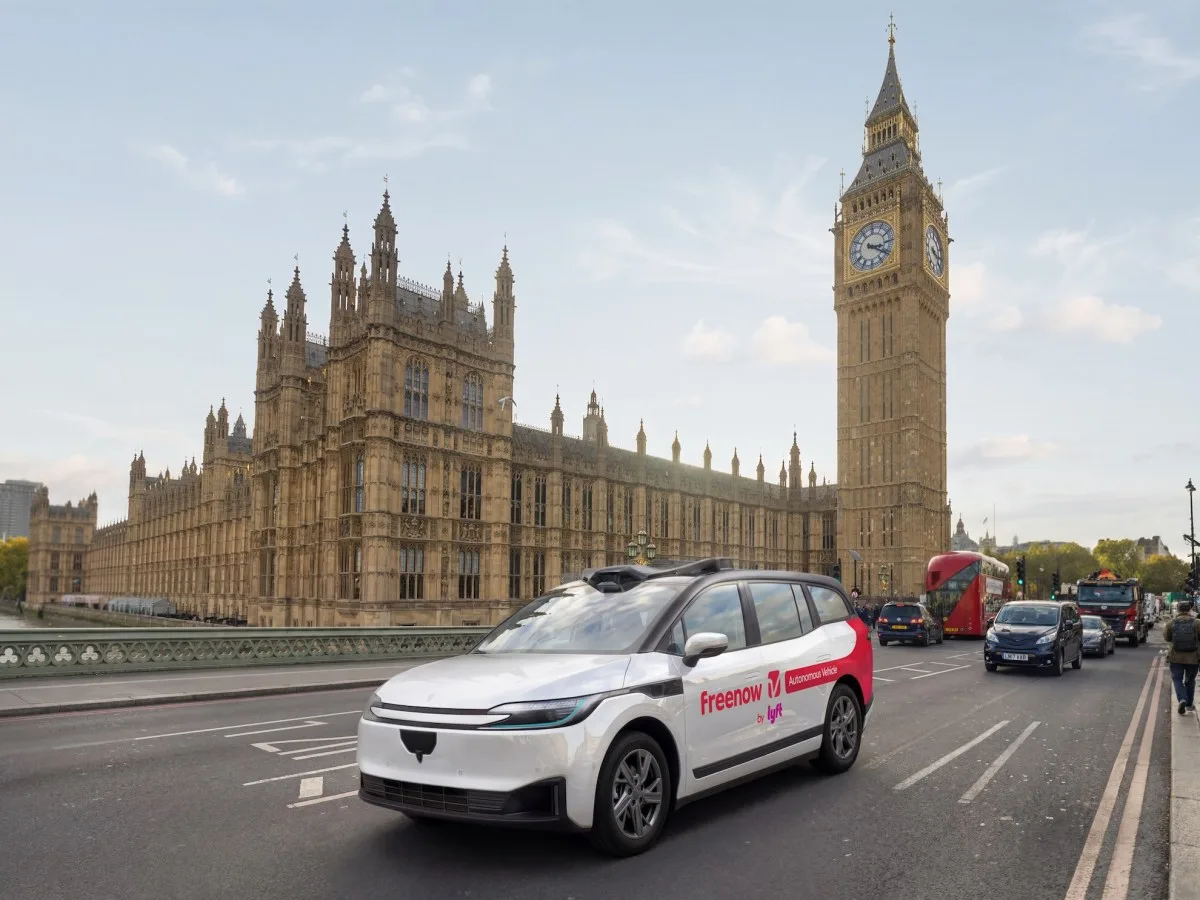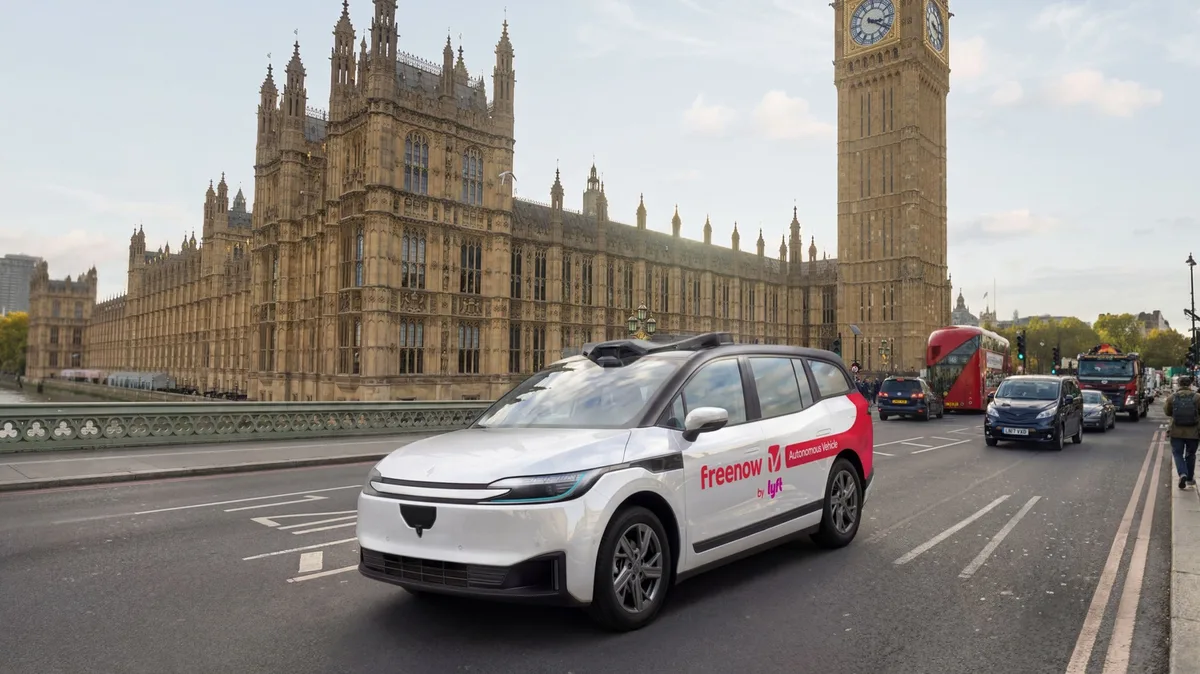
Baidu has initiated public road testing of its Apollo Go RT6 autonomous robotaxis in London, with safety drivers onboard, since July 28, 2026. The trials are taking place in the London borough of Brent, marking Baidu’s first robotaxi testing outside China [1, 2, 3].
Lyft owns the German taxi and multi-mobility platform Freenow, which will serve as the booking app for Baidu’s robotaxi service across Europe. Lyft acquired Freenow for $197 million and plans to integrate autonomous vehicles alongside human drivers on the platform, creating a hybrid network [1, 3].
Thomas Zimmermann, CEO of Freenow by Lyft, said, "As a platform with deep roots in the taxi industry, our priority is ensuring that autonomous technology supports the professional drivers who keep London moving" [1].
The robotaxi service is expected to launch to the public in 2027, subject to regulatory approval from UK authorities such as Transport for London and the Centre for Connected and Autonomous Vehicles. Until then, all vehicles operate with safety drivers onboard [1, 3].
Baidu and Lyft’s entry adds to London’s growing autonomous vehicle testing scene. Waymo began robotaxi testing in the city in April 2026 with human safety operators, and Uber, in partnership with self-driving startup Wayve, announced plans to launch its own service in 2026 [1, 3].
The trials in Brent are part of a wider effort to integrate autonomous taxis alongside traditional private hire and taxi services to offer customers more options while maintaining jobs for human drivers [1, 3].
The next major milestone is the anticipated public launch in 2027, pending regulatory signoff, which will mark one of Europe’s first fully commercial robotaxi services available through a mainstream ride-hail platform.