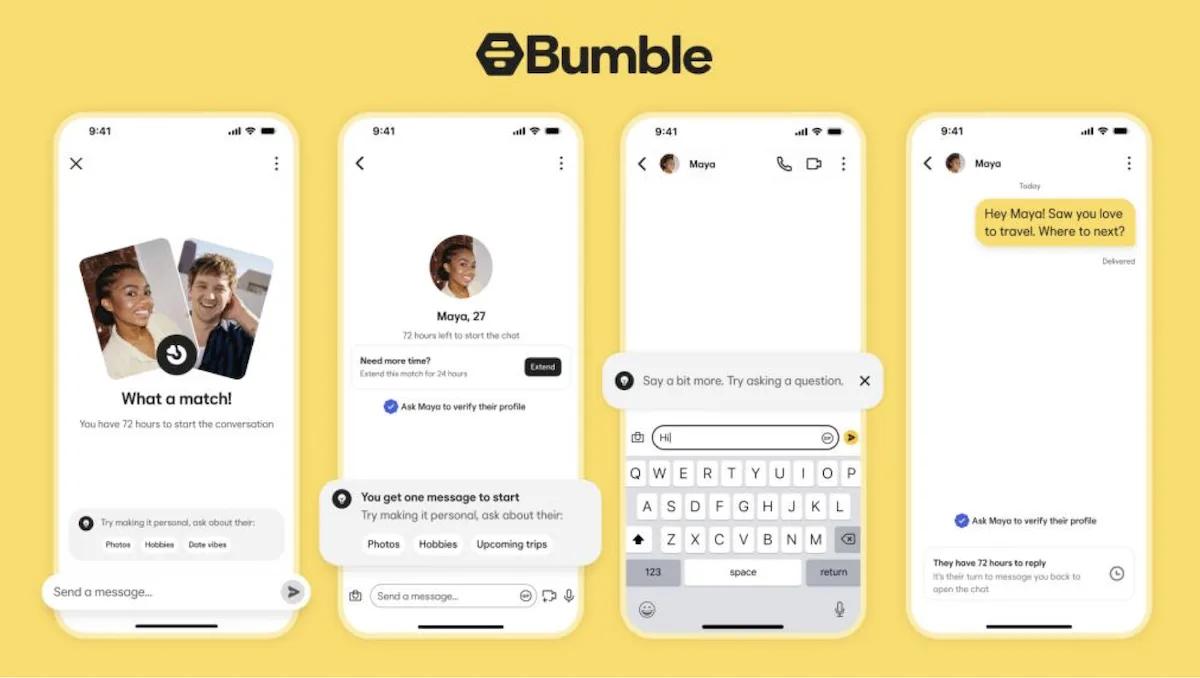
Bumble officially removed its rule that only women can send the first message in heterosexual matches on August 11, allowing anyone on a match to send the initial message [1, 2, 3]. The company also extended the deadline for responding to a message before a match expires from 24 hours to 72 hours [1, 2, 3].
The change marks a significant shift from Bumble's original women-first approach. Founder and CEO Whitney Wolfe Herd said the update "isn’t a departure from our founding vision, but the realization of it." She explained that "being women-first was never about prescribing just one way to connect," but about "designing an experience with women’s needs in mind to create better outcomes for everyone." The new policy aims to offer "more flexibility, less pressure, and more opportunities to create real, meaningful connections" [1, 2].
Bumble previously loosened its messaging rules in stages. Matches involving nonbinary users have allowed either party to message first since 2022 [3]. In 2024, the dating app introduced "Opening Moves," which let men send the first message by responding to prompts in heterosexual matches, gradually shifting from the strict women-first model [1, 2, 3].
User surveys found that 66% of women still prefer men to send the first message. Bumble said the new change will help reduce stress and improve chances to connect by removing pressure caused by tight timing and gender roles in messaging [1, 2]. The app also includes a feature that detects one-word or low-effort first messages and prompts users to send more thoughtful openings [1, 3].
Bumble’s push to refresh its user experience comes as the company faces financial challenges. Its second-quarter 2026 revenue declined 15.2% year over year to $210.5 million [2]. Earlier this year, Bumble also launched an AI assistant called Bee to help users make better connections and compete with rivals like Tinder [3].
The new messaging rules and extended reply window took effect on August 11, 2026, reflecting Bumble’s effort to adapt to users’ evolving preferences and ease interaction pressures on its platform [1, 2, 3].