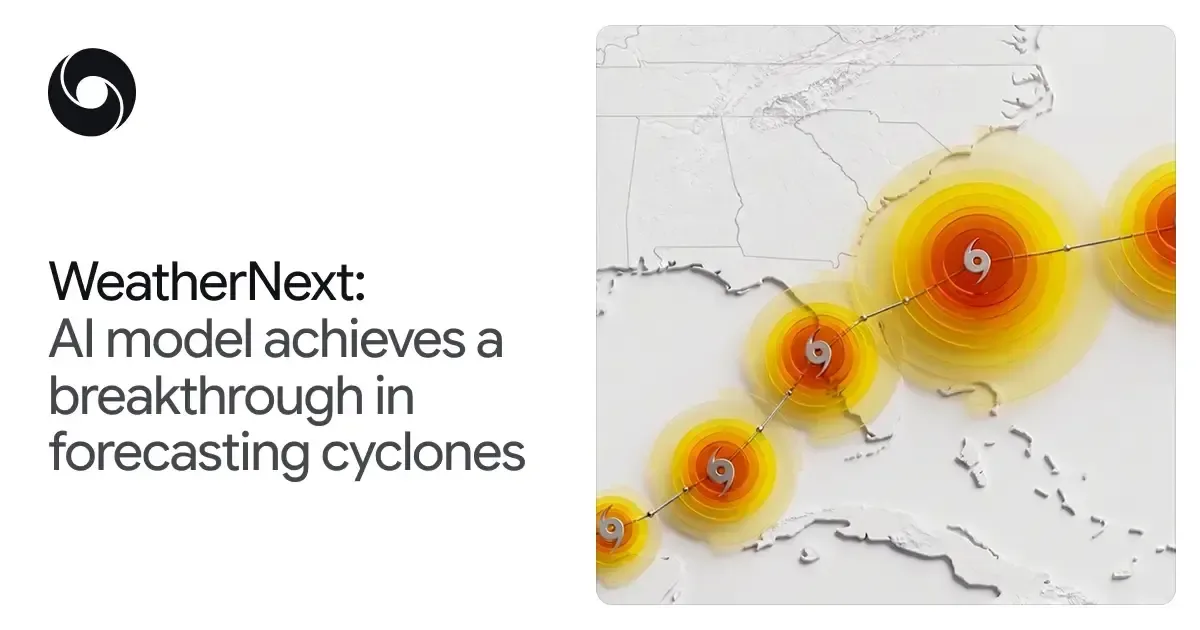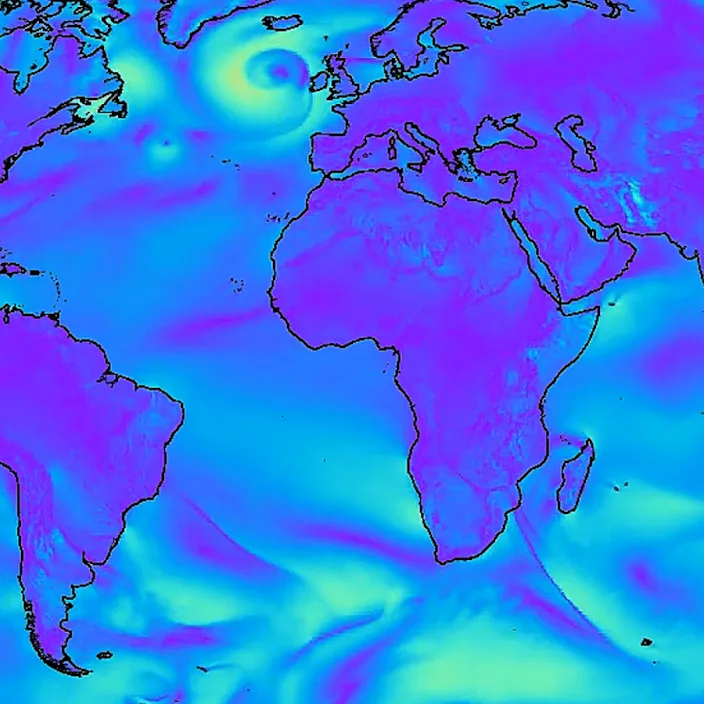
DeepMind and Google Research have released WeatherNext, an AI model capable of producing 15-day cyclone forecasts with high accuracy in under a minute on specialized hardware called TPUs [1, 2]. The model was designed to improve early warning lead times by about one day compared to existing cyclone models, giving forecasters additional valuable time to prepare [3, 4].
WeatherNext uses Functional Generative Networks (FGNs) combined with ensembles of up to 1,000 members to better capture rare and complex phenomena such as rapid cyclone intensification. It achieves intensity forecasts comparable to or better than traditional models but at coarser spatial resolution (28x28 km) [1]. The model trains on 20 terabytes of global atmospheric and cyclone-specific historical data, allowing it to integrate both broad weather patterns and local intensity processes into a single framework [2].
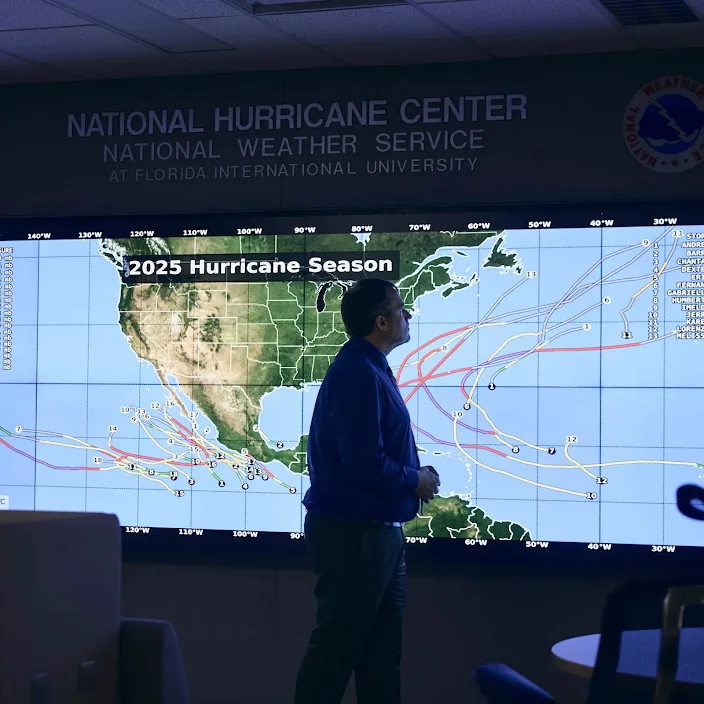
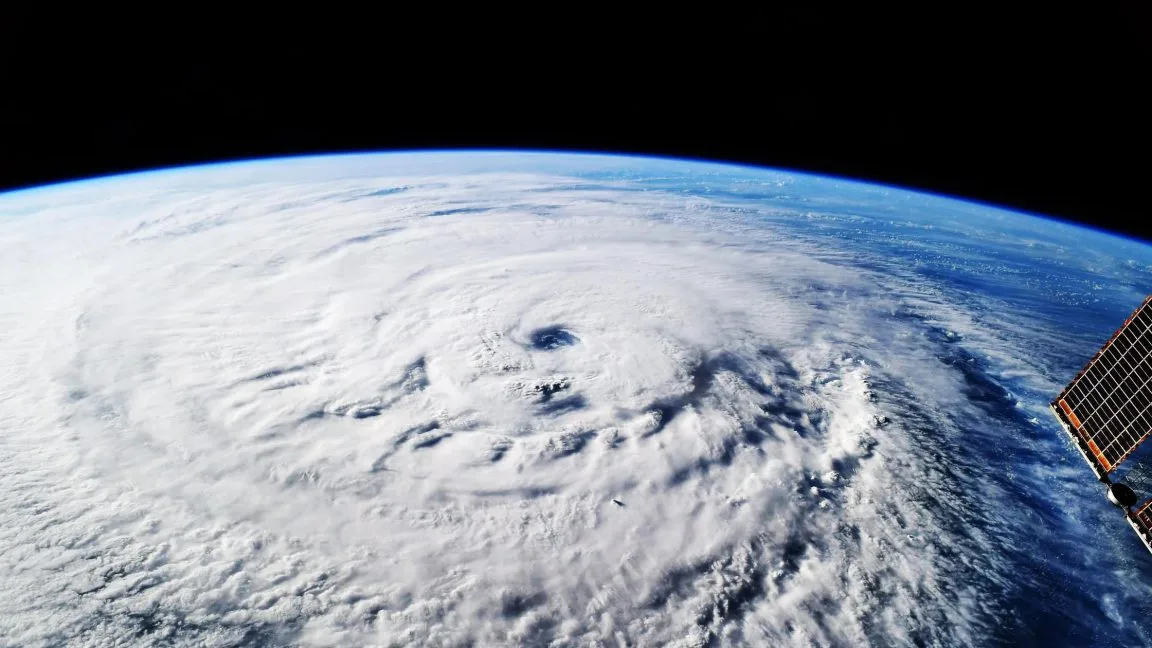
In October 2025, WeatherNext predicted Hurricane Melissa’s intensification to a Category 5 storm and its path toward Jamaica with 80% confidence five days before landfall. Early warnings based on this forecast helped Jamaican communities prepare for catastrophic flooding and landslides caused by the hurricane [3, 4]. Mike Brennan, director of the U.S. National Hurricane Center, said, "Even a few hours can make a difference. Time is really golden when it comes to those types of decisions, so the ability to push forecast accuracy out as much as a day beyond what we’ve previously been able to do is really valuable" [3].
A later operational update named WeatherNext 2 was introduced around mid-October 2025 [1]. On August 6, 2026, DeepMind and Google published a paper in Nature detailing the model and open sourced the WeatherNext code, model weights, and a smaller version called WeatherNext 2-mini for research and operational use [1, 3, 4, 2]. Key collaborators on WeatherNext's development include the U.S. National Hurricane Center, the Cooperative Institute for Research in the Atmosphere, and the UK Met Office [2].
Research scientist Ferran Alet at Google DeepMind noted, "We don’t have that much cyclone data, but we have a lot of weather data. So what we did was train a model to be both good at weather as well as cyclones" [3].
The open sourcing of WeatherNext aims to support broader scientific research and operational forecasting improvements worldwide.