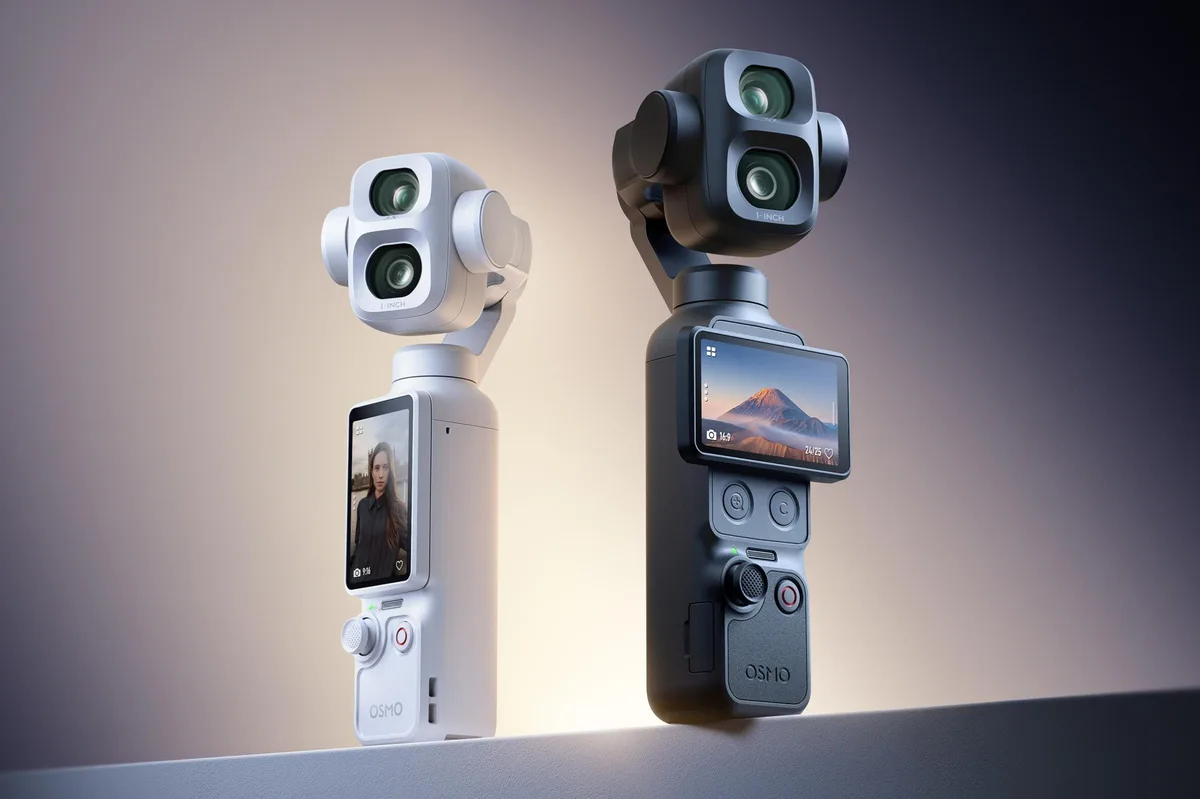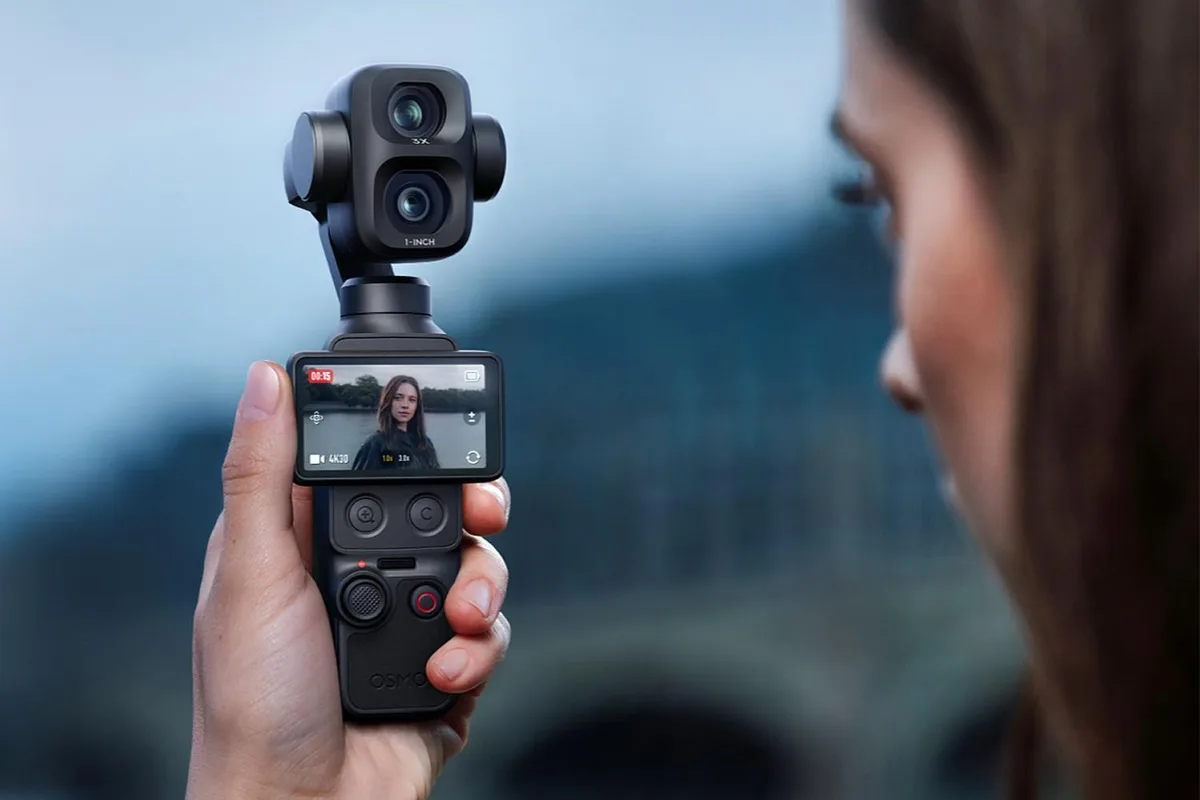
DJI unveiled the Osmo Pocket 4P stabilized camera featuring a dual-camera system with a new 1-inch 4K sensor and 240fps slow-motion video capability in August 2026 in China [1]. The primary wide-angle camera on the Pocket 4P offers an f/2.0 lens, 17 stops of dynamic range, while the secondary telephoto camera uses a 1/1.28-inch sensor with an f/1.8 lens, providing 3x optical zoom, 6x lossless zoom, and up to 12x digital zoom [1]. The device includes 103GB of built-in storage, expandable via microSD card, and is priced at ¥3799 (approximately $562) for preorder on DJI’s Chinese website [1].
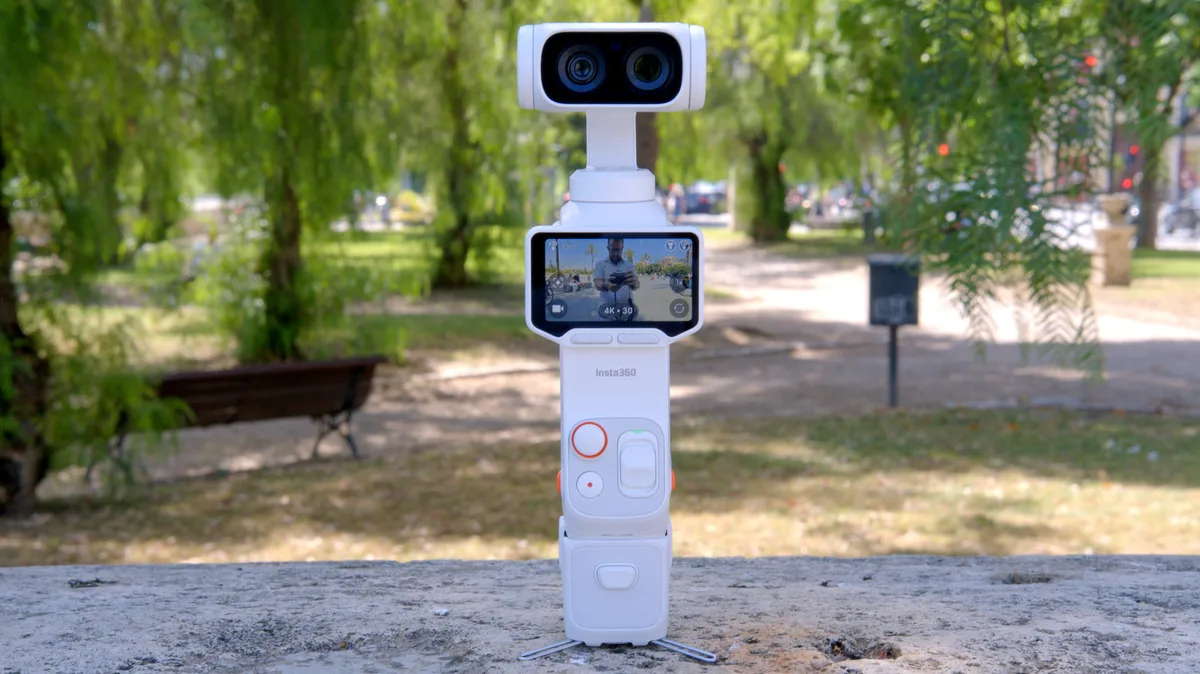
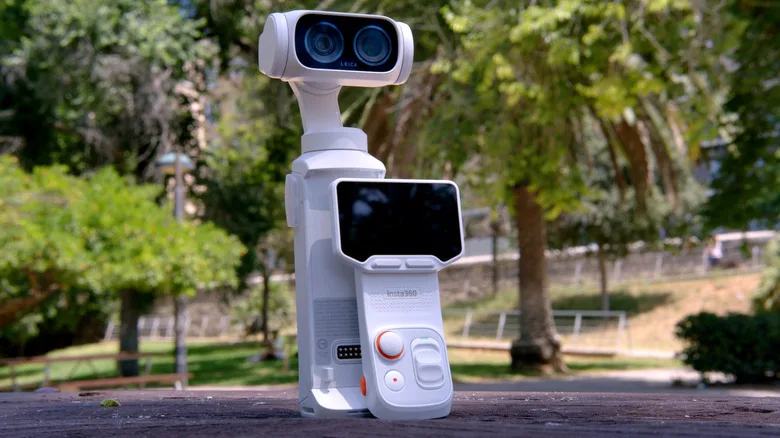
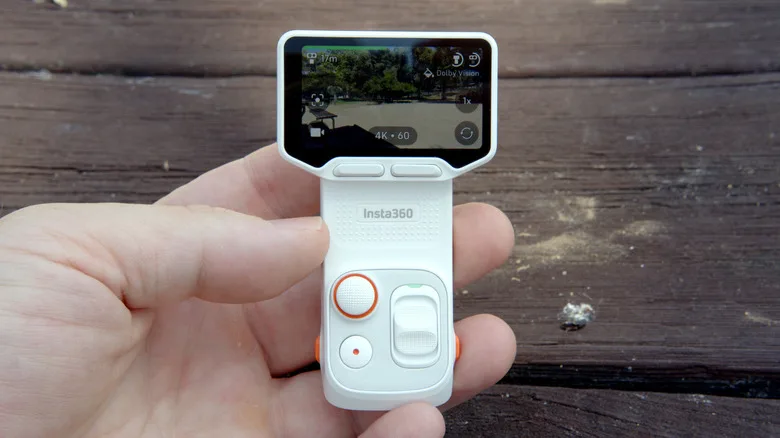
In late August 2026, competitor Insta360 launched the Luna Ultra, a dual-camera gimbal with an 8K-capable 1-inch sensor primary camera and a telephoto 1/1.3-inch sensor lens offering 3x optical zoom [2]. The Luna Ultra shoots 8K video at 30fps or 4K up to 120fps with Dolby Vision and I-Log color modes [2]. It has 47GB of internal storage, extendable via microSD, and packs a 1550mAh battery supporting around four hours of recording time [2]. It also features a removable wireless display panel usable up to 60 feet away that includes a microphone for remote audio capture [2].
Both DJI’s Osmo Pocket 4P and Insta360’s Luna Ultra provide dual-camera setups with telephoto 3x optical zoom and large primary sensors, aiming at users seeking high-quality stabilized video with flexible framing options [1, 2]. However, DJI’s Pocket 4P emphasizes high frame rate slow-motion capture with up to 240fps at 4K resolution but does not offer 8K recording like the Luna Ultra [1, 2]. Insta360’s Luna Ultra targets higher maximum resolution with 8K video and advanced color profiles [2].
The pricing gap is notable, with DJI’s Pocket 4P offered at about $562 in China, while Insta360’s Luna Ultra carries a global price near $770 [1]. Both models support expandable storage and leverage high-quality sensors in compact stabilizer form factors.
DJI’s Osmo Pocket 4P is currently available for preorder from DJI’s China site, while the Luna Ultra has already launched globally in late August 2026 [1, 2].