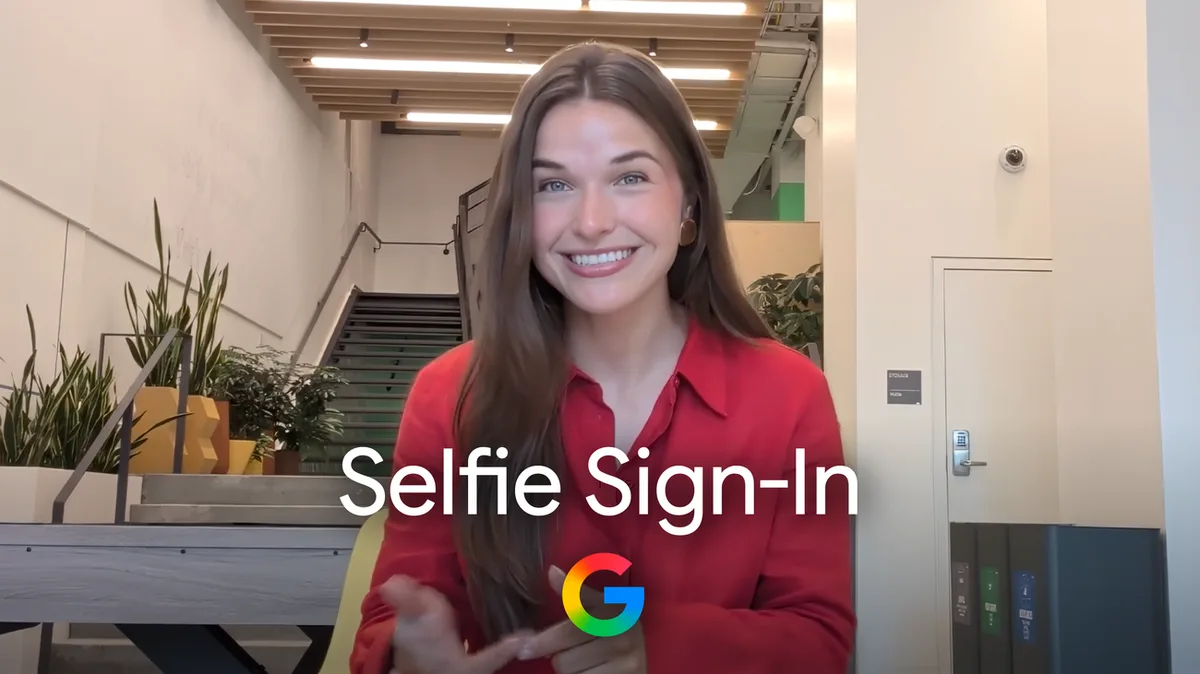
Google began rolling out a new selfie video sign-in option globally on July 23, 2026, allowing users to verify their identity with short guided videos featuring head movements [1, 2, 3]. The feature helps users access and recover their Google Accounts if they lose their usual devices or passwords [4, 5, 6].
To set up the feature, users record a short video following prompts to capture multiple angles of their face with guided head movements. This recorded video is securely encrypted and stored on Google's servers with the user's consent, and it can be deleted at any time from within the Google Account settings [7, 8, 5, 6, 3]. During sign-in, the user records another short video performing similar head movements to confirm liveness and allow comparison with the stored reference video [7, 8, 2].
Google employs multiple security layers to prevent impersonation attempts, including defenses against deepfakes and fake videos through liveness detection based on head movements [7, 5, 6, 9]. However, the feature is not available for Google Workspace accounts, child accounts, or users enrolled in the Advanced Protection Program [4, 3].
Google product manager Claire Forszt said, "Selfie is just the newest option in that list available for users. It's designed to help specifically in these vulnerable scenarios around not having access to the device where your passkey might be" [2]. Google's blog post states, "Your selfie video is yours and you're in control. It is recorded and securely stored with your consent, and you can delete it at any time in your Google Account. It's used only for helping you sign in, unless you opt to share it for additional purposes" [7].
Users must set up the selfie video option before being locked out; it cannot be added during the account recovery process [2, 3]. Google recommends maintaining multiple sign-in methods, including passkeys, recovery contacts, and backup codes, to improve account security beyond passwords and two-factor authentication [7, 9]. The rollout complements these existing security tools [7, 6].
The selfie video can also be optionally shared to improve Google's biometric technologies such as facial recognition and age verification if the user consents [4, 8, 9]. Privacy concerns remain about biometric data collection and use in such systems [1, 5, 9]. Other companies like Facebook have recently introduced video selfie verification for identity confirmation but for different purposes such as user trust badges, not account log-in [10].
The arrival of this selfie video recovery feature represents Google's latest effort to make account access easier when devices or credentials fail. The rollout will continue to expand access for eligible users in the coming months [3].