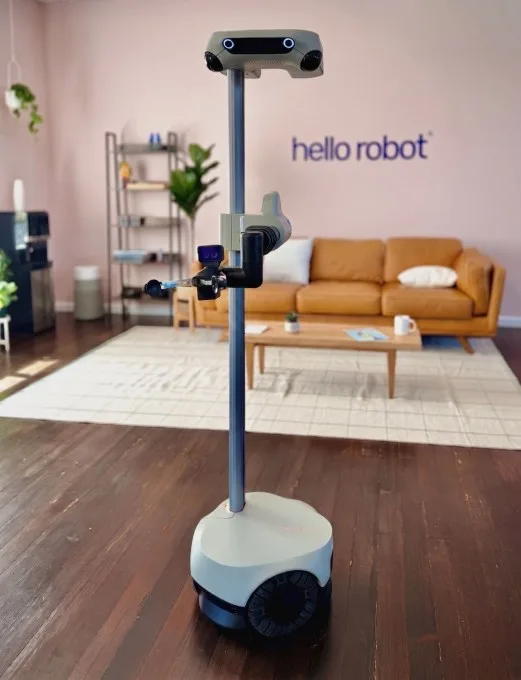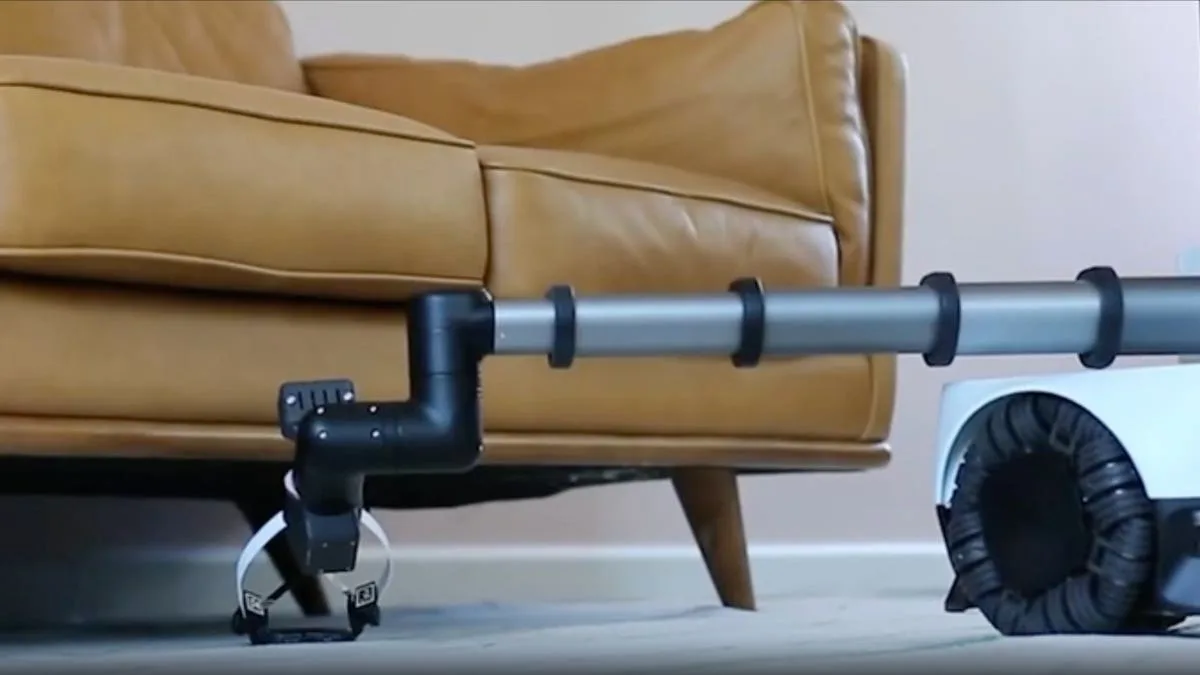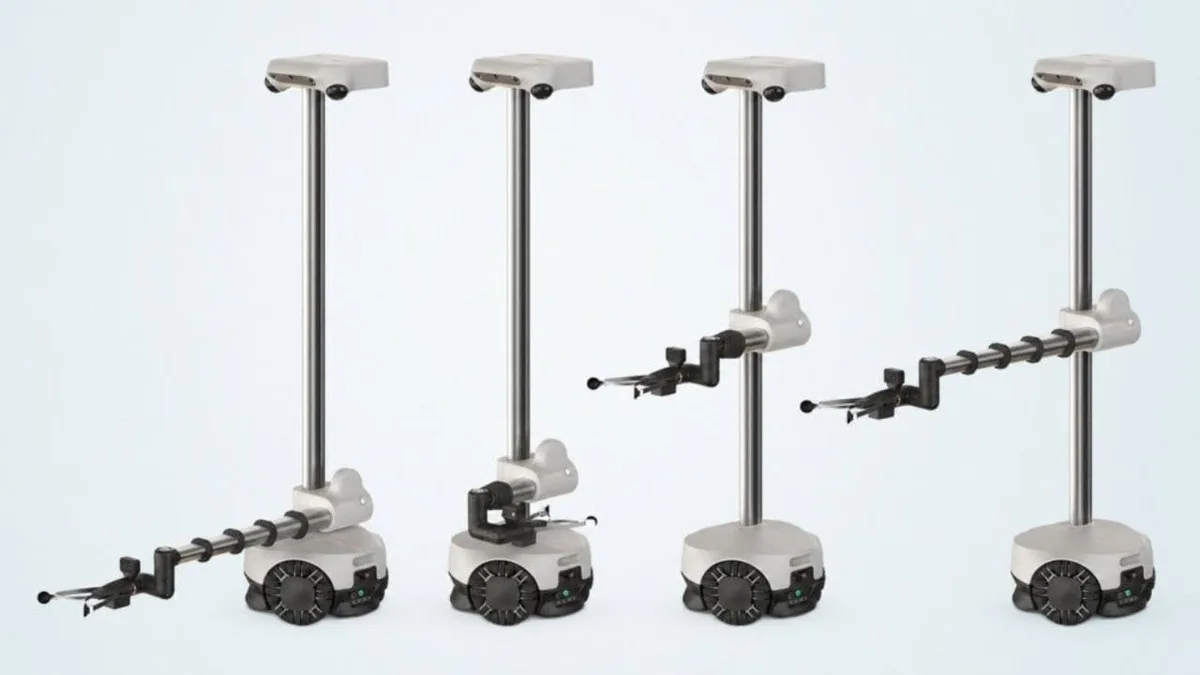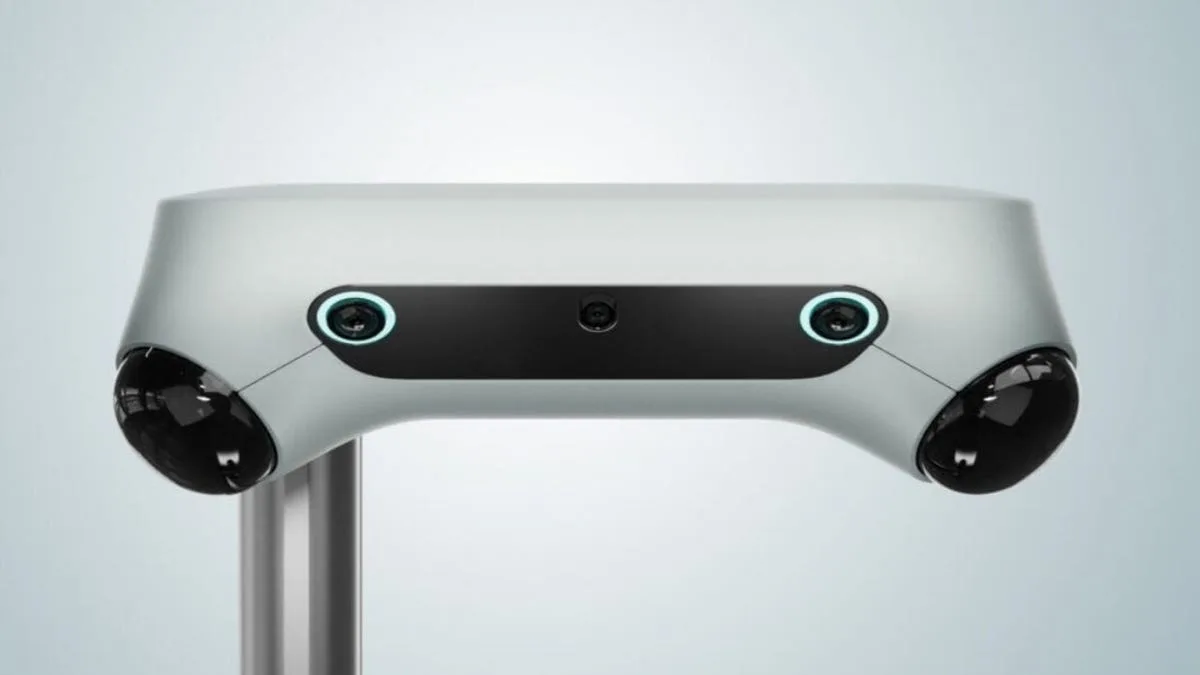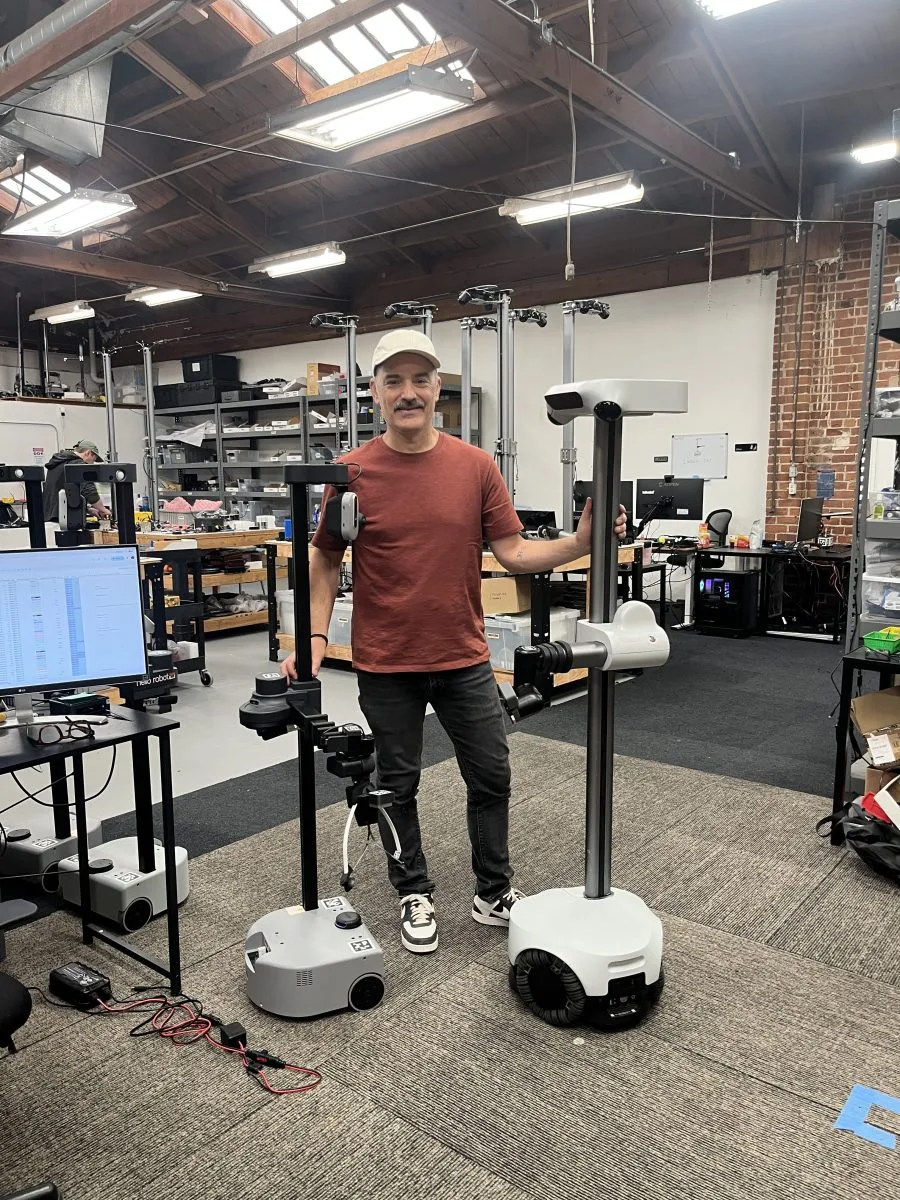
Hello Robot released the fourth version of its home assistance robot, Stretch, in May 2026 [1]. Stretch 4 features a mobile platform with an omnidirectional wheeled base, a telescoping arm equipped with pinchers, and a sensor-packed head resembling a humanoid torso [1, 2]. The robot is designed to navigate safely and perform tasks indoors amid common home obstacles like rugs, cords, pets, and furniture [1, 2].
Stretch 4’s wheeled design prioritizes stability and simplicity. Unlike bipedal humanoid robots that require complex balancing and many moving parts, Stretch 4 uses wheels to reduce risk and mechanical complexity when moving around a household [2]. Blaine Matulevich, an engineer at Hello Robot, said, "When Stretch’s batteries run down, lights around its ‘eyes’ glow — ‘it looks angry’" [1].
Keith Platt, a quadriplegic investor and board member at Hello Robot, controls Stretch 4 through a voice-operated iPhone app to assist with everyday home tasks [1]. This functionality highlights the robot’s practical focus on accessibility and assistance.
Founded in 2017 by former Google robotics director Aaron Edsinger and Georgia Tech professor Charlie Kemp, Hello Robot targets research, development, and laboratory use for Stretch 4 currently, but plans pilot deployments in private homes soon [1, 2]. Unlike many robotics firms focused on broad automation or foundation models, Hello Robot prioritizes incremental deployment to gain operational experience in real home environments [1].
The robot has attracted media attention, with TechCrunch covering the release and Fox News discussing the company’s choice of wheeled mobility over humanoid legs for safer home operation in June 2026 [1, 2].
Hello Robot aims to begin home pilot deployments in the near future, marking the next step in Stretch 4’s real-world testing and refinement [2].