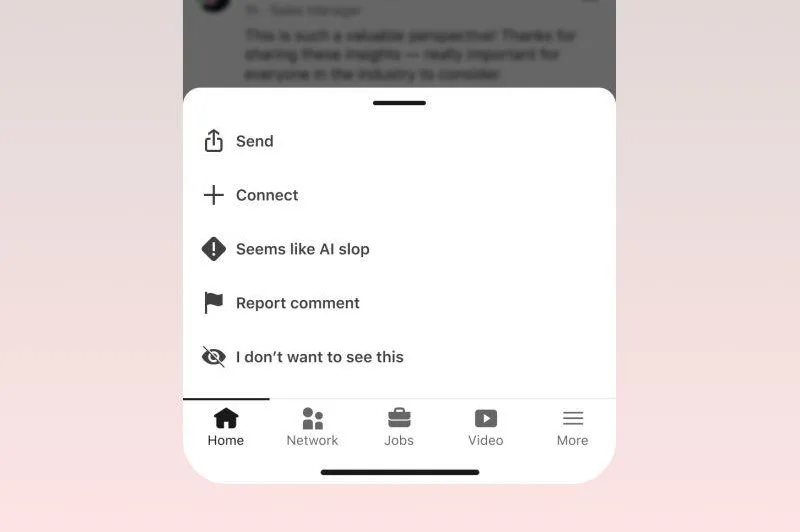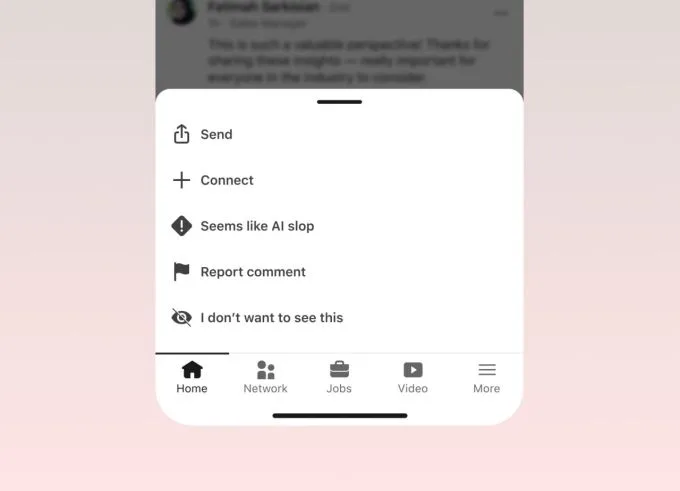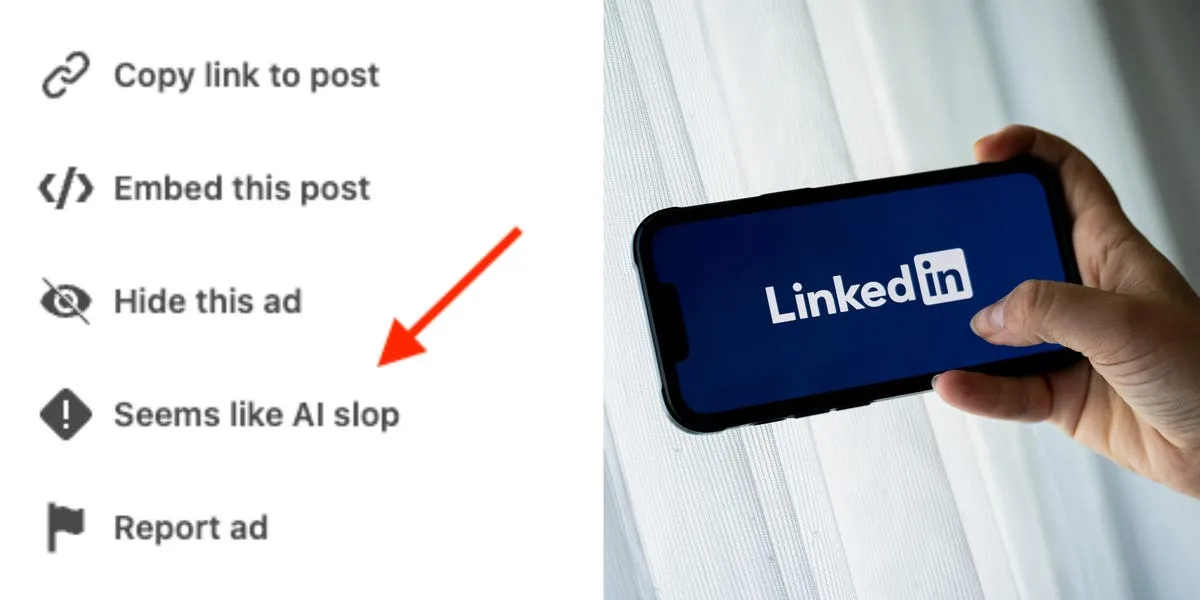
LinkedIn rolled out a new "seems like AI slop" button, allowing users to flag posts that appear to be low-quality and AI-generated. The feature opened to users on July 30, 2026, and places a reporting option in the post menu to identify content that does not feel human-written, helping to hide such posts from individual feeds [1, 2, 3, 4].
Flagged content faces algorithmic penalties that reduce its reach, similar to existing "not interested" feedback, limiting the spread of low-quality, inauthentic posts [4]. LinkedIn is also using new AI classifiers to detect and suppress AI slop and other low-value content in its feeds and recommendations [1, 2].
To give human content creators better tools, LinkedIn is phasing out its prior AI content enhancement features. In their place, it introduced a proofreading tool that focuses on improving writing while preserving the user’s authentic voice [2, 4]. Meanwhile, posters whose content seems heavily AI-generated receive private notifications through their dashboards to alert them about potential inauthenticity [1, 3, 4].
LinkedIn faces a significant influx of AI-generated content. The AI detector Pangram found that 41% of LinkedIn’s longform posts were fully AI-written, making it the most AI-saturated social media platform [2, 3, 4]. To combat widespread automation abuse, the company blocks hundreds of thousands of automated comment attempts daily and billions of other automation attempts monthly [1, 4].
LinkedIn’s Chief Product Officer Hari Srinivasan said, "AI slop is a top priority for all of us. We really care about this. People come to LinkedIn to connect with real people and share their real perspectives, ideas, and expertise." He added the company’s goal is for users "to get feedback from real humans on what sounds authentic — not just have an AI detector review it and get it wrong" [1, 3]. Srinivasan noted the new button will also "help LinkedIn tune our models and make better feeds" [2].
The platform began testing and rolling out the feature during July 2026 while simultaneously removing its AI-enhancement tool from posts [4]. The launch followed wider concerns in the tech industry, illustrated by platforms like Digg shutting down due to bot flooding earlier in the year [1].
LinkedIn’s new reporting tool is now active, giving users a direct way to help reduce AI-generated low-quality content and improve feed authenticity.