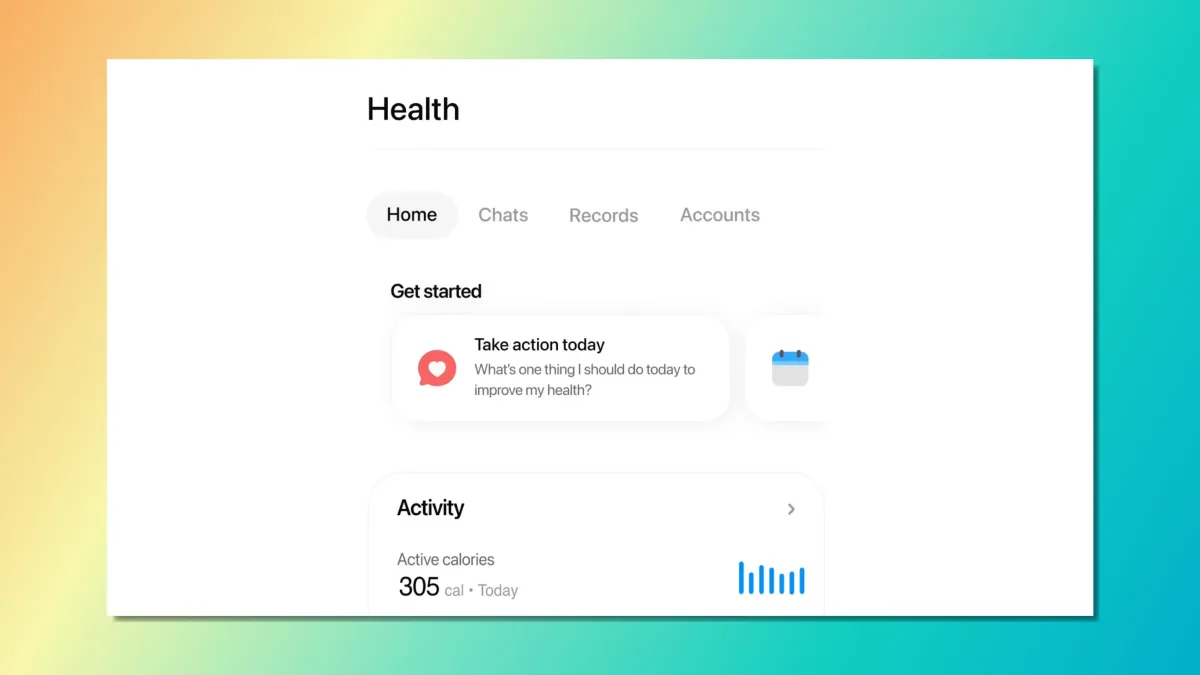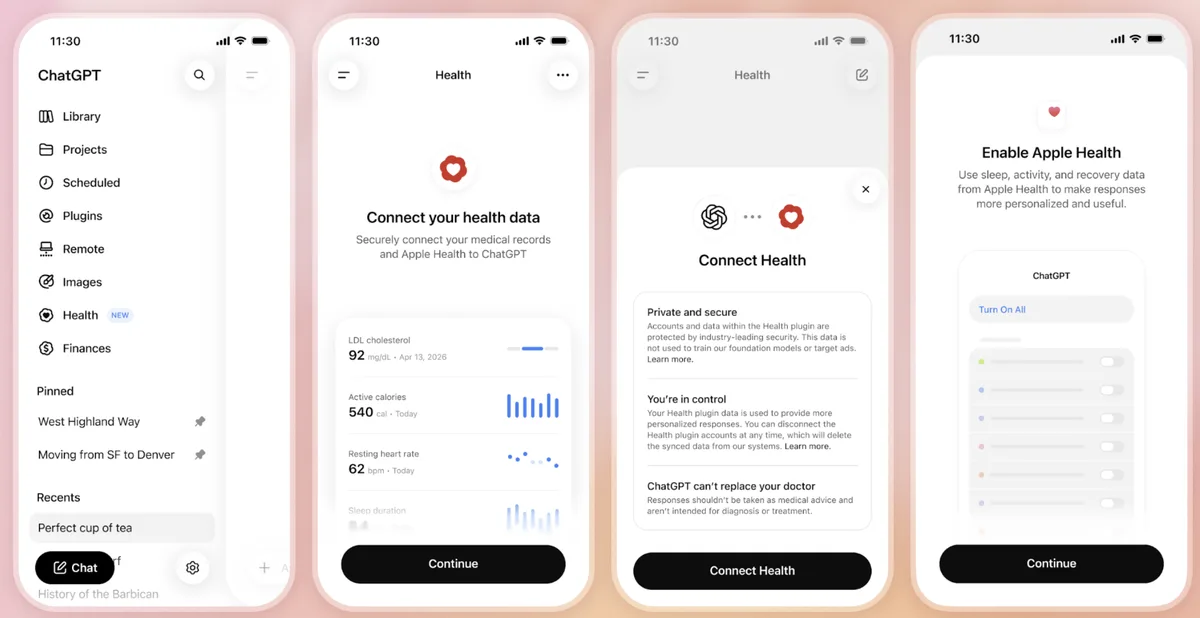
OpenAI expanded its ChatGPT Health feature nationwide yesterday, making it available to all U.S.-based users aged 18 and older across free, Go, Plus, and Pro plans on web and iOS platforms [1, 2, 3, 4]. The feature provides personalized health-related insights by allowing users to connect their personal health data from platforms including Apple Health, MyFitnessPal, One Medical, Function Health, Epic, Oracle Health, and Kaiser Permanente [1, 2, 4].
Users can access health information both through a dedicated Health tab and within general chat conversations. ChatGPT prompts users for permission before accessing any connected health data [1, 2, 4]. OpenAI emphasized that conversations incorporating linked health records receive additional encryption and privacy protections, with data excluded from AI training, although chats without connected data do not benefit from these safeguards [1, 2, 3, 4].
OpenAI introduced the latest GPT-5.6 models, including the Luna and Sol variants, which the company says outperform previous versions like GPT-5.5 on HealthBench, its custom evaluation for health queries [1, 2, 4]. Ashley Alexander, OpenAI’s VP of Health Product, claimed the models now reason at levels "better than clinician level," though Karan Singhal, OpenAI's Health Lead, urged caution that these results come from some supporting studies and should not be overstated [2].
Despite improvements, OpenAI clearly states ChatGPT Health is "not intended for use in diagnosis or treatment" and advises users to verify information with medical professionals [1, 2, 4]. The rollout comes amid scrutiny, highlighted by a Florida pastor’s lawsuit filed last month alleging the AI gave dangerously inaccurate advice that delayed his treatment for a pulmonary embolism [1, 2, 4]. Additionally, independent studies and experts have flagged concerns about AI diagnostic accuracy and safety, with skepticism expressed in the media [3].
ChatGPT Health’s weekly health-related queries have grown from 230 million during initial testing this January to 300 million currently [1]. OpenAI began testing the feature in January 2026, initially limited to a dedicated health hub integrating several health data services [1, 4]. The nationwide rollout was formally announced July 23, extending access beyond the hub to all eligible U.S. users [1, 2, 4].
OpenAI does not use user health data for training its AI models and promises encrypted handling of connected health data conversations [1, 2, 4]. Privacy protections differ depending on whether health data is actively connected, with only those linked conversations treated as Health chats and excluded from training [3].
The company continues to promote ChatGPT Health as an aid alongside professional medical advice while acknowledging ongoing safety concerns. Users seeking health guidance are advised to corroborate AI outputs with qualified doctors and follow medical care recommendations.