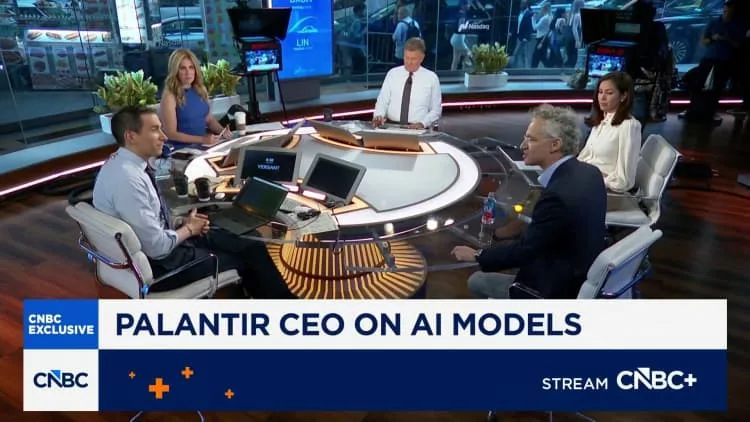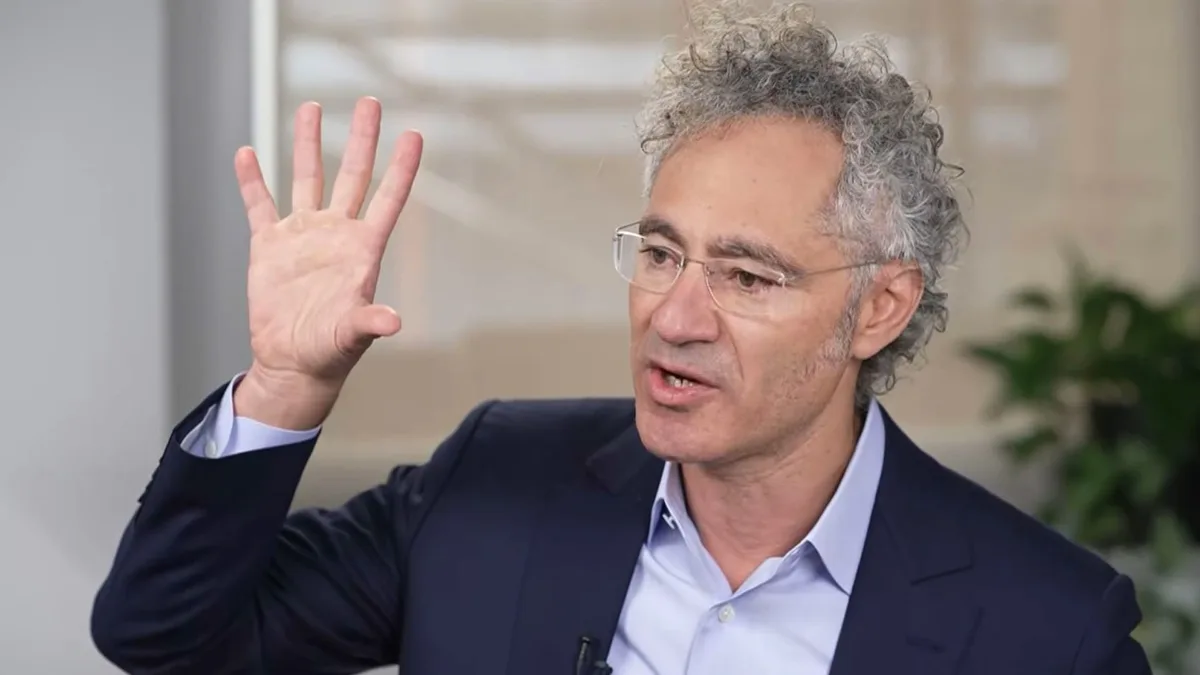
Palantir CEO Alex Karp sharply criticized AI companies OpenAI and Anthropic for their token pricing model during a CNBC interview on July 1, 2026. He said, "Something has gone completely wrong. The basic view among enterprises in this country is I'm going to chillax and waste my time with tokens," adding that companies receive no real value while giving up intellectual property rights [1, 2, 3].
Karp emphasized that many enterprise CEOs want to own proprietary AI models rather than rely on the current token-based pricing system. "This is the voice of American business that is being channeled through me," he said [1, 3]. He described the AI industry as "completely irresponsibly oversold," warning that the current token model has caused a trust deficit between businesses and AI vendors [1, 2, 3].
He also expressed strong national security concerns about depending on Silicon Valley firms for military AI needs. Karp called the idea of outsourcing battlefield AI "effing insane" and stressed the importance of AI sovereignty, secure data management, and control over proprietary models [4, 2, 3].
On the same day as his interview, Palantir shares rose more than 9% [4]. The company recently expanded its partnership with Nvidia to develop custom AI models tailored for U.S. government agencies, reinforcing its focus on secure, controlled AI applications [1, 4, 2].
Karp, a billionaire with a net worth of $12.3 billion as of July 2026 and a co-founder of Palantir, has positioned his firm as an alternative to token-based AI platforms [4]. This follows growing Pentagon concerns that prompted the U.S. military to designate Anthropic as a supply chain risk earlier in 2026 due to fears its models could be used for surveillance or autonomous weapons [4]. In June 2026, a federal executive order mandated oversight of AI models before public release [4].
Palantir's expanded work with Nvidia aims to deliver AI tools under strict government standards. Karp’s remarks on July 1 highlight his push for enterprise control over AI technology and caution against leaving national defense AI to broad Silicon Valley consensus.