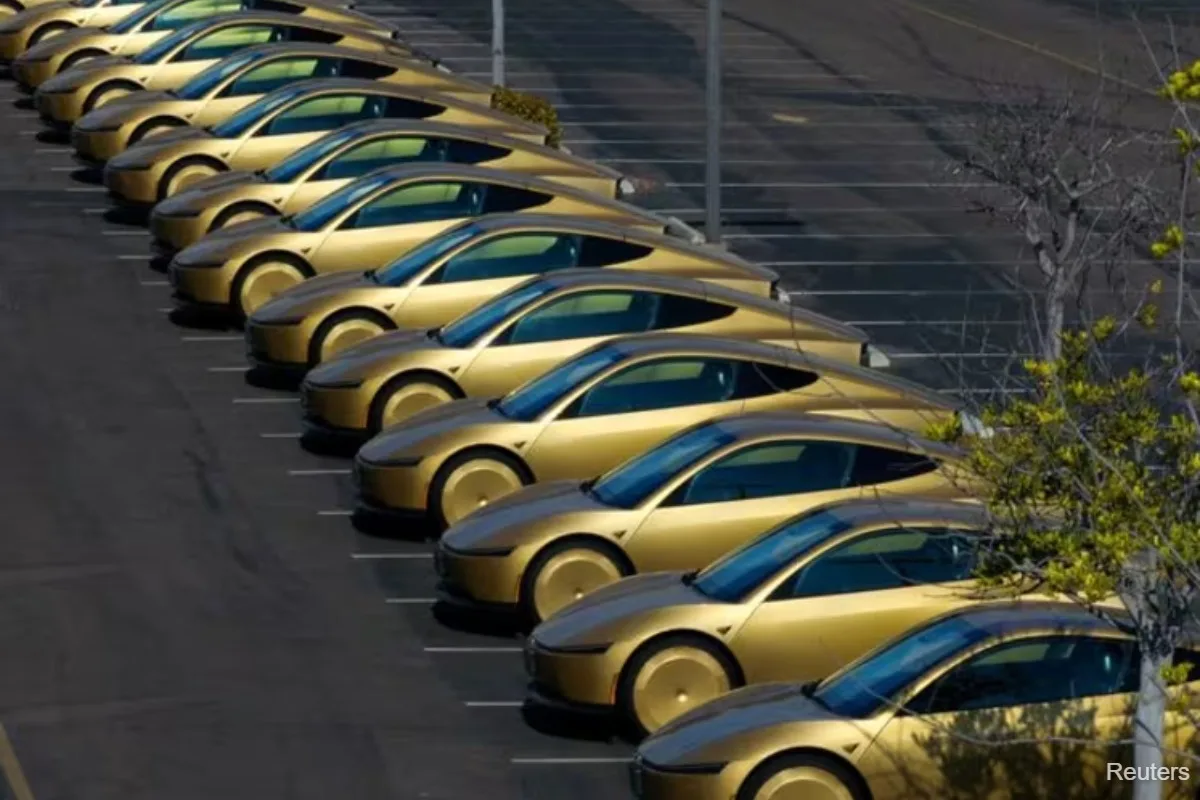
Tesla launched its Cybercab robotaxi, a two-seat vehicle without steering wheel or pedals, offering rides to the public in select Austin, Texas areas starting September 3, 2026 [1, 2, 3]. The Cybercab joins Tesla's expanding robotaxi fleet, which previously consisted only of autonomous Model Ys, and can be hailed through the Tesla Robotaxi app [1, 2, 3].
The Texas Department of Motor Vehicles shows Tesla registered 45 Cybercabs as of September 3, contributing to a total of 314 driverless Tesla vehicles authorized to operate in the state, mostly Model Ys including Cybercabs [2, 3]. The Cybercab is designed for two passengers, featuring butterfly doors and a bench-style seat without manual driving controls [1, 2, 3]. Tesla CEO Elon Musk has promoted the vehicle as a low-cost robotaxi priced under $30,000 aimed at fleet customers to operate robotaxi networks [2].
Tesla’s social media stated, "The future has arrived in Austin," as Vice President of AI Ashok Elluswamy said, "You can go outside, take rides. Anyone can take rides. It's open to the entire public." [1, 2]
However, on September 4, the National Highway Traffic Safety Administration (NHTSA) opened a federal probe into Tesla’s Cybercab deployment on public roads [4]. The agency said it is investigating whether Tesla's self-certification that the Cybercab complies with federal motor vehicle safety standards—which require manual controls—is valid. NHTSA stated it will "examine the process and technical data on which Tesla relied when certifying the Cybercab and related issues." [4]
The Cybercab was first unveiled in October 2024 at Tesla's "We, Robot" event in California, launching as a public ride option after a June 2025 pilot of autonomous Model Ys in Austin [1, 2]. Tesla plans future sales targeting fleet operators to expand their robotaxi network [2, 3].