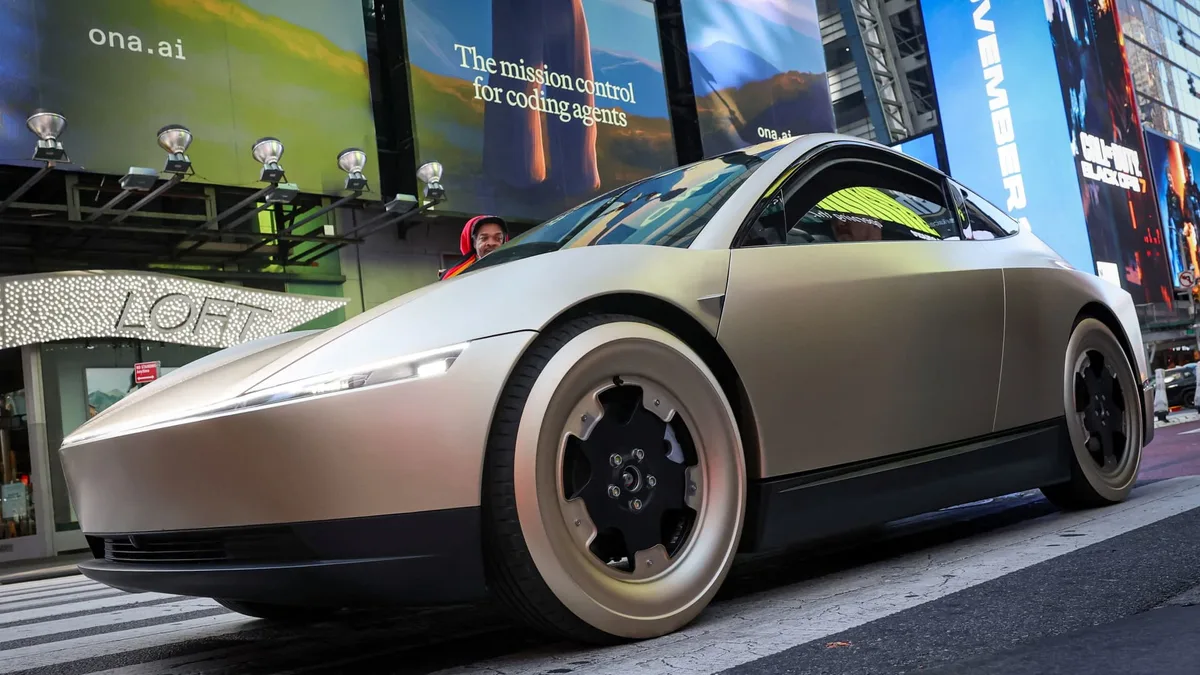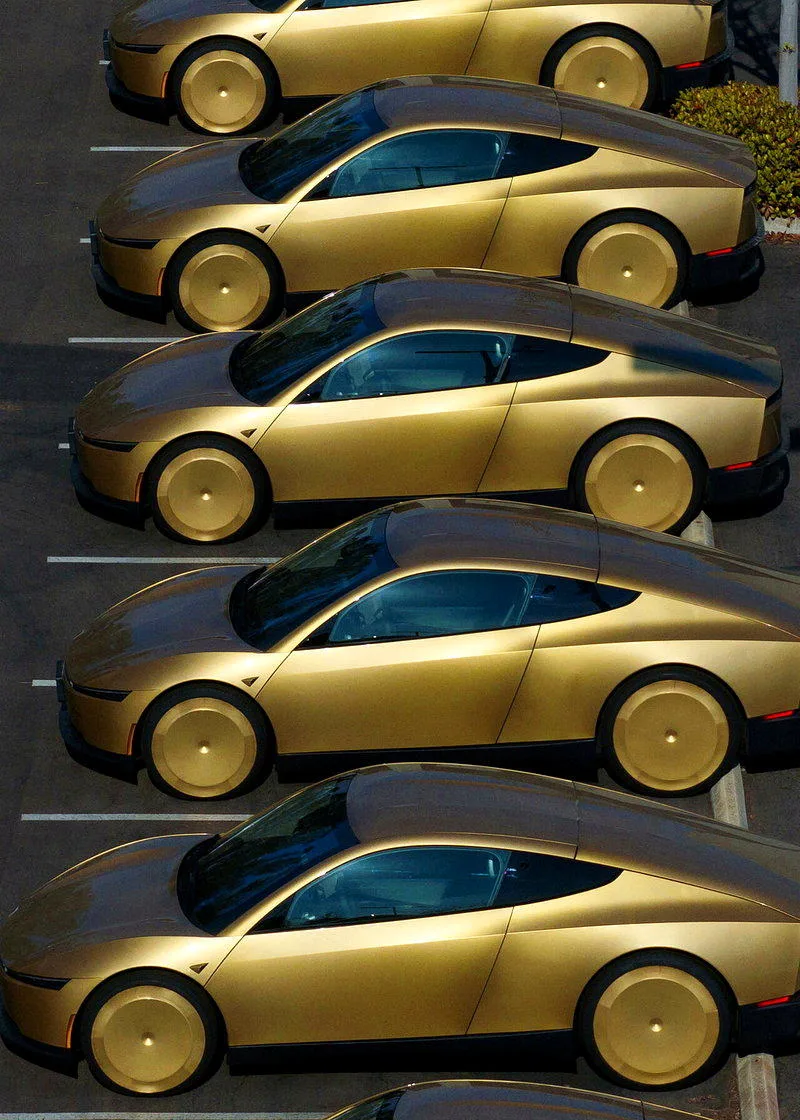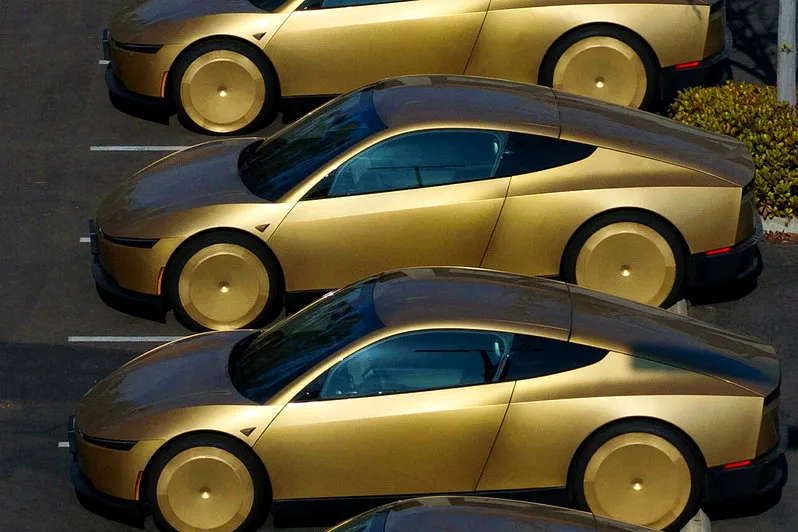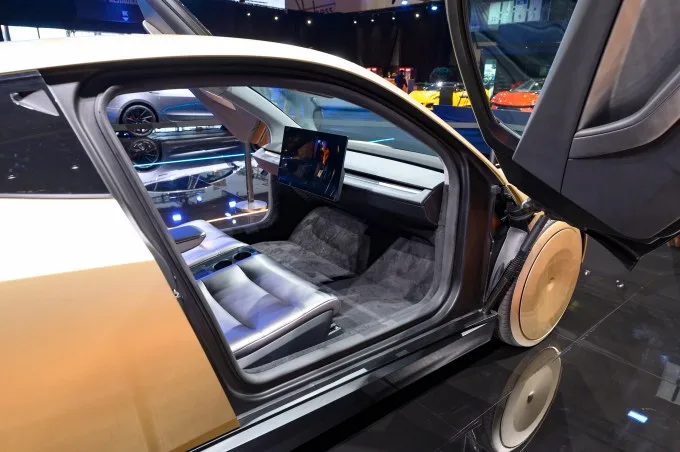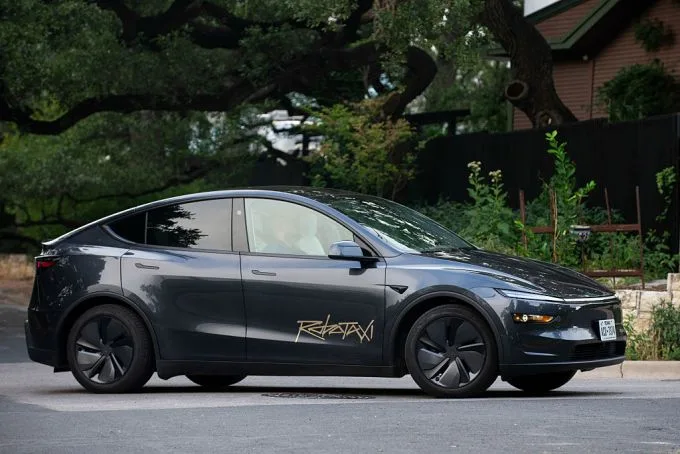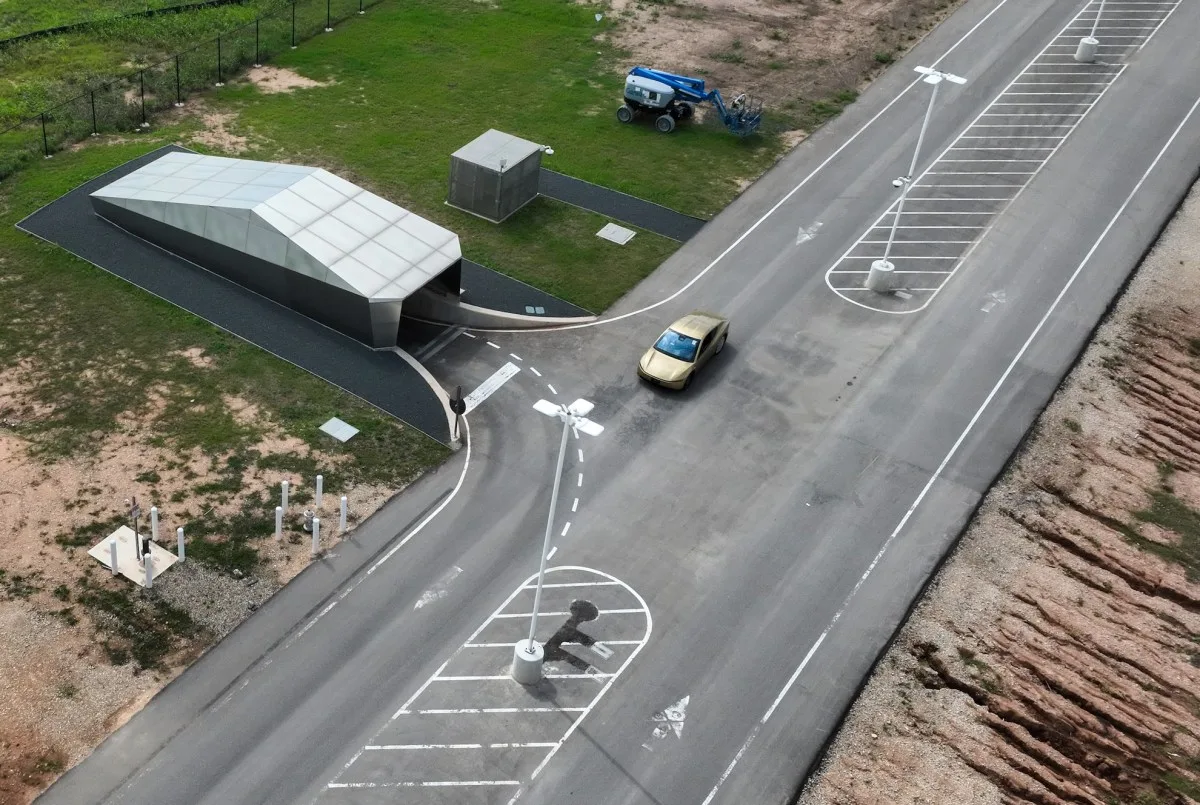
Tesla unveiled its Cybercab, a small gold two-seater robotaxi designed without a steering wheel or pedals, at an event in Austin, Texas on September 3, 2026 [1, 2, 3, 4]. The Cybercab features butterfly doors and is built as a purpose-designed driverless vehicle rather than a modified car [1, 3, 4].
Customers in Austin can now hail rides through Tesla’s new Robotaxi app, marking the start of commercial operation for the Cybercab robotaxi [1, 3, 4]. Tesla CEO Elon Musk described the launch as the start of “a storm of Cybercabs,” signaling an upcoming surge in these vehicles on city streets [1, 2]. Ashok Elluswamy, Tesla AI chief, added, “The streets won’t be the same anymore” as the company brings fully autonomous service to market [2].
Tesla began testing its Robotaxi service in Austin in June 2025 using modified Model Y vehicles equipped with human safety drivers for oversight [1, 3, 4]. Today’s Cybercab launch marks a step forward from testing to operating a fleet designed from the ground up for driverless operation.
About 200 Tesla vehicles are registered in the US as "unsupervised" capable of driverless operation within certain geofenced areas [1, 3, 4]. Texas alone has 420 autonomous vehicles registered, including 45 Cybercabs authorized to operate fully driverless in that state [2, 3, 4]. For comparison, Google's Waymo currently runs about 4,000 driverless vehicles across 14 US cities [1, 3, 4].
Tesla retains a distinction between its Full Self-Driving (FSD) package sold on customer vehicles, which requires a human driver, and the Cybercab fleet, which operates without a driver onboard [1, 3, 4]. The event also boosted Tesla’s stock by 5.4% ahead of the Cybercab reveal [3, 4].
The company plans to continue expanding the Cybercab fleet and provide further vehicle details following the launch event in Austin [1, 2, 3, 4].