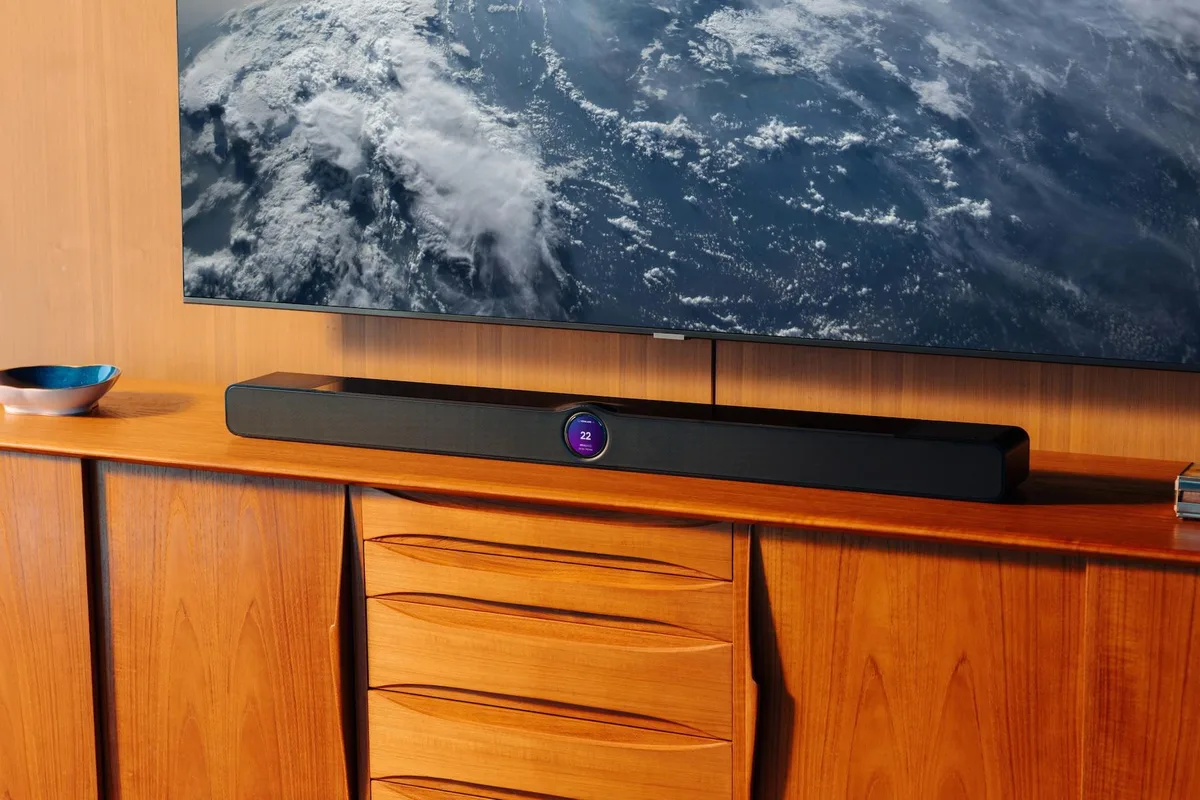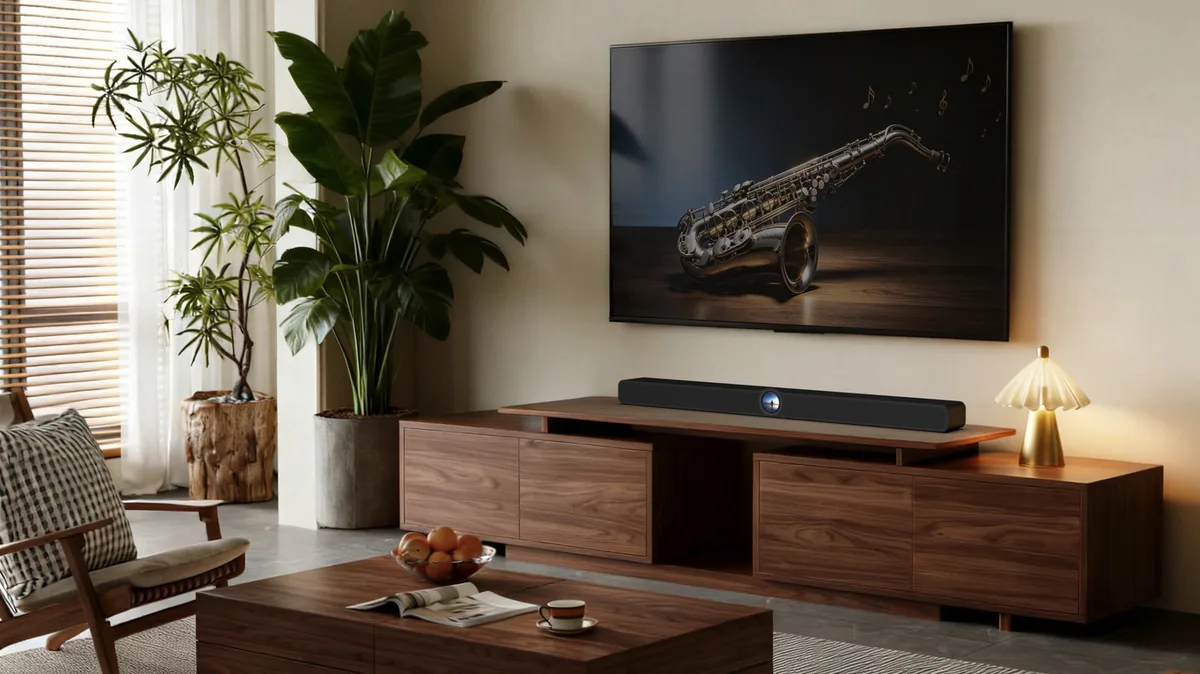
WiiM unveiled its first soundbar, the WiiM Bar, in July 2026, priced at $479 with pre-orders starting in June [1, 2]. The soundbar supports a 3.0.2 Dolby Atmos setup equipped with eight drivers: three front mid-woofers, three front tweeters, and two up-firing full-range height drivers [1, 2]. It also includes four passive radiators.
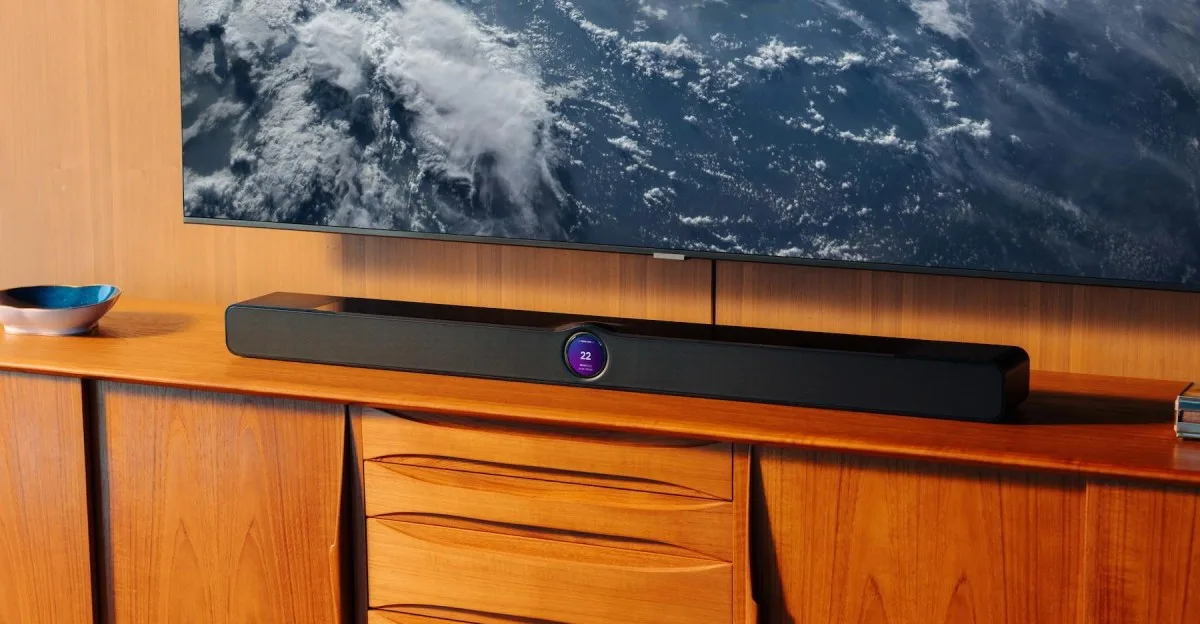
Users can expand the system to 3.1.2 by adding a WiiM Sub Pro subwoofer, which sells for $449, or extend to 5.1.2 surround sound with additional WiiM wireless speakers [1, 2]. The front center of the WiiM Bar features a 2.1-inch round glass-covered touchscreen display that shows playback controls, source switching, EQ settings, audio presets, and album art. An Engadget article noted, "The glass-covered 2.1-inch round display offers playback controls, source switching, EQ, audio presets and customization options on the front of the WiiM Bar" [2].
Additional controls reside on the top panel, where capacitive buttons manage volume, play/pause, and source switching [1, 2]. The soundbar supports streaming from over 20 services including Google Cast Audio, Spotify Connect, Qobuz Connect, Tidal Connect, and Amazon Music Cast but notably lacks Apple AirPlay integration [1, 2].
Connectivity options include HDMI eARC, optical, line-in, Ethernet, and USB-A ports. The USB-A port is configurable for audio input/output or media storage [1]. The system also features RoomFit calibration for room correction, a Clear Voice Mode to enhance dialogue, and a Night Mode designed to reduce loud noises without affecting speech intelligibility [1, 2].
The soundbar's launch marks WiiM's entry into higher-end home audio, combining advanced audio formats with modern user interface features. The company has positioned the WiiM Bar as a versatile standalone device with expandable options for users seeking a full surround experience.