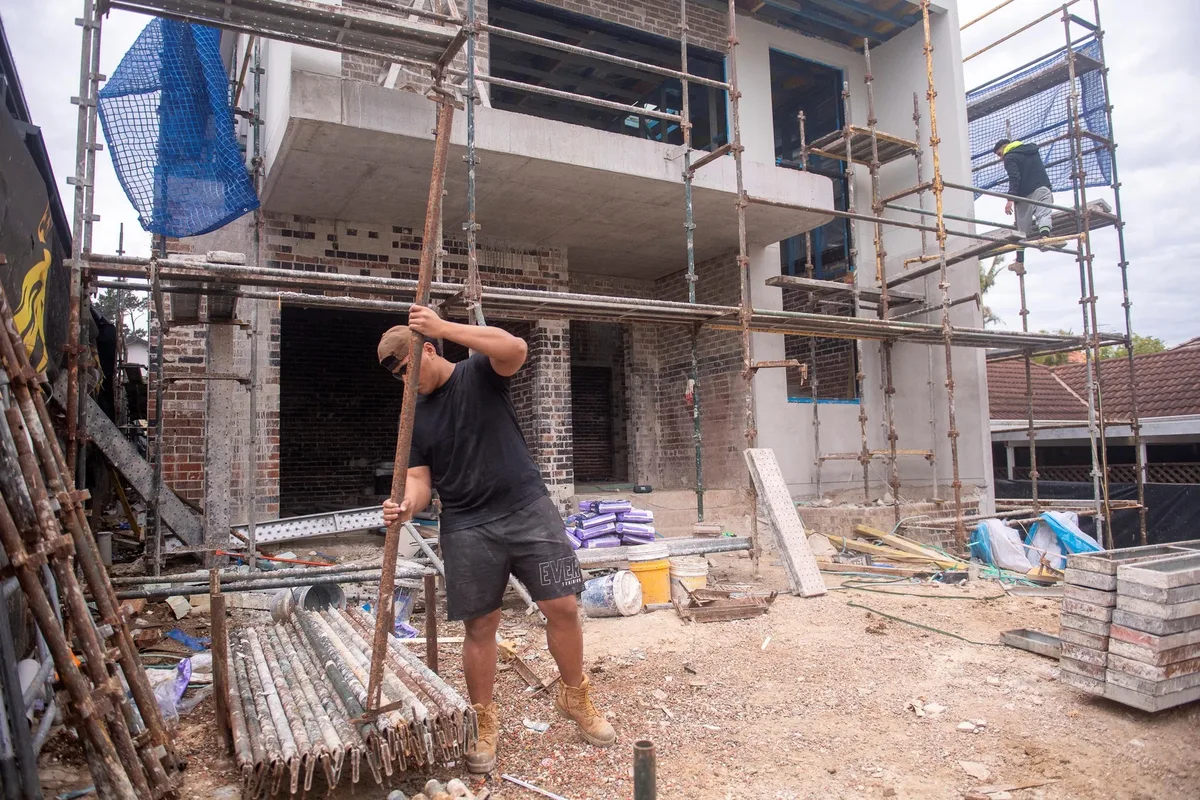
Australia aims to build 1.2 million new homes by 2029 under the National Housing Accord to tackle the housing shortage nationwide [1, 2, 3]. Two years into the agreement, home completions are 27% below the quarterly target of 60,000 dwellings needed to stay on track [1, 2, 3]. Builders in major cities including Brisbane and Sydney face longer construction times and higher costs driven by labor shortages and rising prices for materials and financing [1, 2, 3].
In Brisbane, builder Jay Perham reported pouring concrete only at night due to daytime labor shortages. "That then creates quality issues, right? Because you just can’t see during the night. Probably the last three or four pours I’ve made have all been night time and we’ve been under head torches and lamps," he said [2]. Brisbane’s labor constraints are intensified by about A$7 billion in Olympic-related construction for the 2032 Games [1, 2, 3]. Sydney suffers particularly severe capacity constraints among cities [1, 2, 3].
Almost 70% of approved apartments since 2020 have not started construction yet, with the Gold Coast at 83%, Sydney 64%, and Melbourne 62% not begun [1, 3]. Mark Dawson, head of housing at Urbis, said apartment development feasibility is hurt by rising construction costs including materials, labor, and financing expenses [1]. Hal Pawson, emeritus professor at the University of New South Wales, said, "The capacity of the construction industry is being stressed, it’s at its limits" [2].
The Australian Housing Industry Association projects the country will deliver around 15% fewer homes than the target by 2029 [1, 3]. Michael Hopkins, Deputy Executive Director of Master Builders Queensland, criticized the focus on tax debates rather than boosting workforce and cutting red tape, saying "We should focus on expanding the workforce and simplifying red tape and regulations" [1]. Australian Housing Minister Clare O'Neil’s spokesperson acknowledged the target is "deliberately ambitious" but said, "the answer to those challenges is not to lower our ambition – it is to keep doing everything we can to build more homes, faster" [2].
In May 2026, the government canceled real estate investment tax incentives blamed for driving up housing prices, which has cooled the market. However, builders maintain these reforms do not resolve the core supply issues caused by labor shortages and regulatory hurdles [1, 3].
The construction shortfalls revealed on August 12, 2026 further highlight the challenge of meeting the 1.2 million new homes goal by 2029, with delays ongoing and capacity stretched across key cities [1, 2, 3].