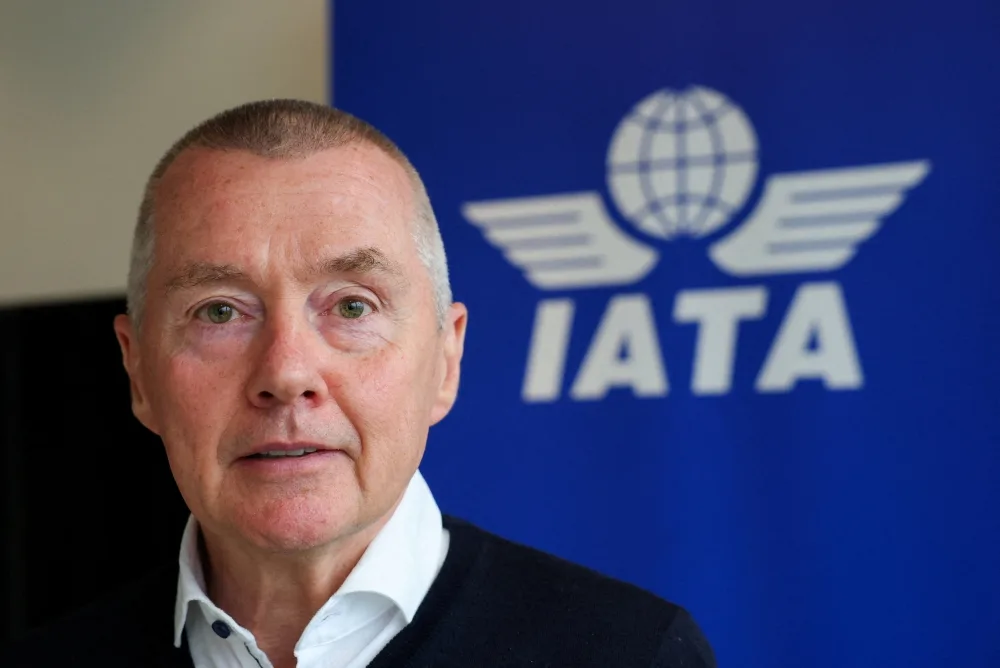
Global airline executives gathered in Rio de Janeiro from June 6-8 for the annual International Air Transport Association (IATA) summit to confront rising fuel costs and operational challenges linked to the ongoing Iran war [1, 2].
IATA represents more than 370 airlines which account for roughly 85% of global air traffic [1, 2]. Before the Iran conflict, industry profits were projected to reach a record $41 billion in 2026. However, the war’s disruptions have forced flight detours and driven jet fuel prices higher, complicating carriers’ efforts to maintain profitable routes and raise fares [1, 2].
Moody’s Ratings downgraded the global airline sector outlook from stable to negative in May, forecasting profits could fall by more than 35% in 2026 due to increased fuel costs and war-related impacts [2]. The pressure is compounded by sustainable aviation fuel shortages, which hinder efforts to meet IATA’s goal of net-zero emissions by 2050 [2].
Global passenger traffic declined in April for the first time since the post-pandemic recovery, led mainly by drops at Middle Eastern carriers highly affected by airspace restrictions and higher costs [2]. Air India CEO Campbell Wilson said, "When you take on all those competitive dynamics, the added cost of this extra flying, the added cost to fuel, it just makes some routes uneconomic," highlighting the strain on airline networks [2].
Reports from June 4 detailed these challenges ahead of the Rio summit, where members aimed to address the fuel cost shock and operational disruptions caused by the Iran war [2, 1]. The gathering focused on strategies to sustain network profitability amid rising costs while balancing environmental goals.
The IATA meeting concluded on June 8, with airlines continuing efforts to adapt to volatile market conditions and geopolitical risks impacting global aviation.