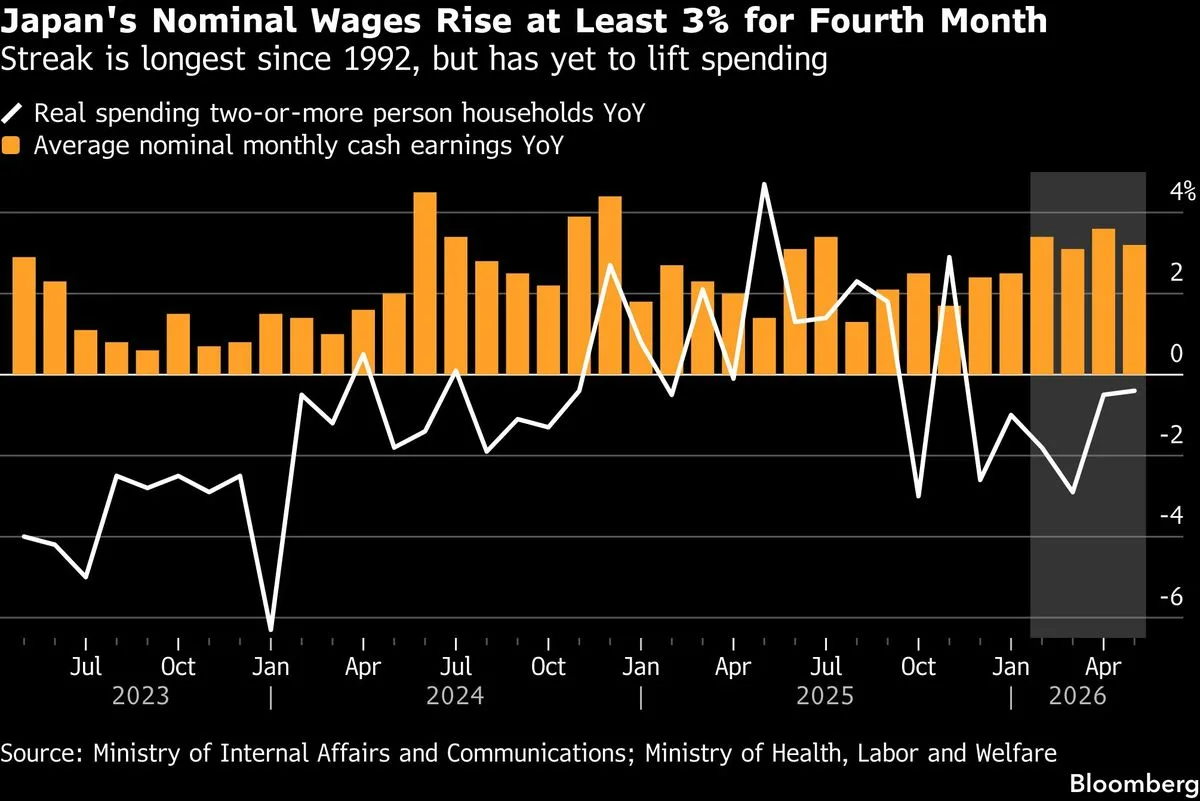
Nominal wages in Japan increased by 3.2% in May 2026 compared to the previous year, following a revised 3.6% rise in April 2026. This marks the fourth straight month with wage growth of at least 3%, the longest such streak since 1992 [1, 2, 3].
Base pay rose by 3% in May, while a stable wage measure that excludes bonuses and overtime for full-time workers increased by 2.4% in the same month [1, 2, 3]. When adjusted for inflation, cash earnings climbed 1.4% in May, representing the fifth consecutive month of real wage gains—the longest run since 2021 [1, 2, 3].
The sustained wage growth strengthens the Bank of Japan's position on potential further interest rate hikes. "With crude oil prices stabilising, I believe that if current wage levels are maintained, real wages will continue to show positive growth for the time being. I expect the BOJ will maintain its course towards raising rates," said Naoto Sekiguchi, economist at SMBC Nikko Securities Inc [1].
Japan’s unemployment rate has remained below 3% for over five years, one of the lowest among developed nations [1]. Meanwhile, Prime Minister Sanae Takaichi’s subsidies on gasoline, education, and household expenses have helped soften headline inflation, even as inflation-adjusted household spending fell 0.4% despite real wage gains [1].
Markets currently assign an 82%-88% chance of another Bank of Japan rate hike by December 2026 [1, 3]. The BOJ’s next policy decision is scheduled for the end of July, on July 31 [1, 3].
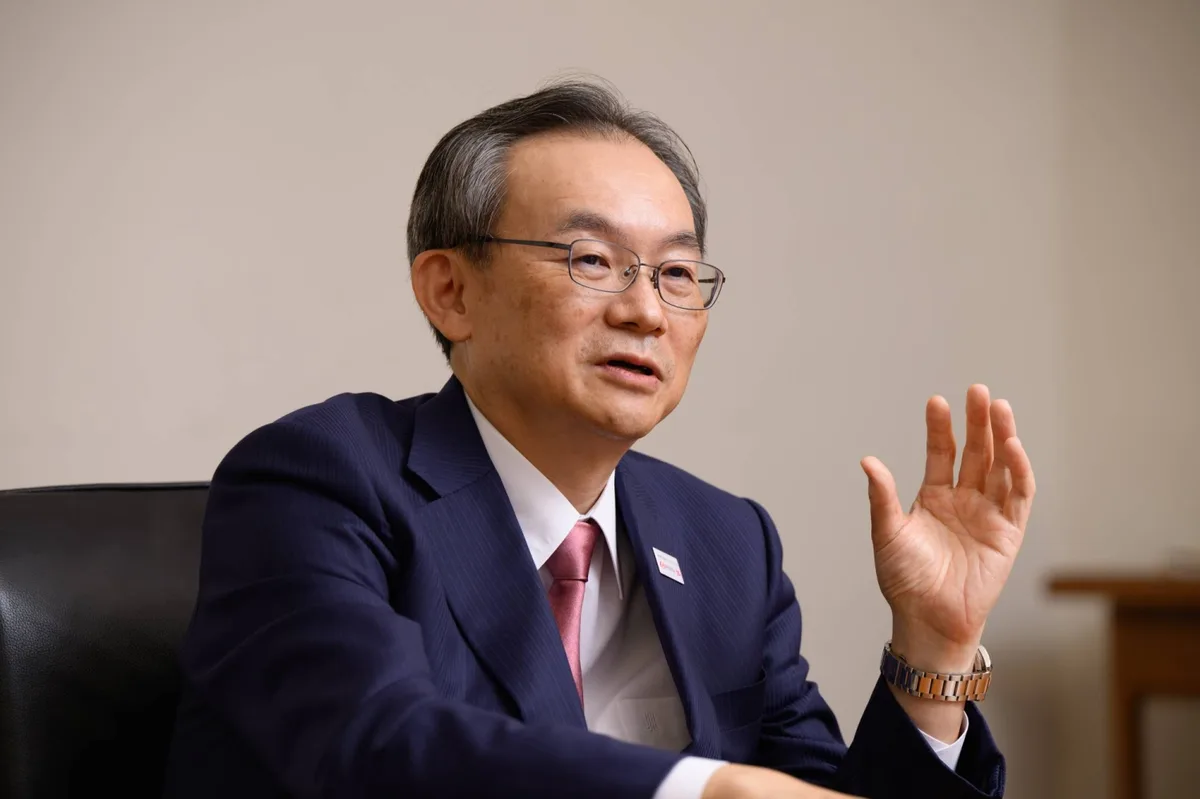
Separately, Mitsubishi UFJ Financial Group’s CEO Junichi Hanzawa reaffirmed ambition for the bank, stating, "I want to achieve the goal we set 20 years ago to become one of the world’s top five banks" [4].