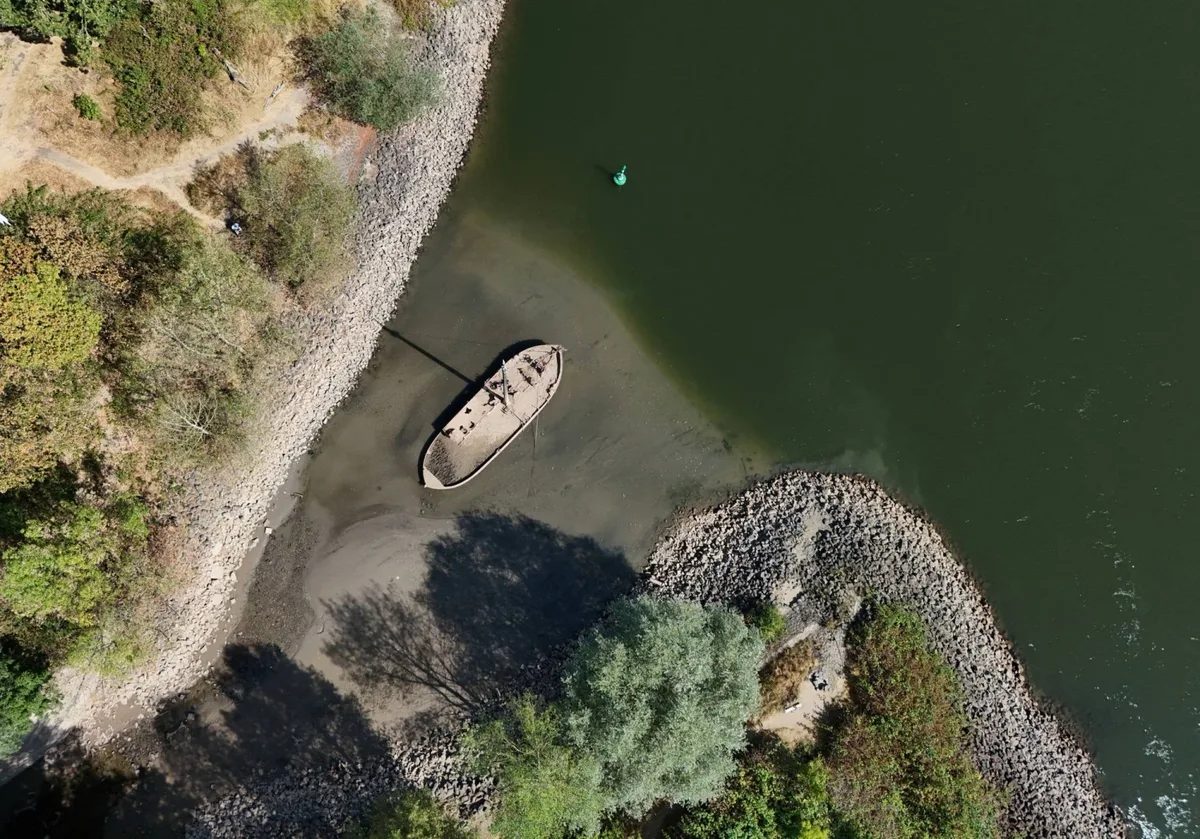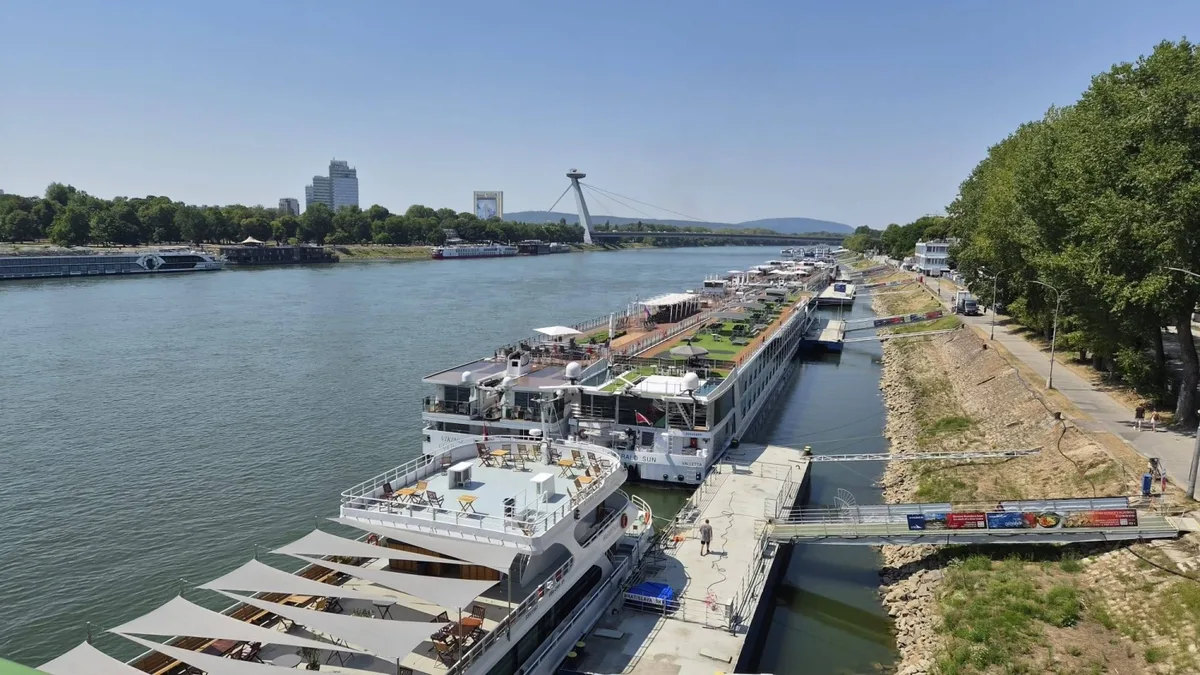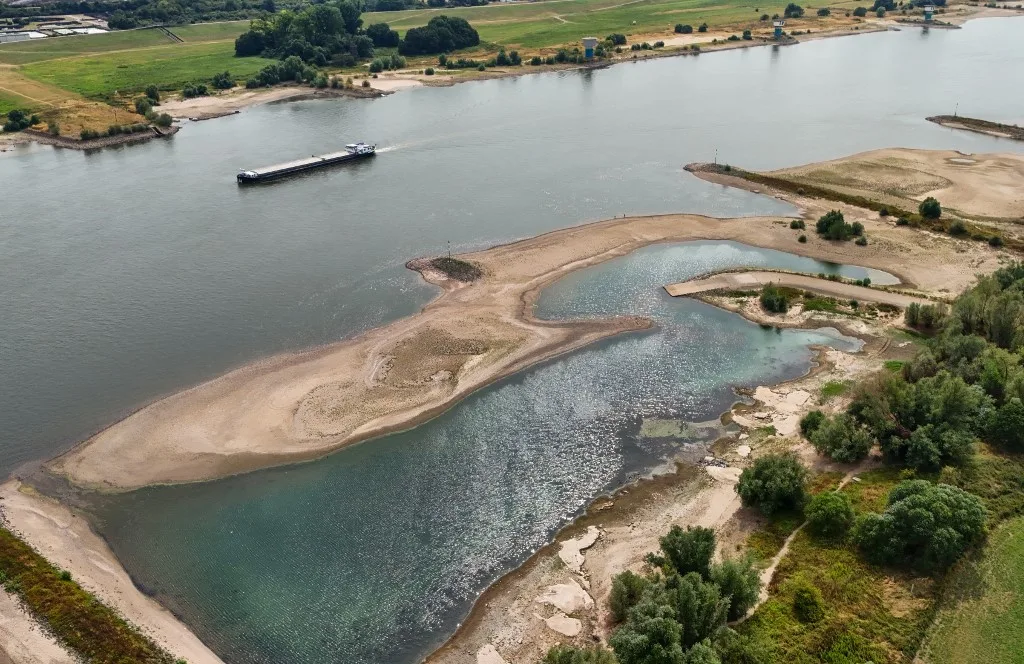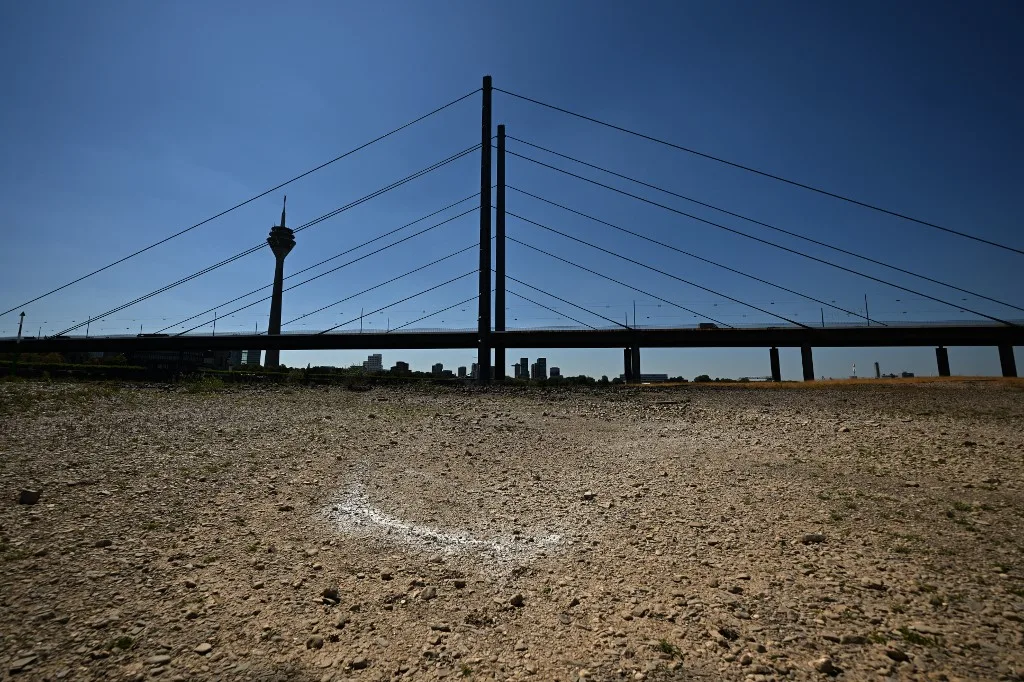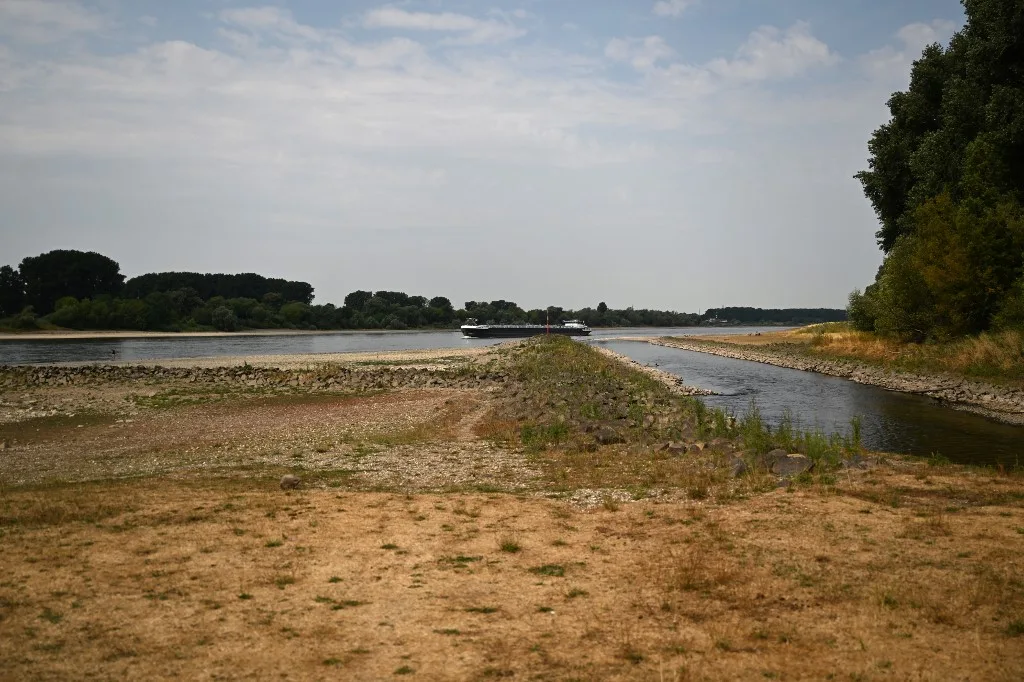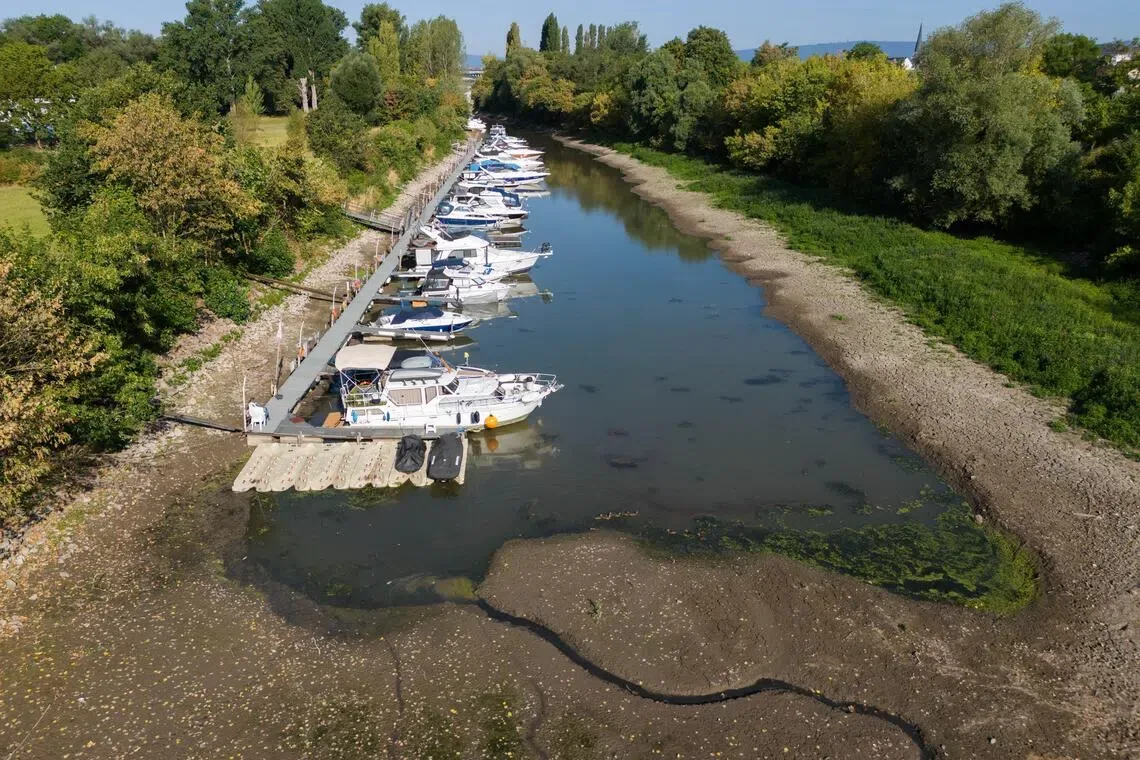
Water levels on Germany’s Rhine River have dropped to unprecedented lows due to extreme heat and drought in early August 2026, severely restricting inland cargo transport [1, 2, 3, 4, 5]. At Duisburg port, vessels are loading at about one-third of their usual capacity, forcing more frequent trips and increased costs [1, 3, 4, 5]. Shipping rates have surged, with petroleum freight hitting €200 per tonne this month between Karlsruhe and ports such as Amsterdam and Rotterdam—well above the €130 record in August 2022 [1, 3, 4].
The Rhine handles about 80% of Germany’s inland waterway freight, moving roughly 285 million tonnes of goods annually between industrial centers and the Rotterdam port [1, 3, 4]. The river’s near-dry conditions are creating logistical bottlenecks, delivery delays, and supply issues impacting sectors including chemicals, steel, and petroleum [1, 3, 4, 5]. Industrial firms such as Covestro and Lanxess report significant difficulties; Covestro relies on the Rhine for over 30% of its product shipments and nearly 75% of its raw materials [3, 4]. Steelmaker thyssenkrupp and chemical giant BASF have shifted to vessels with shallower drafts to keep supply chains flowing [1, 3, 4].
To adapt, shipping companies are imposing surcharges and spreading cargo across multiple vessels, raising wholesale costs [1, 5]. Rail and road transport alternatives face limitations from capacity bottlenecks, driver shortages, and infrastructure constraints [1, 3, 4]. Rhineland-Palatinate Economy Minister Michael Ebling emphasized, "This strategic waterway must remain operational year-round," calling for accelerated dredging to maintain river usability [1].
Transport Minister Steffen Bilger convened industry and shipping officials in Bonn on August 6 to urgently address the crisis [1, 3, 4]. The Rhine water level at the Kaub gauge is forecast to drop to an all-time low of 18 centimeters on August 7, breaking the previous 25 cm record set in 2018 [5]. ING economist Rico Luman noted, "The Rhine handles around 80 per cent of Germany’s inland waterway traffic," while economist Brzeski warned that without rain, "this drought may deal a heavy blow to the economy recovering from long stagnation" [1, 3].
Historically, the 2018 drought, which also lowered Rhine water levels, reduced Germany’s economic growth by about 0.3% [3, 4]. The current early-season lows and absence of relief rainfall are expected to further dampen Germany’s economy in the third quarter of 2026 [1, 5].
Officials continue urgent talks on how to deepen parts of the Rhine and diversify transport methods to prevent worsening economic disruption.