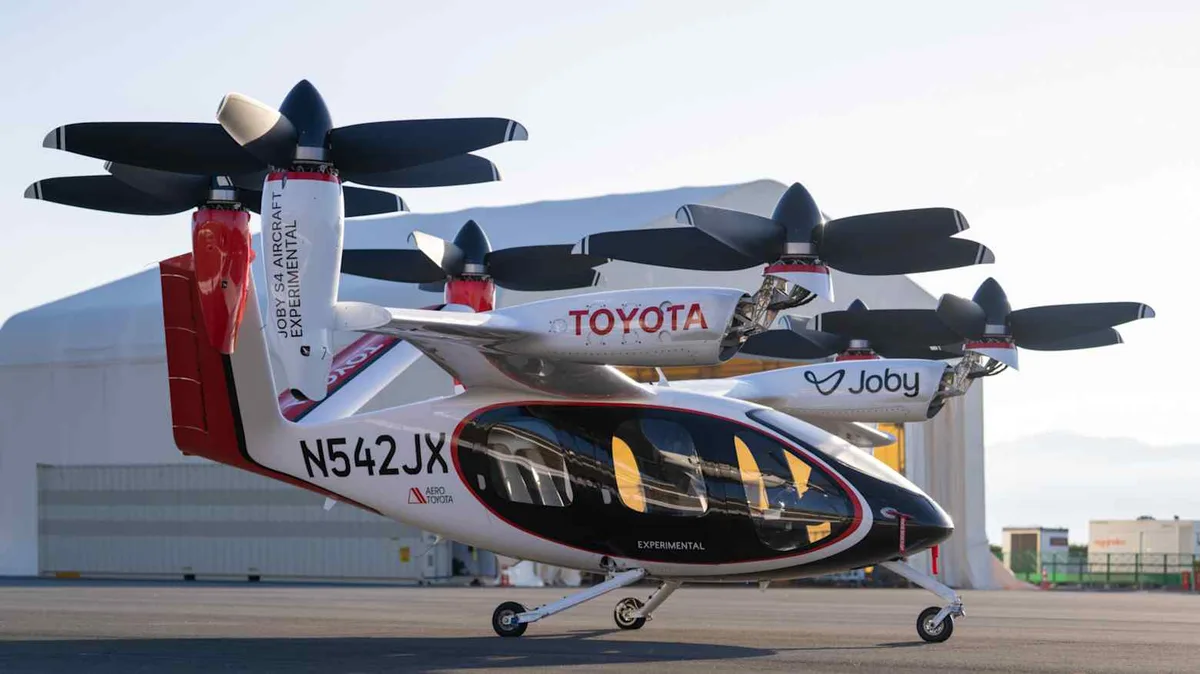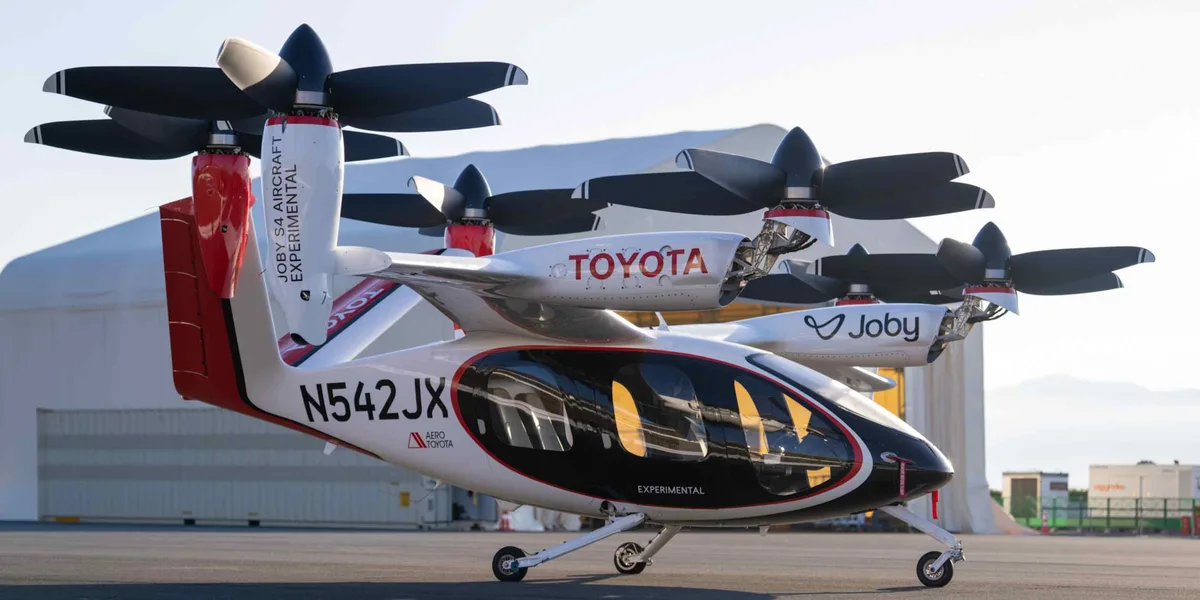
Toyota Motor has agreed to create a joint venture with U.S. electric aircraft startup Joby Aviation to develop and produce flying cars, or personal aircraft designed for urban air mobility [1, 2]. The two companies have deepened their manufacturing cooperation as part of this collaboration, aiming to advance production capabilities and scale commercial air taxi operations [1, 3, 2].
Toyota plans to invest an additional $250 million in the venture, bringing its financial commitment to supporting Joby’s air taxi technology and production growth [3, 2]. Toyota became Joby’s largest shareholder in 2025 and has been working closely with the startup to standardize production methods [2].
Joby Aviation specializes in electric vertical takeoff and landing (eVTOL) vehicles designed for short commuter flights. The joint venture seeks to improve productivity, quality, and cost effectiveness in manufacturing these commercial vehicles. "The strategic alliance will initially focus on establishing the groundwork for commercial production, and advancing manufacturing excellence, with particular emphasis on further improving productivity, quality, and cost," the companies said [2].
Joby’s planned commercial passenger service launches have faced delays. The timeline remains unclear as full certification for commercial flight by U.S. regulators such as the Federal Aviation Administration is still pending [2]. Despite these challenges, Joby’s stock rose 4.6% to $9.02 on the announcement day, after a roughly 32% decline so far in 2026 [2].
Toyota also plans to deliver a final tranche of nearly $1 billion funding later this year pending regulatory approvals and the signing of a manufacturing supply agreement with Joby [2]. The joint venture formalizes the companies’ partnership to bring electric air taxis closer to commercial production.
The next key step is the expected delivery of Toyota’s final funding tranche and the completion of the manufacturing supply agreement, currently targeted for late 2026 [2].