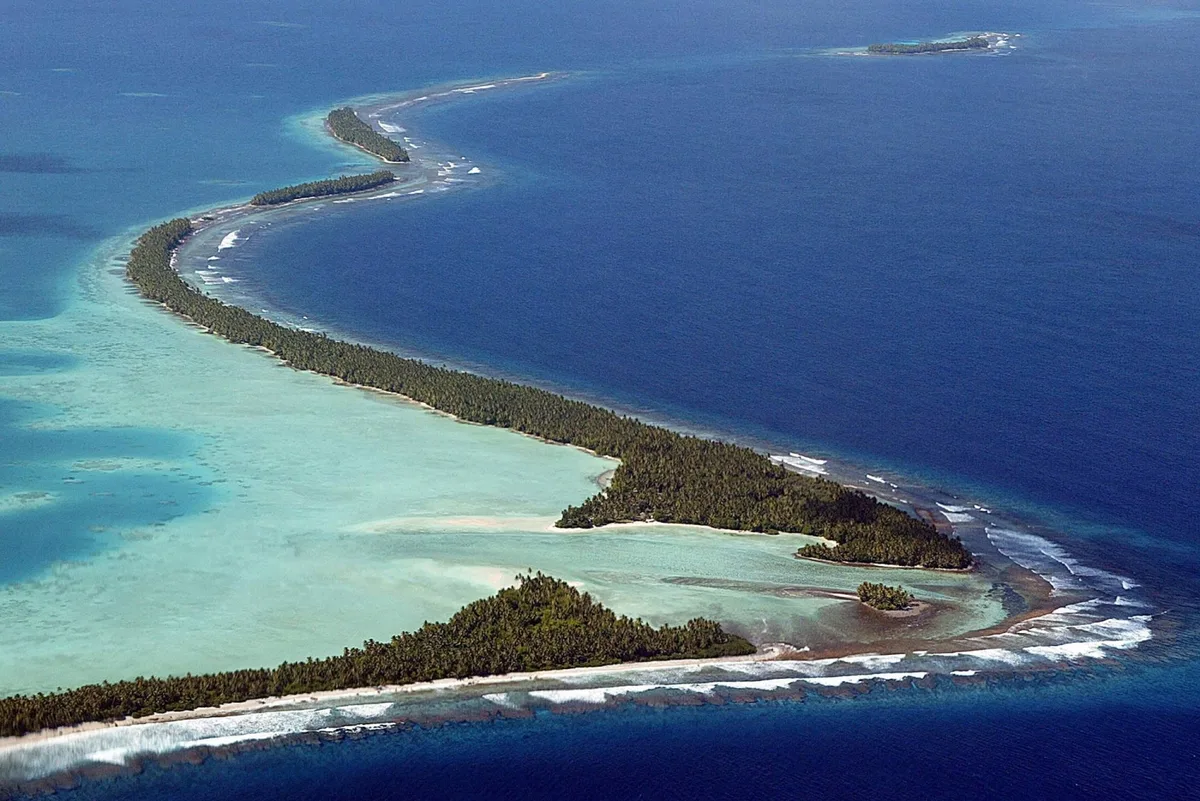
Tuvalu’s $200 million trust fund, created to support the South Pacific nation vulnerable to climate change, holds investments in coal mining, gas exploration, and the world’s largest crude oil refinery, according to reports published on May 28, 2026 [1, 2]. Tuvalu is among the countries most exposed to climate threats like rising seas, acidifying oceans, tropical diseases, and land scarcity [1, 2].
The fund was established in 1987 with help from Australia, New Zealand, and the United Kingdom [2]. In 2022, advisory firm Mercer took over management of the fund [2]. Mercer’s September 2025 quarterly report revealed that the fund is invested in diversified markets including Australian shares, international shares, and emerging markets, which include holdings in major fossil fuel companies [2].
The trust fund’s investment objectives state it must minimize exposure to fossil fuel reserves and carbon emissions where possible, yet its current holdings include coal, oil, and gas assets [2]. Following the publication of the fossil fuel investments, Tuvalu’s government is reviewing the fund’s exposure to them [1, 2].
Tuvalu climate activist Richard Gokrun described the findings as shocking. He said, “We stand strong for the phase-out of fossil fuels, because we see the impacts to our country. The major changes that we are seeing are sea-level rise. We are starting to see new places are getting flooded or inundated.” [2]
The fund is valued at approximately $200 million USD, equivalent to about 796 million Malaysian Ringgit [1, 2]. The review underway aims to align the fund’s investments with Tuvalu’s urgent climate vulnerability.
The trust fund’s next steps involve evaluating options to reduce fossil fuel holdings while maintaining financial support for the nation’s future. The review process follows the May 28, 2026 disclosure and is ongoing [1, 2].