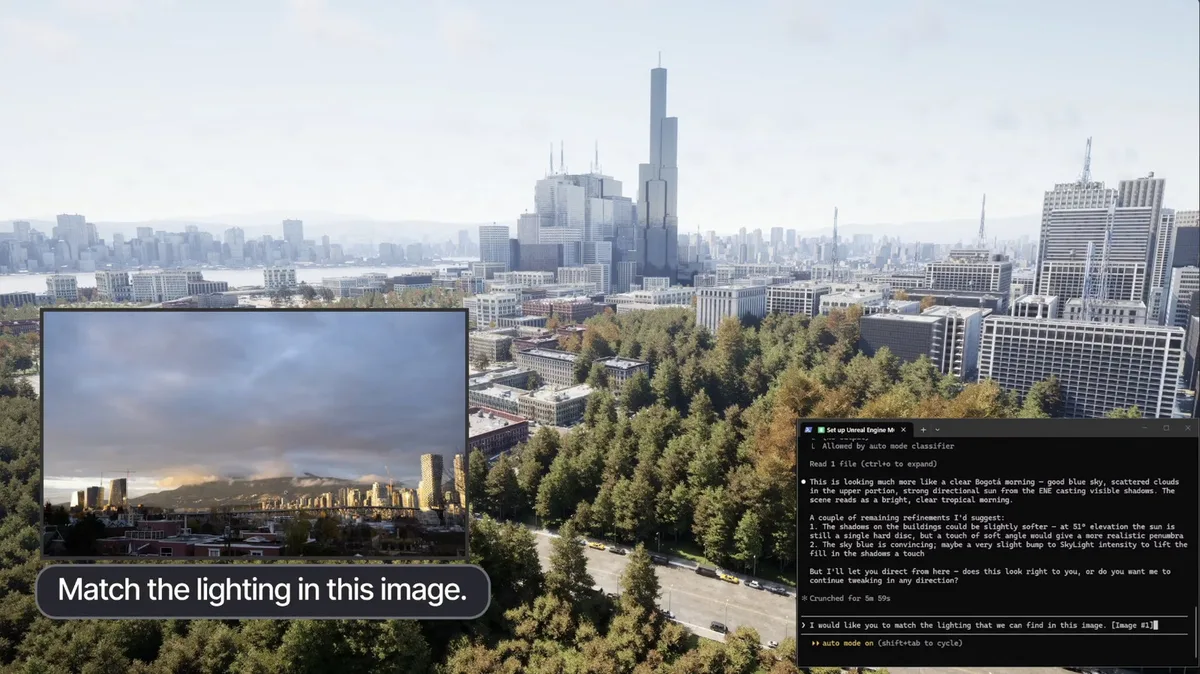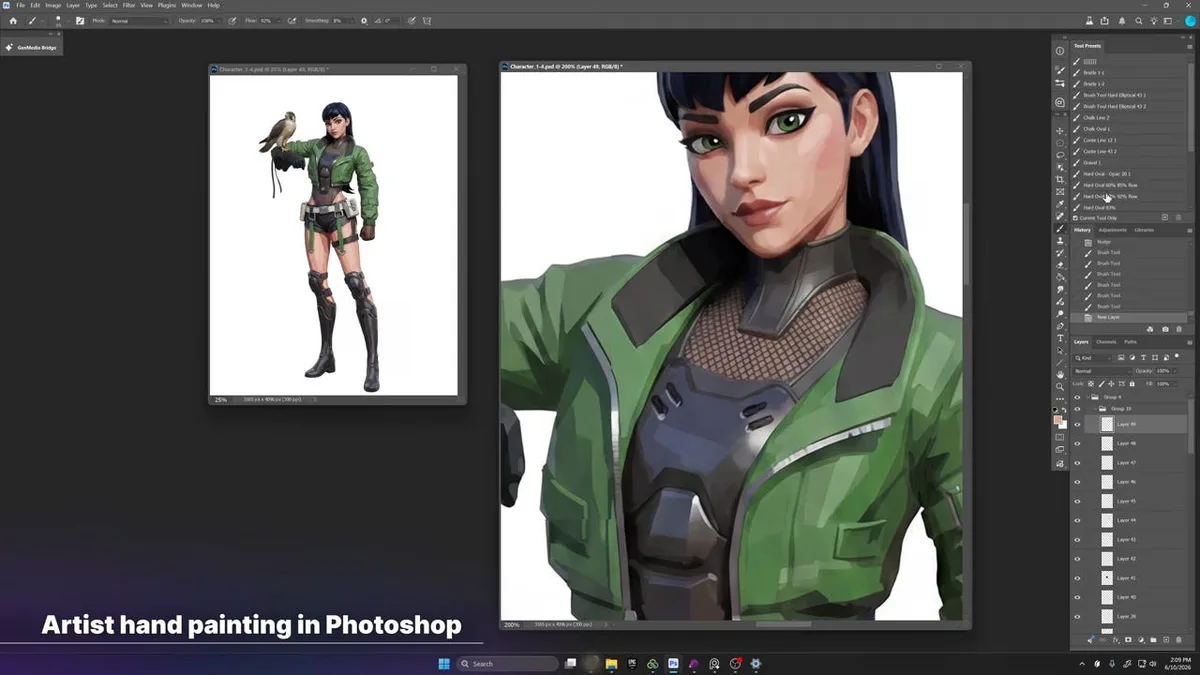
Epic Games uses generative AI during the concept art stage to help create and iterate new Fortnite character skins and in-game locations, but does not rely on AI to design characters from scratch [1]. An Epic Games staff member explained, "The design is king, AI can generate generic stuff all day, but that's not what we're doing here. It just skips ahead in the timeline so [the artist] can focus on honing in on the design and crafting it exactly how he wants it to be" [1].
After AI generates assets, artists review and refine them to correct errors before finalizing the designs for Fortnite [1]. This human oversight ensures quality and creative control remain central to the process.
Epic Games released Unreal Engine 5.8 on June 17, 2026, featuring an experimental Model Context Protocol (MCP) plugin that supports integration with generative AI models such as Claude and Gemini [2]. The MCP plugin enables developers to automate asset creation, testing, and optimization within both Unreal Engine and Unreal Engine for Fortnite (UEFN) [2].
Marcus Wassmer, head of Epic's development team, described the approach as "creativity and productivity multipliers so that teams can focus their efforts on the essential creative and technical tasks of development rather than time on time-consuming manual tasks" [2]. An Epic Games blog post added their goal for Unreal Engine 6 is "to greatly reduce the tedious work in authoring content to leave more time for creative exploration, and increase the amount of iterations a team can make to polish their content" [2].
Epic Games aims to continue evolving Unreal Engine to empower developers to spend less time on repetitive manual work and more time on creative polish and iterative design refinement [2].