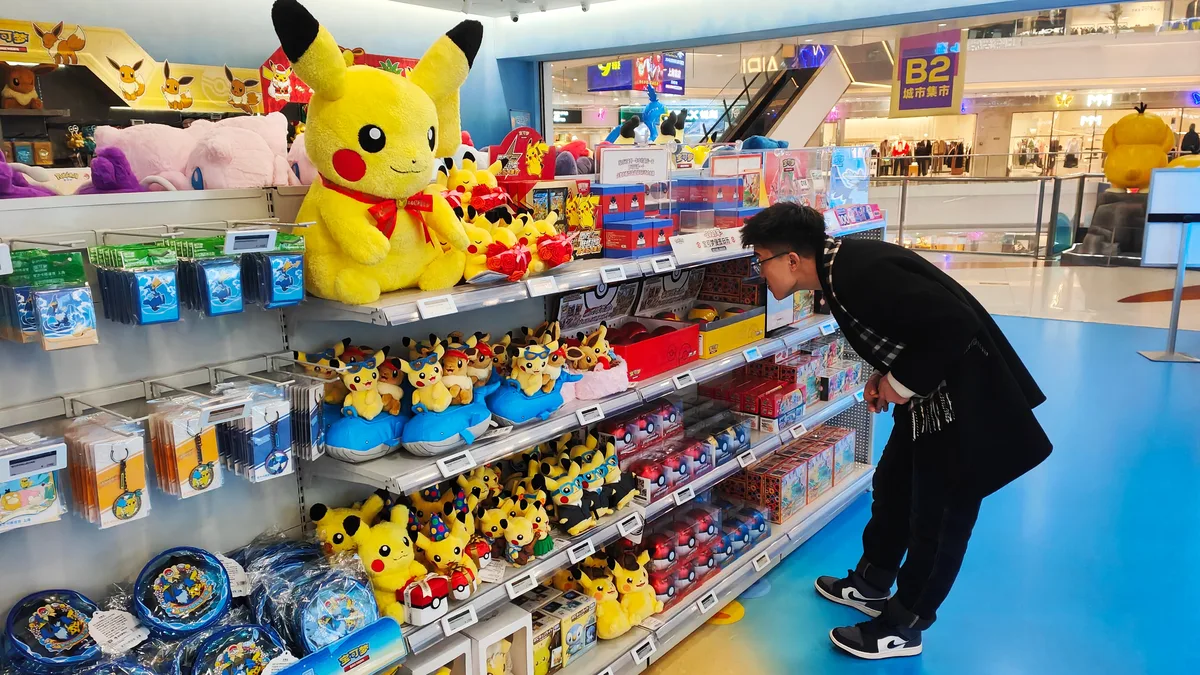
The Pokémon Company has installed a facial recognition system at five pop-up Pokémon card stores across Japan to limit purchases and entry to one per person each day for customers who are elementary school age and older [1, 2, 3, 4]. Customers attempting to enter the same store multiple times in a day may be denied entry by the system or asked questions by staff, who said, "To ensure compliance with our entry rules, if we observe multiple attempts to enter the store, our staff may speak to you individually [2]."
Children younger than elementary school age are not subject to facial recognition but must be accompanied by a guardian to enter the stores [1, 2, 4]. Those who refuse to undergo the facial scan will be barred from entering [1, 4]. The company stated, "Your acceptance of this system's management and your agreement to these rules are conditions for entering our store [4]."
Collected facial data will be deleted after a certain period according to The Pokémon Company's privacy policy [1, 4]. The system was announced publicly on July 24, 2026, via an update on the official Pokémon Card Game website, which said the goal is to "provide a safe and secure shopping environment, prevent crime, and ensure compliance with appropriate entry and purchase rules" in the stores [3].
This facial recognition effort follows earlier measures requiring customers in Japan to show government-issued ID cards, such as the national "My Number" card, to limit scalping and resale of Pokémon Trading Card Game products [1, 3]. The July 21 announcement introduced the use of these IDs to restrict purchases and lottery entries online and in stores [3].
The system is currently limited to the five Japanese pop-up stores and has not been announced for international deployment [1]. The Pokémon Company printed 10 billion Pokémon cards in 2025 to meet growing demand [2].
The facial recognition system aims to enforce a strict one-entry, one-purchase rule in the stores while maintaining customer safety. Store staff have clear authority to intervene if they observe multiple entries from the same person in a day, ensuring fair access to popular card products.
The company plans to continue monitoring the system’s effectiveness and compliance with purchase rules at the pop-up locations in Japan in the near term [3].