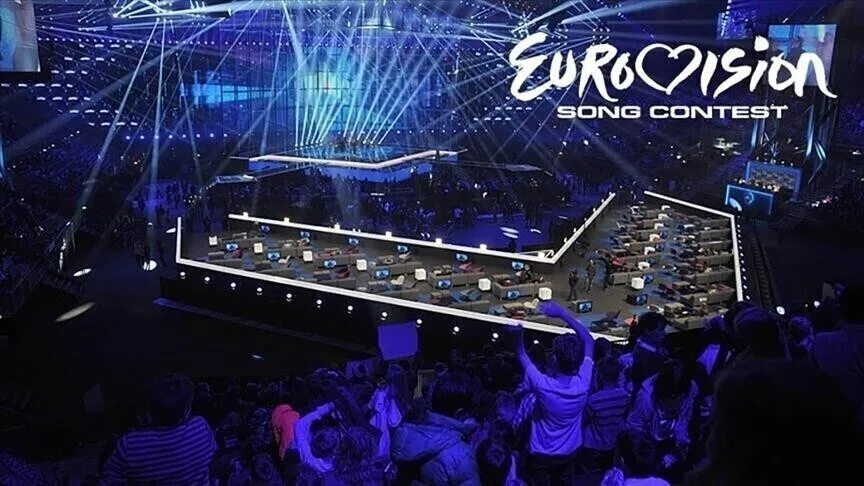
The European Broadcasting Union (EBU) announced on August 12 that broadcasters from countries involved in armed conflict or sensitive geopolitical situations will no longer be allowed to host the Eurovision Song Contest starting in 2027 [1, 2, 3]. This change follows ongoing conflicts, including Israel’s war in Gaza that began with Hamas's attack on October 7, 2023 [2, 4]. At the 2026 contest in Vienna, five countries—Spain, Ireland, the Netherlands, Slovenia, and Iceland—boycotted due to Israel’s participation amidst the Gaza war [1, 2, 4].
The 2027 contest will be held in Bulgaria after Dara’s victory for the country in May 2026 [1, 3]. If security risks prevent the winning country from hosting, the EBU will conduct an independent security assessment and appoint an alternative host broadcaster, which will assume full rights and liabilities without hosting on behalf of another member [1, 2, 3, 4].
In addition to hosting changes, the minimum age for Eurovision competitors will rise from 16 to 18 years old on the day of their first rehearsal starting in 2027 [2, 3, 4]. This move aims to protect younger artists from pressures linked to the competition. Martin Green, Eurovision director, said the update "continues the work already undertaken by the contest to strengthen safeguarding and protect younger artists from the pressures associated with competing at the Eurovision Song Contest" [4]. The youngest winner remains Sandra Kim of Belgium, who won at age 13 in 1986 [2, 4].
The EBU also clarified that lead singers must perform the main melody live, while backing tracks and pre-recorded elements may be used but cannot replace or unduly assist the lead vocal [3].
Green added that the rule changes were guided by member feedback to provide clarity, protect artists, and ensure the contest remains a safe and welcoming environment while preserving Eurovision’s spirit and integrity [1, 2, 3]. He said, "The Eurovision song contest is constantly evolving, and our annual review of the rules is an important part of making sure the contest remains fair, transparent and consistent for all those who participate" [1].
Eurovision is organized by the EBU, whose membership extends beyond Europe, allowing non-European countries to participate and host [2, 4]. The new rules come into force at the 2027 contest in Bulgaria, marking a significant shift in Eurovision’s hosting and competitor eligibility policies [1, 3].