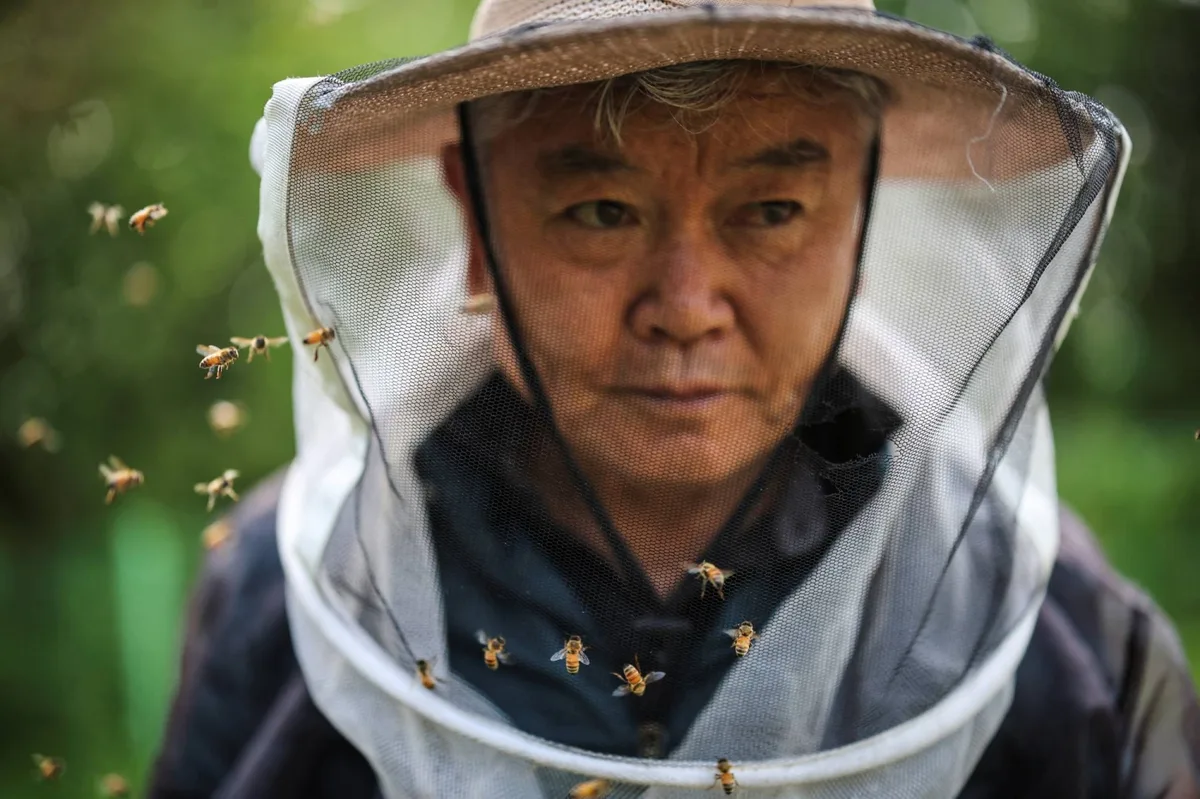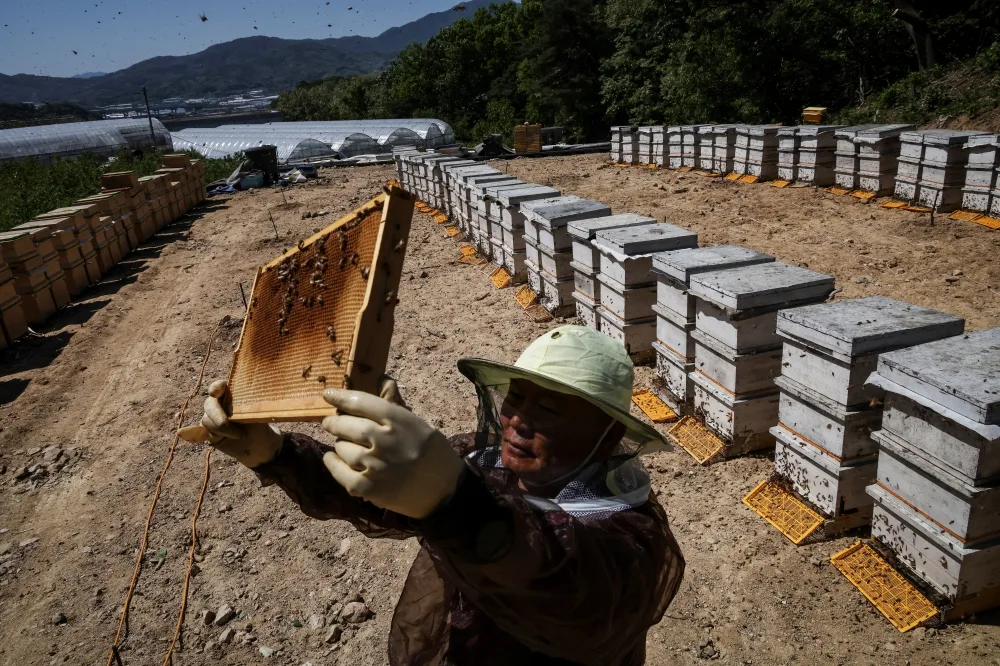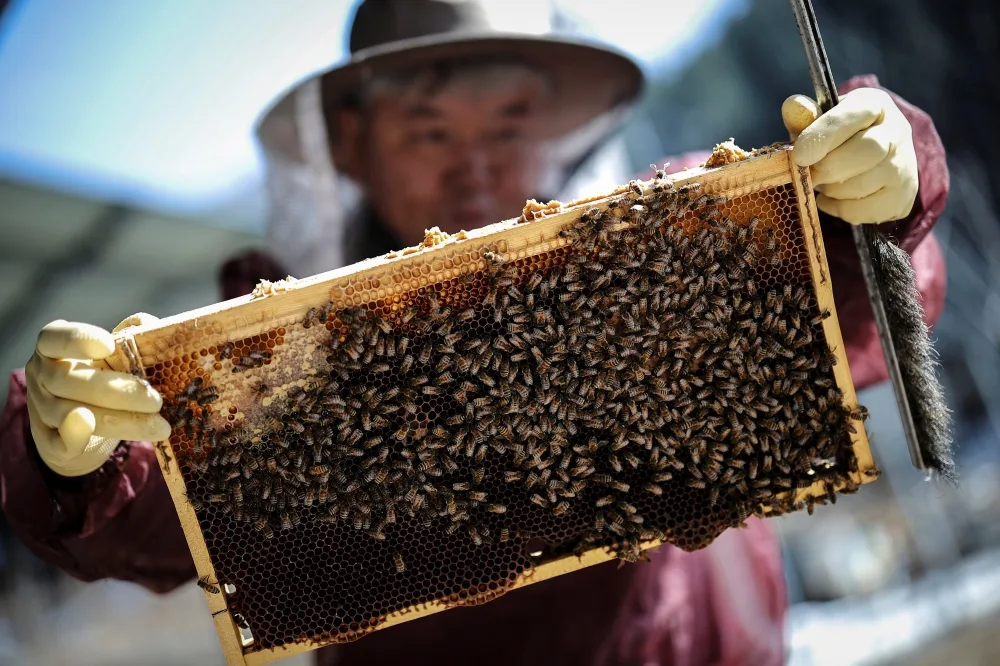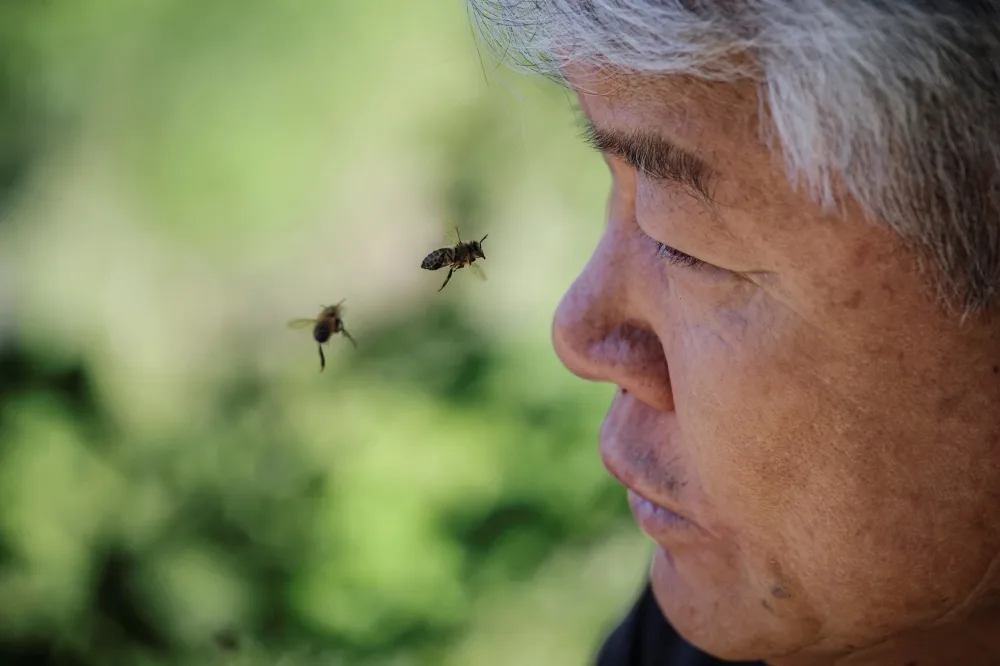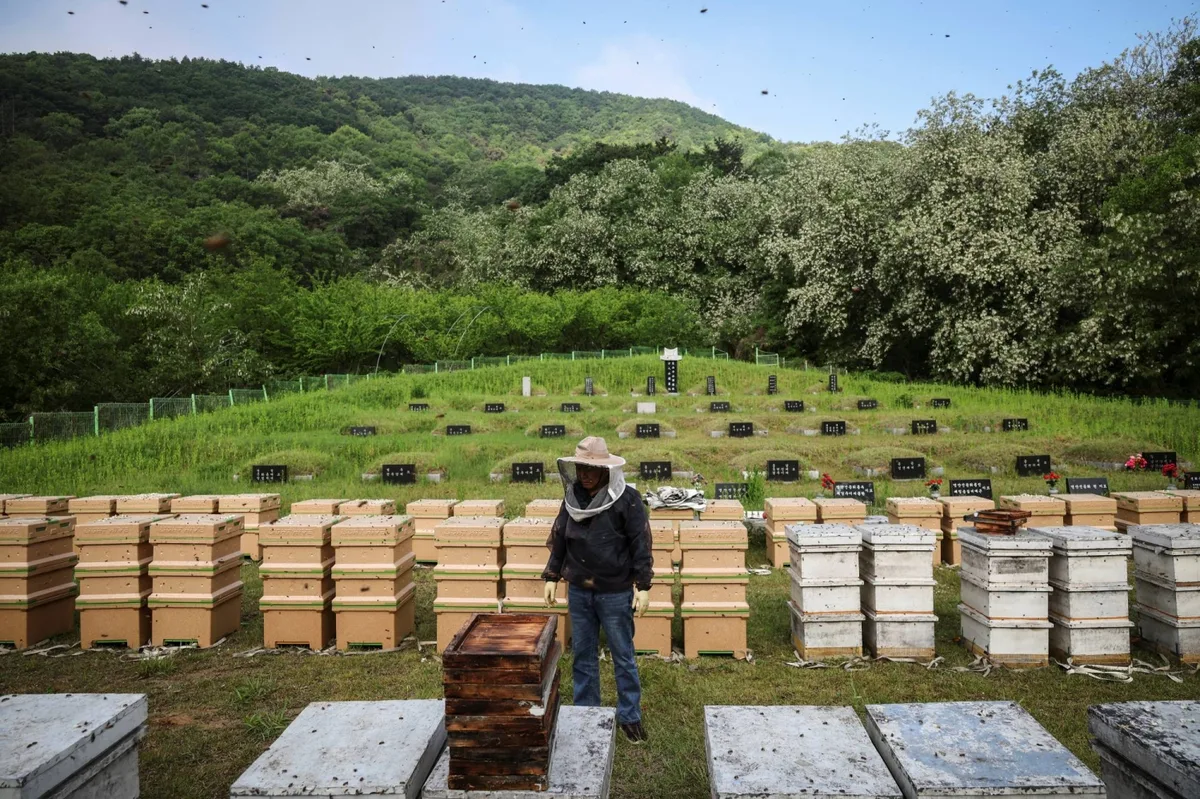
Park Gyeong-je, 65, a migratory beekeeper from Sancheong county, South Korea, manages about 110 hives housing roughly 8.8 million bees as of 2026. He began beekeeping in 1979 with just eight hives and has expanded since then [1, 2].
Park said climate change is shortening seasons, causing flowers to bloom earlier and for shorter periods. Strong winds also disrupt bees’ ability to return to their hives, making it difficult for beekeepers to maintain their colonies. "City people don’t notice seasons, but farmers feel them directly. Now it feels like only summer and winter remain," Park said. "Now, because of climate change, it is very hard for beekeeping farmers to survive" [1, 2].
South Korea has seen a 14% decline in the number of migratory beekeeping hives, down to 813,279 between 2014 and 2023, according to Ministry of Agriculture data. The total bee forage area fell dramatically to 146,000 hectares by 2020, about 70% less than recorded in the 1970s and 1980s [1, 2].
Bees in South Korea have also faced threats from mites and new diseases, further affecting their populations. Climate change harms bees worldwide and impacts vital processes like honey production and crop pollination of fruits such as apples, strawberries, and tomatoes [1, 2].
In 2024, South Korea exported 8.55 metric tons of natural honey, primarily black locust honey, along with chestnut honey and other varieties [1, 2]. Globally, China was the largest natural honey producer in 2018, followed by Turkey and Argentina [1, 2].
Yeh Sang-Wook emphasized the broader consequences, stating, "A decline in the (bee population) ultimately affects the food supply." He added, "The most fundamental substructure of the ecosystem that constitutes our entire natural world is, in a sense, being destroyed" [2].