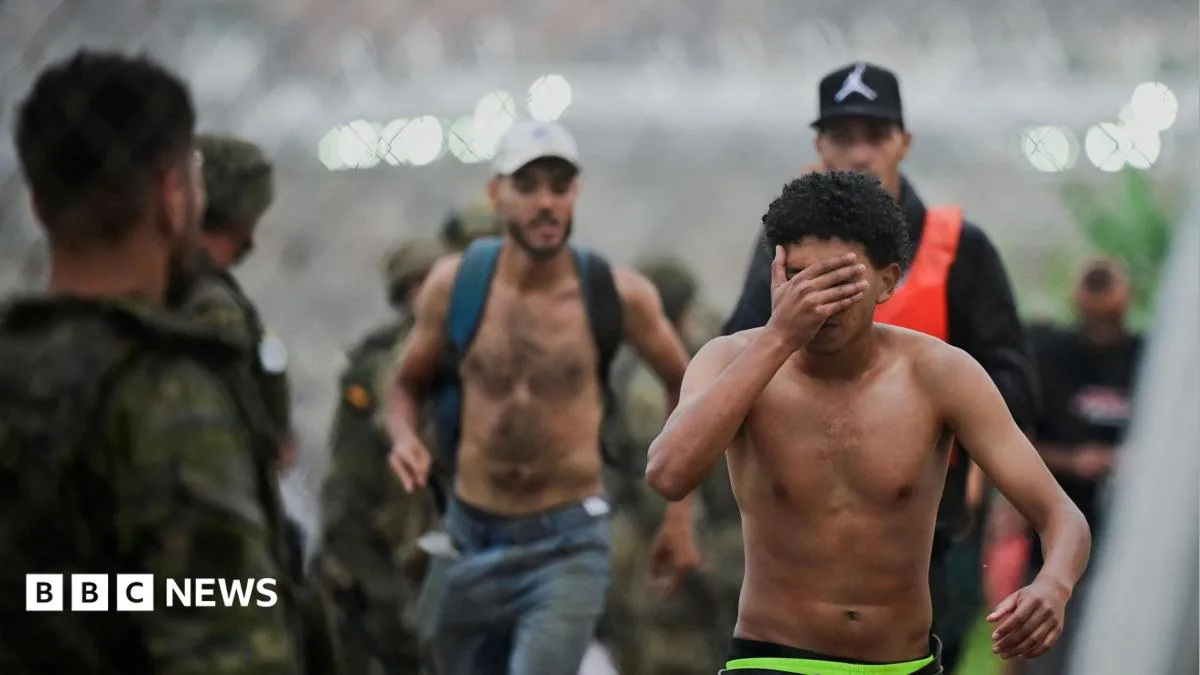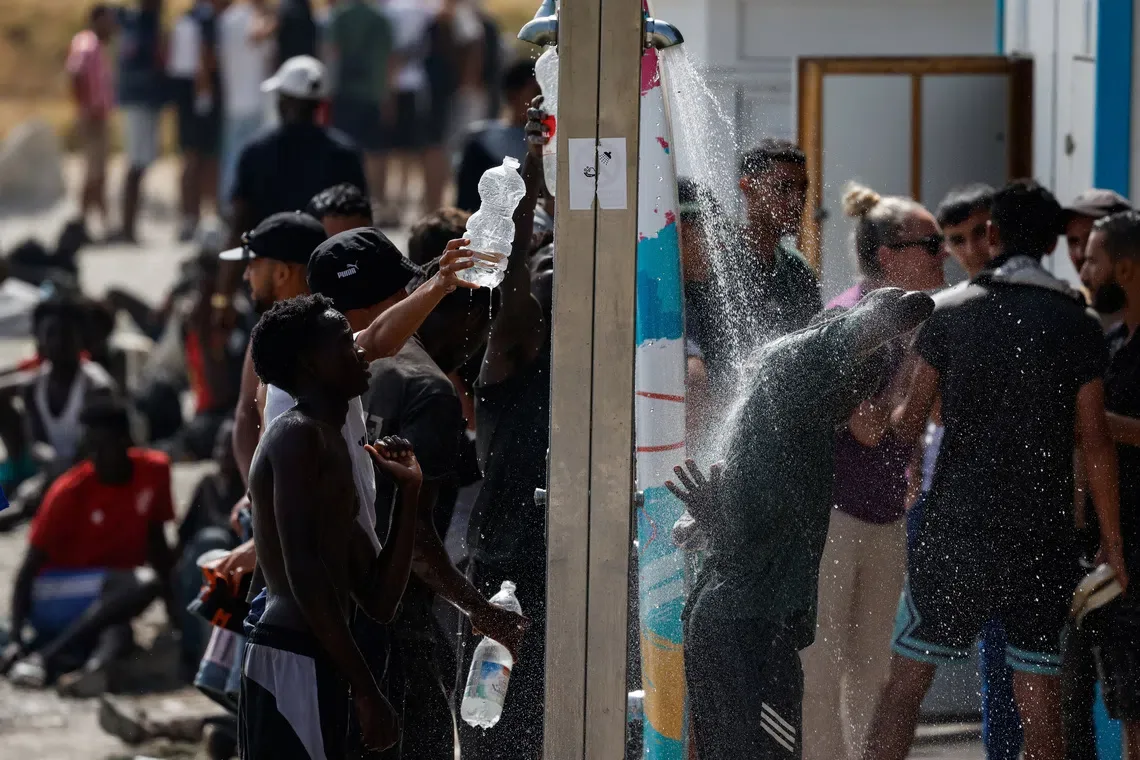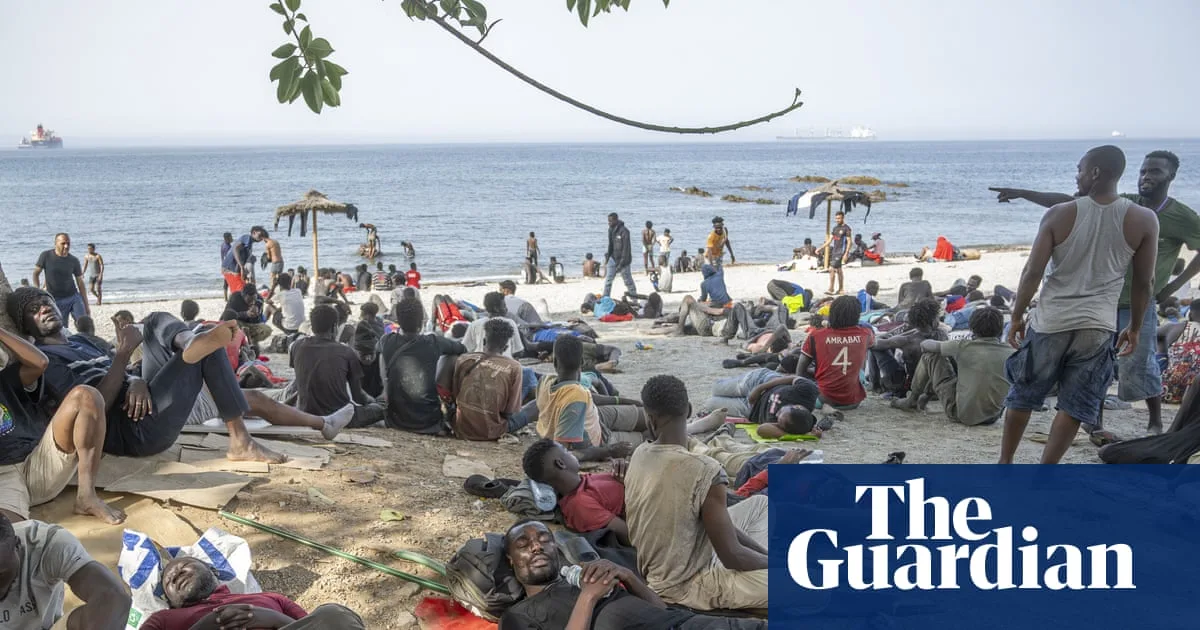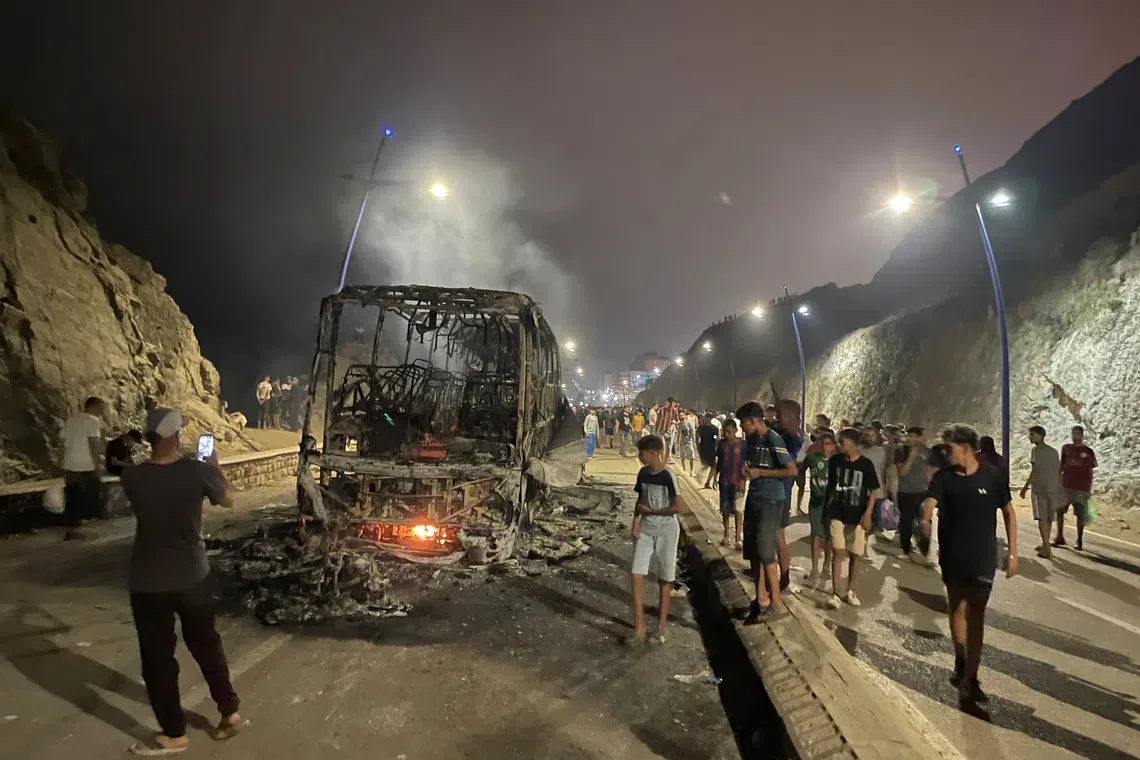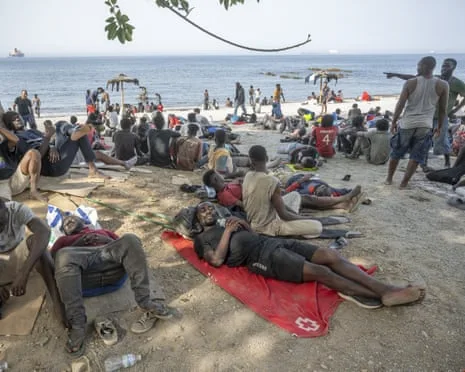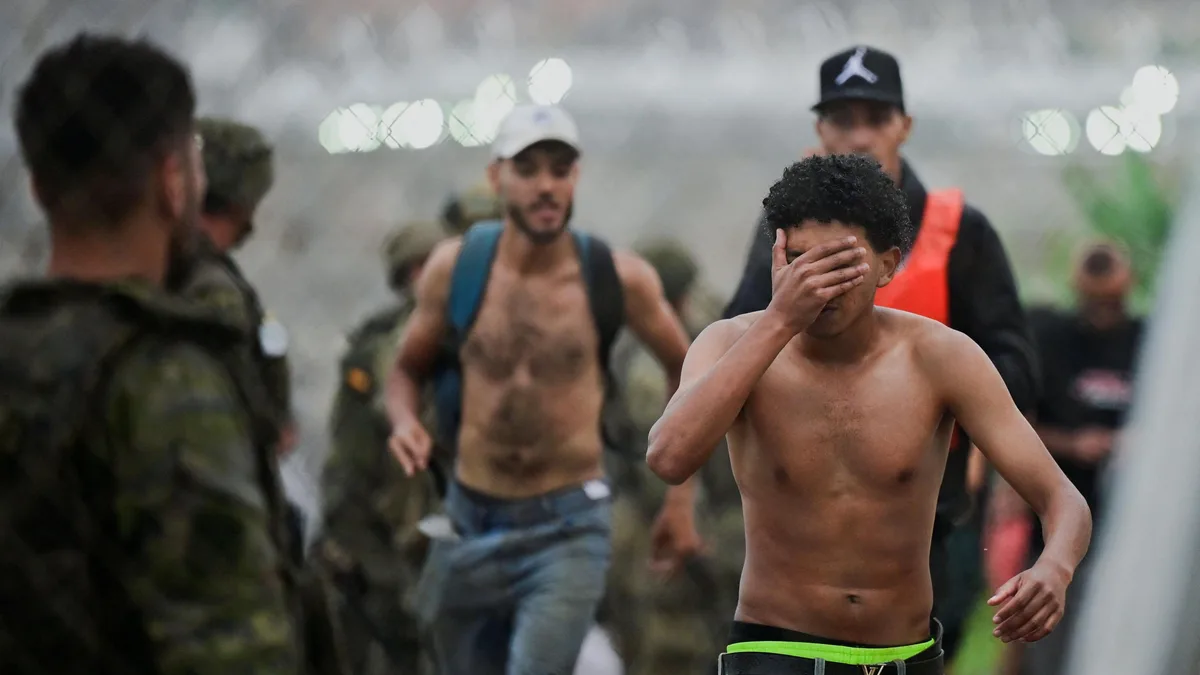
Around 60,000 migrants crossed from Morocco into the Spanish North African enclave of Ceuta starting around July 30-31, 2026, with thousands entering in a short time span and overwhelming border controls [1, 2, 3, 4, 5]. Videos showed migrants swimming across the border and some torching vehicles in clashes near the border fence [1, 6, 5]. Ceuta’s population is about 83,600 to 85,000, so the influx was comparable to more than half the city’s residents [1, 6].
Spanish officials estimate that about 7,000 minors were among those who crossed on one day alone [1]. At least 57 to 67 migrants died attempting to reach Ceuta due to drowning or injuries while climbing the border breakwater [1, 2, 7, 4, 5]. Migrants reported hunger, exhaustion, hostility from locals, closed shops, and inability to move on to mainland Spain while in Ceuta [8]. A young Moroccan migrant said, "Honestly, I don’t even know why I came, and now I’m going back" [4]. Another migrant, Brahim, said, "I thought I'd build a better future there. But I was surprised in Ceuta" [8].
Following the surge, Spain deployed military and police reinforcements to bolster border security in Ceuta on July 31 [9, 10]. Moroccan authorities used water cannon, tear gas, and riot police near Fnideq and the Ceuta border in an attempt to block or push back migrants [6, 10, 3, 4, 11]. Most migrants have voluntarily returned to Morocco due to lack of resources, hostile conditions, and restrictions. By August 1, an estimated 25,000 to 50,000 migrants had returned to Morocco [8, 3, 7, 12, 4, 5]. Spanish Foreign Minister Jose Manuel Albares said, "It is not possible to travel from Ceuta and Melilla to mainland Spain without identifying yourself at a police checkpoint. The integrity of the Schengen Area is fully guaranteed" [7].
Spain’s Prime Minister Pedro Sánchez described the mass arrival as "a violation of Spain's territorial sovereignty" [2, 5]. The Spanish Supreme Court recently ruled that migrants intercepted at sea near Ceuta or Melilla cannot be summarily returned to Morocco [1, 11]. European political reactions intensified, with EU Chief Ursula von der Leyen stating, "We cannot allow anyone to come to our (European) Union without abiding by our rules" [3]. Italy and other EU members considered suspending Schengen travel with Spain in response to the surge [9, 3, 4, 5].
The immediate priority for Spanish and Moroccan authorities remains managing migrant returns and border security. Spain deployed reinforcements on July 31, and by August 1, Foreign Minister Albares confirmed almost all migrants had left Ceuta [9, 10, 7, 4]. Further border management measures and diplomatic discussions are expected to continue in the coming days.