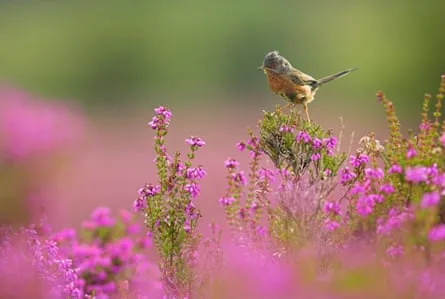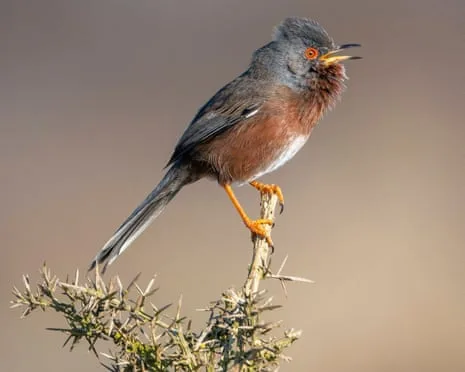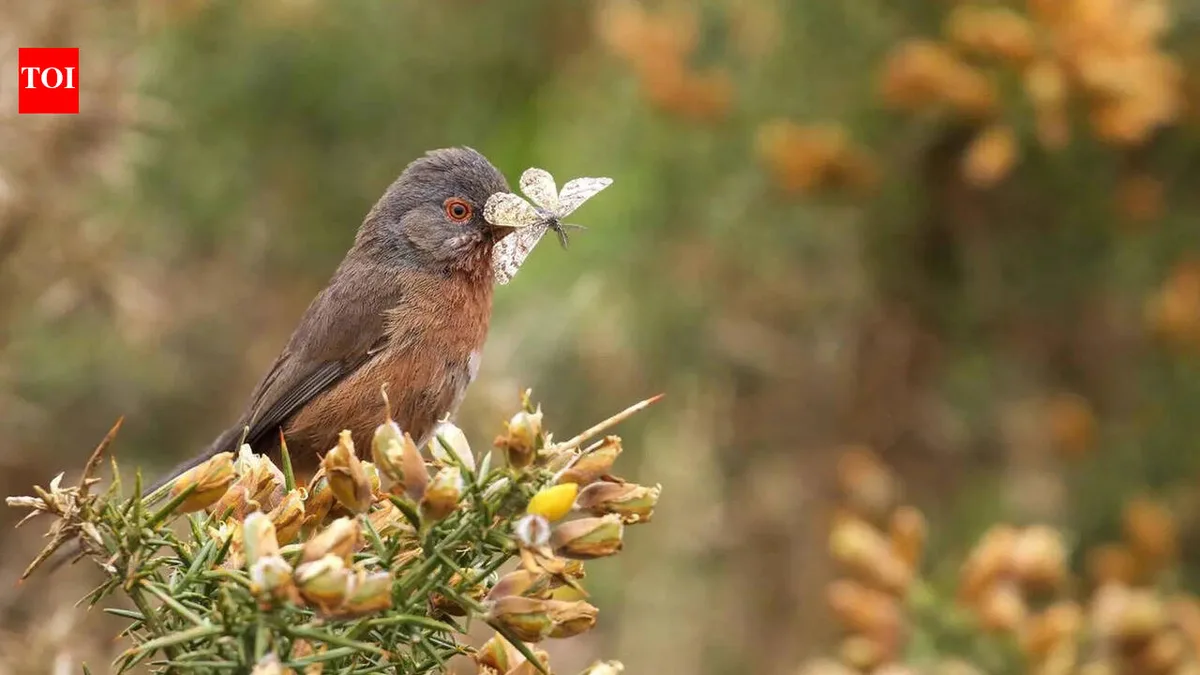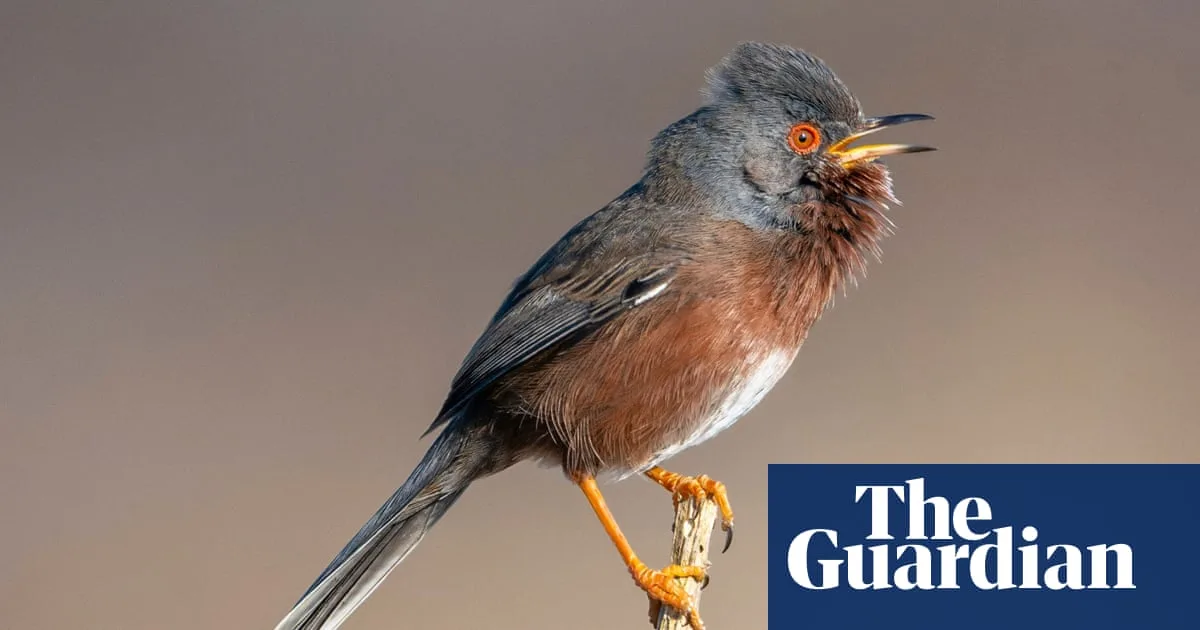
The Dartford warbler population in Britain has seen a significant recovery 60 years after near extinction caused by harsh winters in the early 1960s. A survey conducted in 2025 recorded 264 breeding pairs on RSPB nature reserves, marking a 44% increase in five years from the 2020 baseline [1].
The overall UK population is now estimated at approximately 4,100 Dartford warblers, a species that depends on lowland heathland habitats with dense gorse bushes for nesting and feeding [1, 2]. Despite losing around 80% of its lowland heathland since the 1800s due to forestry and land use changes, conservation efforts have helped the species rebound [1].
The population crash followed the severe winter of 1962-63, which decimated numbers leaving only a few pairs mainly in southern England [1, 2]. Warmer winters in recent decades have reduced mortality rates, aiding recovery [2].
Dartford warblers have been recorded at 14 RSPB reserves, with 97 pairs at RSPB Arne in Dorset and smaller populations on reserves in Devon, Suffolk, Surrey, and Kent [1]. Peter Robertson, Senior Site Manager at RSPB Arne, said, "Restoration of heathland across RSPB Arne has been on a landscape scale. Staff and volunteers have helped connect and enlarge fragmented patches of heathland to give wildlife, such as the Dartford warbler, the space to thrive. The sound of Dartford warblers singing is everywhere now" [1].
RSPB and other conservation groups have restored heathland by removing conifer plantations and reverting land back to suitable habitat to support the species [1, 2]. The next steps include ongoing habitat management to sustain population growth and expansions across the reserves.