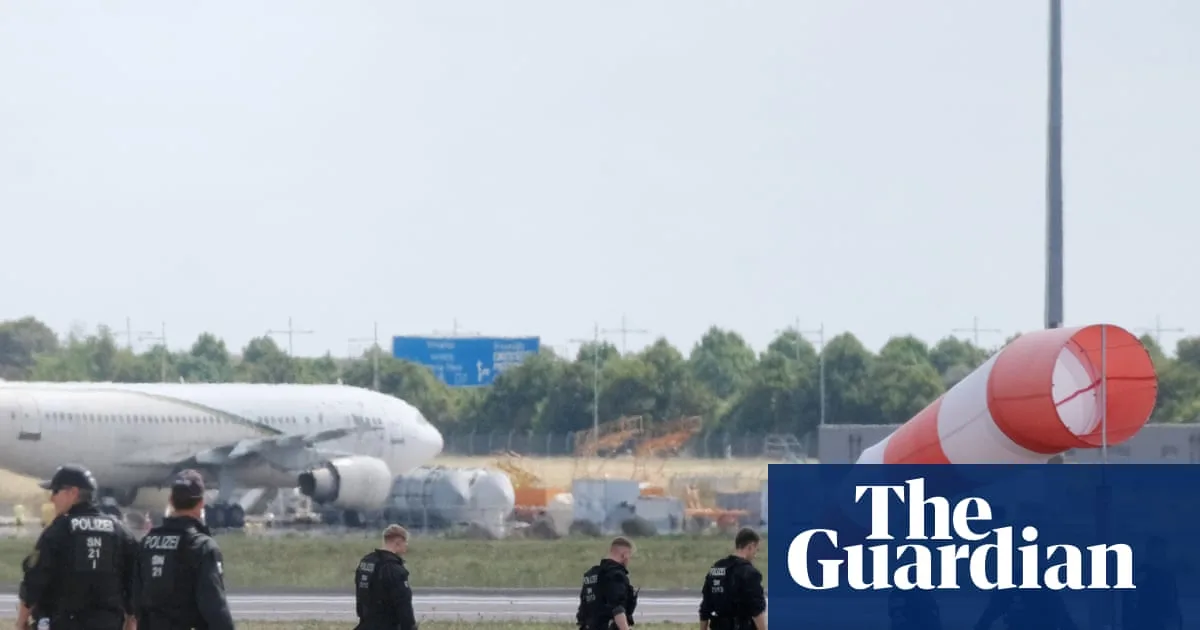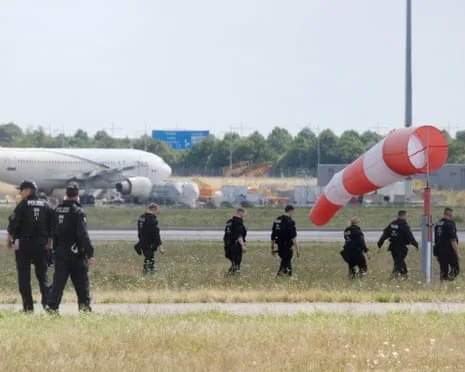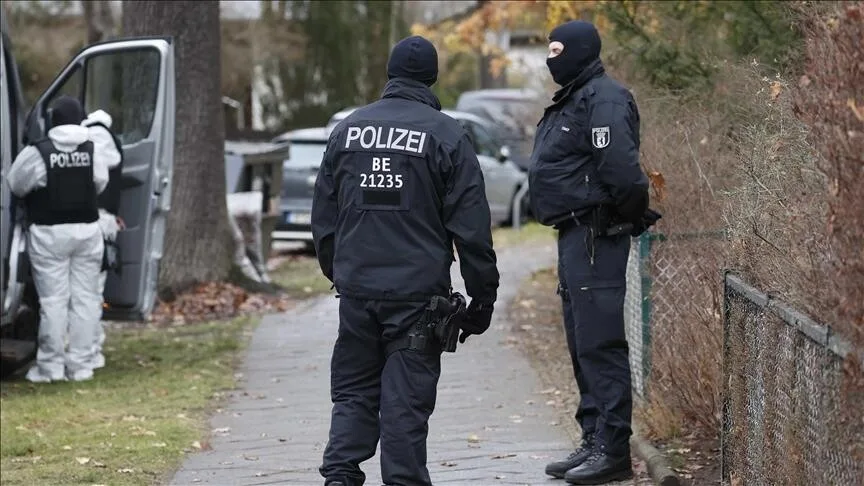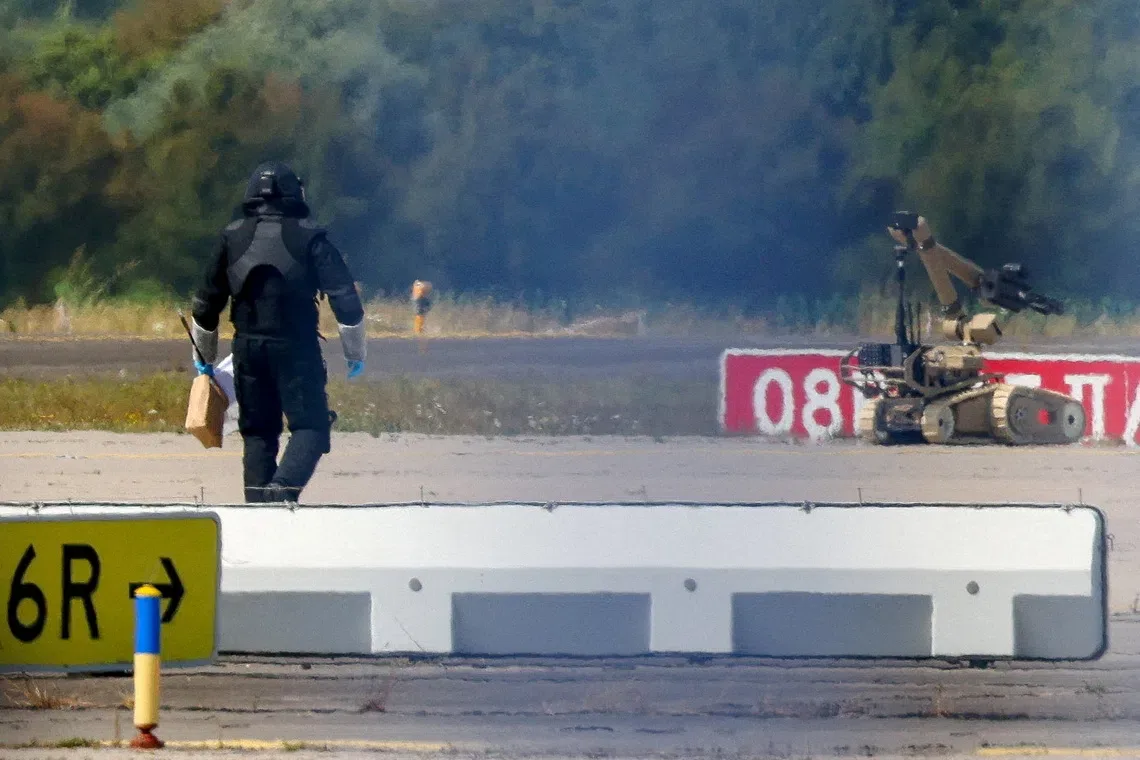
German investigators discovered a third drone and about 50 grams of suspected military explosive hexogen near Leipzig/Halle airport on 14 August 2026, 10 days after the initial attempted attack at the cargo and military logistics hub used by NATO and Ukraine [1, 2, 3].
The first explosives-laden drone was found on 4 August 2026 near a Ukrainian Antonov cargo plane at the airport [1, 2, 4, 3]. About 20 minutes later on the same day, a second drone possibly collided with a DHL cargo plane, forcing the plane to divert to Marseille. Although the second drone was not recovered, damage to the plane’s tail indicated a collision [1, 2, 3].
German intelligence suspects Russian involvement in the drone attacks, but Moscow denies the accusation and the German government has not publicly assigned responsibility [1, 2, 3]. German Chancellor Friedrich Merz said the government will soon provide information about who is behind the attacks and warned that Germany is becoming an increasing target. “They will pay for this. Attackers are increasingly ruthlessly accepting even serious property damage, and even injuries and deaths,” Merz said [2, 4].
French domestic intelligence chief Celine Berthon voiced concern that the Leipzig drone incident signals possible future attacks on French critical infrastructure and companies. She noted increased hybrid threats since Russia’s invasion of Ukraine. Berthon said, “The discovery in Leipzig of an explosive drone that was by all appearances aimed at an aircraft supporting the Ukrainian army is a signal that we must consider the possibility of more direct, more violent actions on our territory” [4].
The third drone and suspected 50 grams (1.8 ounces) of hexogen explosives were found in a field in Kabelsketal, west of Leipzig airport, indicating further threat attempts [1, 2, 3].
The next public update is expected soon as Chancellor Merz announced the government will disclose findings on the responsible parties behind the attacks [2].