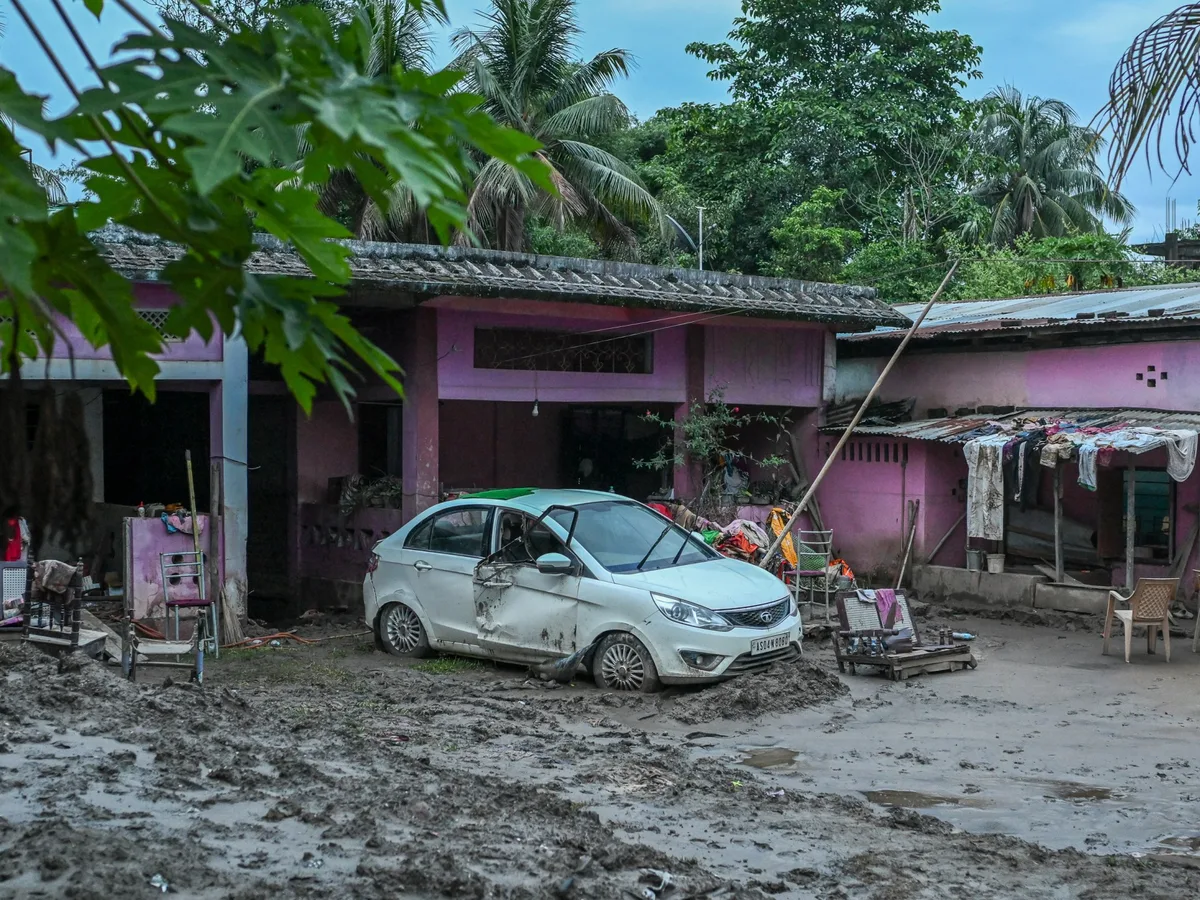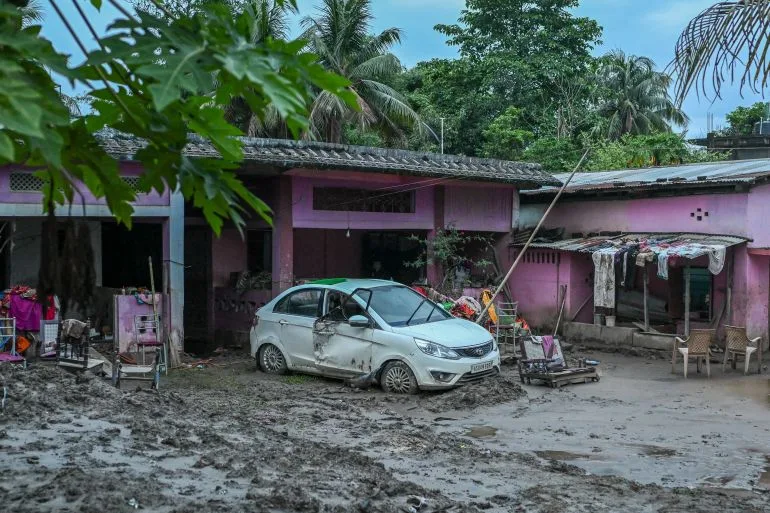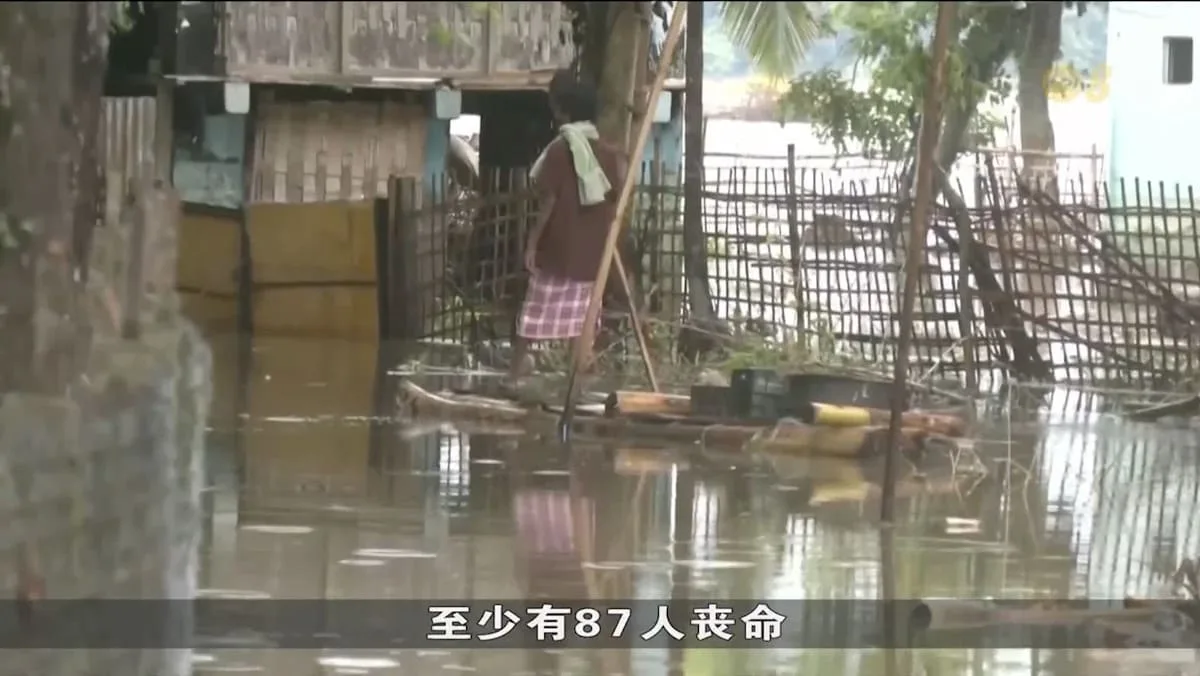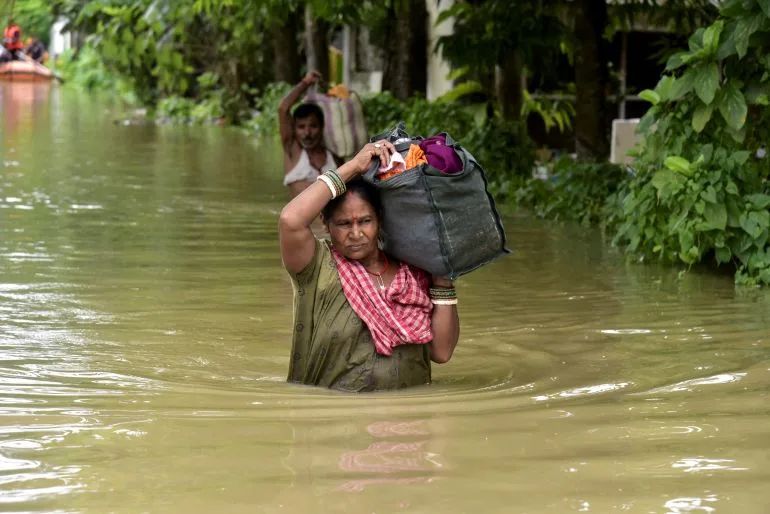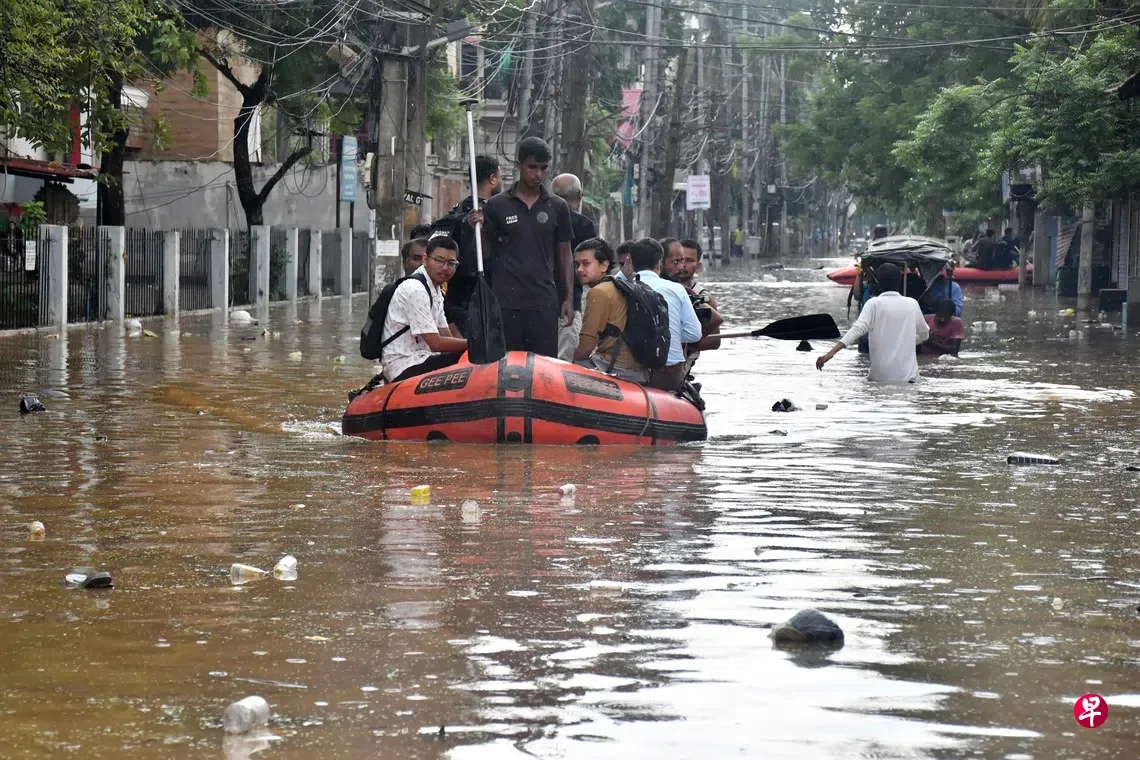
Heavy monsoon rains that began in July 2026 have triggered widespread floods and landslides across multiple Indian states, resulting in over 100 deaths and displacing thousands of people [1, 2, 3, 4]. Assam in northeastern India has been hit the hardest, with at least 87 fatalities reported, including 47 in the Sivasagar district alone [1, 2, 4, 5]. Himanta Biswa Sarma, Chief Minister of Assam, said, "财物损失可以弥补,但任何补偿都无法替代逝去的亲人," reflecting the ongoing human toll of the disaster [1].
Kerala state in the south reported at least 15 deaths and 7 missing as of early August, with over 10,000 people staying in more than 300 relief camps due to flooding [1, 2, 3, 4]. The state's Chief Minister V.D. Satheesan stated, "连日豪雨导致当地至少15人罹难,另有7人下落不明," highlighting the scale of the impact [4]. Some sources report higher fatalities for Kerala, up to 26 deaths [5].
Jammu and Kashmir has also suffered heavy rain bursts leading to at least 31 deaths [1, 2, 4]. Additional rain-related fatalities were recorded in Himachal Pradesh (15 deaths) and Gujarat (35 deaths) states, according to government data [5]. Thousands have been displaced from their homes by the floods and landslides nationwide as rescue and relief operations continue [1, 2, 3, 4].
Meteorologists note that climate change is contributing to increasingly severe and erratic monsoon patterns in South Asia, intensifying the risks for vulnerable communities [1, 2, 4]. Lightning strikes also killed at least 14 people in Jharkhand state, mostly farm workers caught outdoors during sudden storms [2].
Beyond India, neighboring Sri Lanka has faced monsoon flooding that caused 7 to 8 deaths and displaced thousands, while eastern regions struggle with drought conditions simultaneously [2, 3, 4]. The Sri Lankan government links the extreme weather to El Nino effects disrupting typical rainfall cycles [2, 4].
In China, provinces such as Shaanxi and Shanxi experienced heavy rains around August 4 and 5, causing agricultural damage and prompting flood alerts [3].
India’s monsoon season typically runs from June through September and is crucial for agriculture, but it also regularly causes flooding and casualties [2, 5]. The official tally of fatalities from this year’s monsoon was confirmed at over 100 by August 5, with Assam identified as the worst affected state [1, 2, 4, 5]. Authorities continue monitoring weather forecasts and emergency responses as the season progresses.