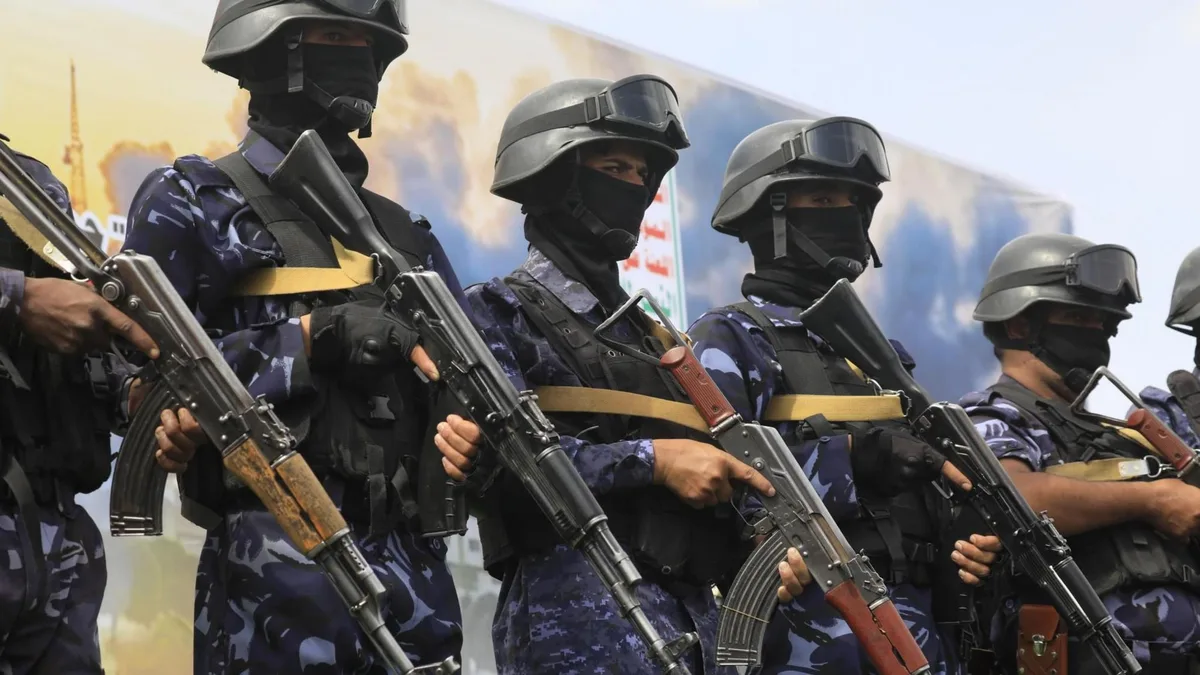
At least 30 Yemeni government troops were killed in Houthi missile and drone attacks on military camps in the provinces of Marib and Hadramawt on August 6, marking one of the deadliest escalations in months [1, 2, 3, 4]. The attacks targeted Emergency Forces bases and other military sites in the al-Ruwaik area of Marib and the al-Abr area of Hadramawt [1, 2, 5, 4].
The Houthis said the strikes destroyed large Saudi military build-ups, weapons depots, vehicles, and inflicted casualties on Saudi-backed forces [1, 2, 3, 5]. Yemen’s Health Minister Qasim Bahibah condemned the attacks as treacherous, saying they were "intended to destabilise security and stability," and ordered medical units to be prepared in both Marib and Hadramawt [1, 2].
The U.S. Mission to Yemen labeled the attacks as "yet another example of Houthi terrorism against the Yemeni people" [2]. The Houthis have also declared a naval blockade on Saudi Arabia in the Red Sea since last month, citing a Saudi siege on Yemen which Riyadh denies [2, 3].
On August 7, Houthi forces launched further missile and drone attacks on displacement camps and residential neighborhoods in Marib, killing 2 civilians and wounding 14 others [3]. The UN Special Envoy for Yemen, Hans Grundberg, warned that the latest attacks "had left Yemen at its greatest risk of renewed large-scale conflict since the U.N.-brokered truce in April 2022," urging restraint and negotiations [3].