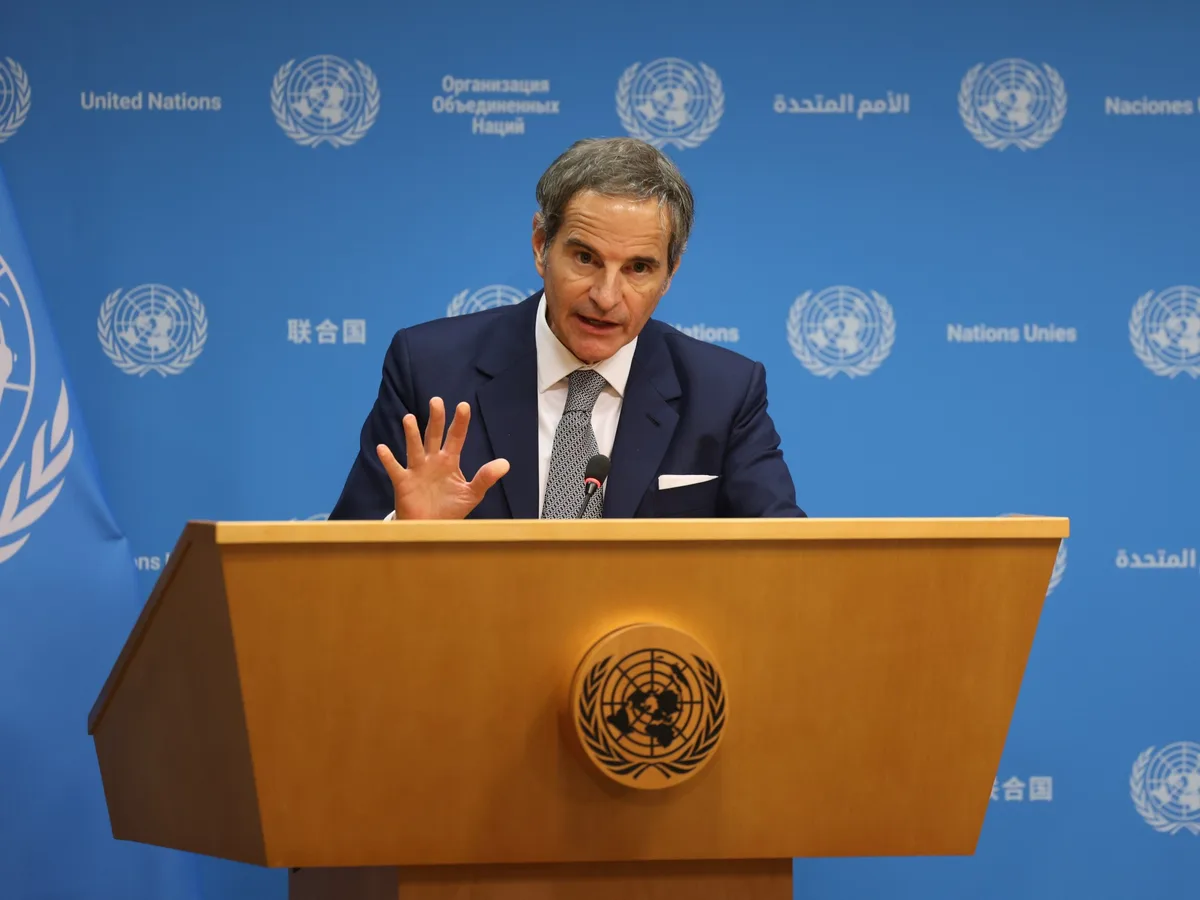
The International Atomic Energy Agency (IAEA) stated there is an "utmost urgency" to resolve Iran’s refusal to grant access to key nuclear sites, including the Isfahan Fuel Enrichment Plant, as well as the unaccounted whereabouts of enriched uranium [1, 2, 3, 4]. IAEA Director General Rafael Grossi emphasized that "the long-standing problems and recurrent crises surrounding these issues must be resolved through a long-lasting, verifiable diplomatic agreement" [1].
After suspending cooperation following US and Israeli military strikes on its nuclear facilities in June 2025, Iran allowed IAEA inspectors to return in September 2025 but continues to bar access to bombed sites [1, 2, 4]. Since June 2025, approximately 440 kilograms of uranium enriched to 60%—a level close to weapons-grade—has gone missing from Iranian facilities. This quantity could potentially be used to build about 10 nuclear weapons if further enriched to 90% [2, 3, 4].
Iran maintains its nuclear program is for civilian purposes only and denies any military intent [1, 2, 3, 4]. Mohammad Eslami, head of Iran’s Atomic Energy Organization, told reporters on August 26 that the IAEA must develop "specific criteria and protocols for inspecting sites targeted by military attacks" before inspections can resume at those locations [1].
Iranian President Masoud Pezeshkian said on September 1 that Iran will respond if the US is "willing to act and re-accept the June 2026 agreement" which aimed at eventual peace talks but collapsed amid mutual accusations of breaches [2, 3, 4]. The US and Israel conducted multiple strikes on Iranian nuclear sites in 2025, including a 12-day conflict in June and further airstrikes beginning February 28, 2026, targeting Isfahan and other plants [1, 2, 3, 4].
The IAEA’s latest report on Iran’s nuclear activities will be discussed at the Board of Governors meeting scheduled for September 21-25, 2026 [1, 2, 3, 4]. This session will review the ongoing access issues and the missing uranium inventory.
US President Donald Trump claimed last year that US actions had destroyed Iran’s nuclear facilities and crippled its program, a claim underlying the recent tensions [1].